Your Resume Is a Living Document - Update It Like Engineers Maintain Code

Software engineers understand continuous integration, version control, and incremental updates. Yet many treat their resume as something that only gets attention during active job searches. Research shows this habit leaves accomplishments undocumented and resumes outdated. BioSpace emphasizes that a resume should be a "living, breathing document" representing ongoing growth, and failing to update it regularly means forgetting details of key projects, skills, and results. [1] Monster career experts note that 40% of workers shelve their resumes once comfortably employed, even though regular updates help you remain visible to recruiters and seize unexpected opportunities. [2] This article explains how to apply engineering principles to resume maintenance through incremental updates, source control thinking, and systematic documentation.
Why Incremental Updates Matter
You Remember Important Details While They're Fresh
Software engineers work in rapid iterations, and achievements pile up quickly. When you only update your resume during a job search, it's easy to forget specifics about projects, metrics, or technologies you used. BioSpace notes that if you don't record new things as they happen, "it's more likely that you'll forget the important details." [1] Experts recommend updating resumes at least once or twice per year, ideally more frequently. [1] Capturing details promptly ensures that metrics like performance improvements or cost savings remain accurate and you can write compelling bullet points.
The Job Market and Your Skills Change Quickly
Industry tools and expectations evolve rapidly. LinkedIn research emphasizes that industries change fast and resumes should evolve with new tools and shifting job responsibilities. [3] During everyday work you pick up new competencies, but without conscious documentation those achievements often slip your mind. The World Economic Forum found that skills half-life has compressed to approximately four years across industries, and just two years in specialized digital fields like AI. [4] Resumes updated every three to six months capture these silent skill upgrades before they become stale memories.
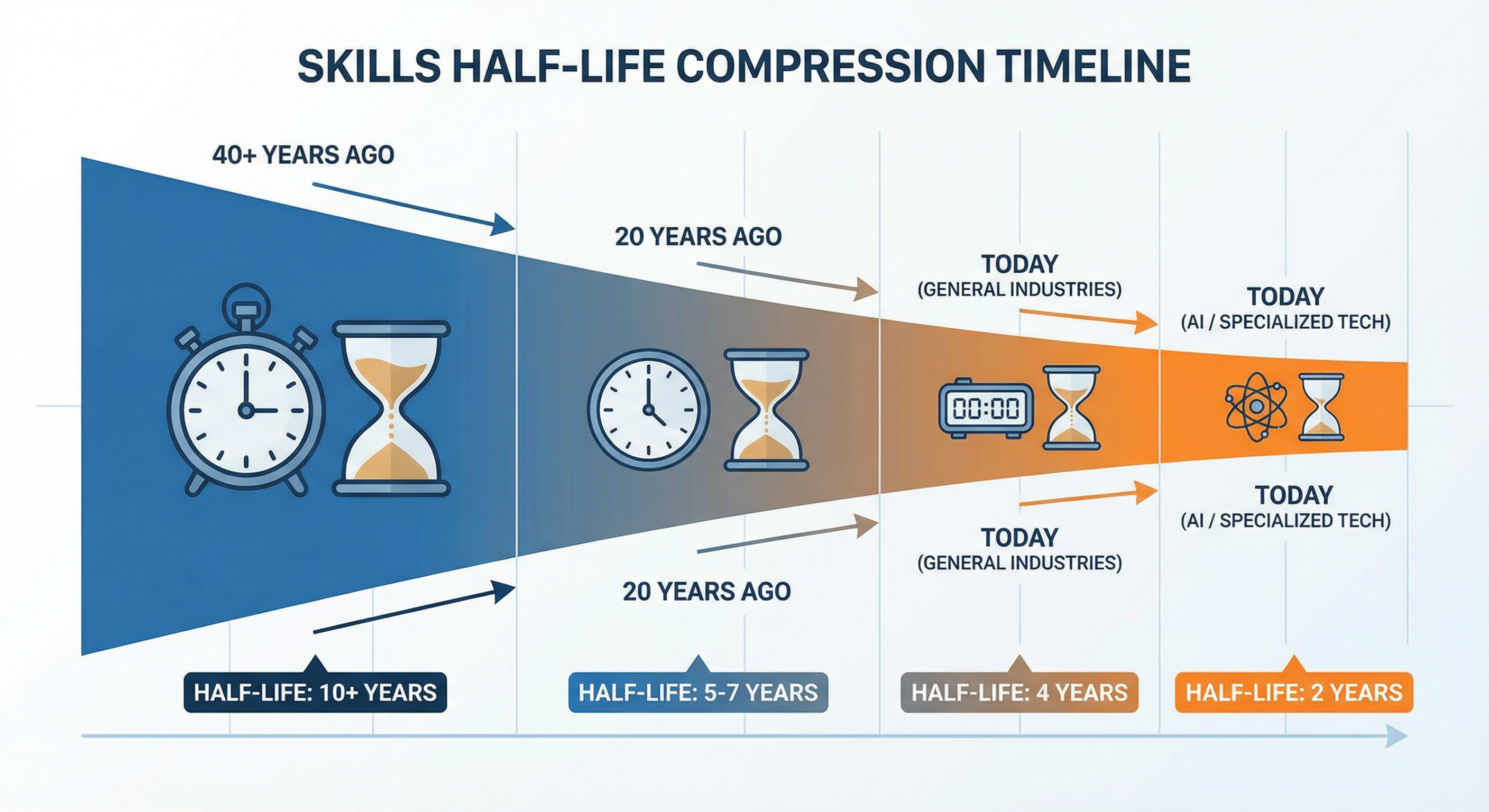 The accelerating pace of skill obsolescence: from 10+ years to 2-4 years in specialized tech fields
You Never Know When Opportunity Will Knock
Unexpected opportunities arrive via internal postings, recruiters, or chance encounters. LinkedIn's career guidance warns that waiting to update your resume until you need it can cause you to miss roles or undersell your expertise. [3] Industry advisors add that networking events or conferences can yield immediate connections, and having an up-to-date resume enables you to seize these moments without scrambling to reconstruct months or years of accomplishments.
Incremental Updates Strengthen Self-Assessment and Career Planning
Regular resume upkeep forces you to review your growth and assess gaps. Career development experts suggest that documenting new responsibilities and achievements is a tool for setting future goals and identifying areas for development. [5] LinkedIn's guidance similarly notes that quarterly or biannual updates help you reflect on career direction and needed skills. [3] This reflection helps you make smarter decisions about learning initiatives and career transitions before momentum stalls.
Staying Visible to Recruiters
Many employers and job boards rank or prioritize profiles by recency. Treating your resume as a living document ensures it appears in searches and signals that you are professionally active, even if you're not actively job hunting. Resume platforms emphasize that keeping your professional profile current can activate search algorithms and boost your visibility to recruiters scanning for fresh candidates. [6]
 Resume age and recruiter visibility: why regular updates keep you in the search results
Reduces Stress When You Need It
Waiting until you need a resume often turns the update process into a stressful rush. Career advisors emphasize that routinely adding a few lines after a new role or project saves time and prevents the anxiety of reworking an entire document later. [5] Job search experts recommend scheduling resume updates every three months so you never miss a chance to apply when ideal roles appear. [7] Regular maintenance distributes the cognitive load of remembering and articulating your achievements across smaller, manageable intervals.
A Lightweight Workflow Engineers Can Adopt
Engineers think in terms of systems, version control, and continuous integration. You can apply those same principles to your career documents. Below is a process-oriented workflow designed to fit an engineer's mindset. Adjust the cadence (quarterly, biannual, or aligned with major sprints) to your situation.
Step 1 - Build a Master Resume Repository
Create a single source of truth. Use a document or Markdown file as your master resume. This file contains every role, project, skill, achievement, metric, and award you've earned. Industry experts advise that a resume "is not set in stone" and should evolve with your career. [8] Engineering career guides recommend maintaining a master resume and tailoring copies from it for specific roles. [9]
Tools like CoreCV.ai treat resumes as structured data, making it simple to maintain a comprehensive master record and generate tailored versions for different roles. The key insight is that you only need to track your accomplishments as bullet points - the formatting, layout, and visual polish are secondary concerns that tools can handle automatically.
Treat it like source code. Engineers already manage code repositories; bring that same discipline to your career narrative. While you don't need Git for your resume itself, the mindset of tracking changes systematically and maintaining comprehensive records serves you well. Keep dated backups or use timestamped file names (e.g., resume-2026-Q1.md, resume-2026-Q2.md) to preserve a history of your career growth.
Step 2 - Maintain a "Brag Document" or Changelog
Collect accomplishments as they happen. BioSpace suggests jotting down new projects, experiences, skills, and results as they arise. [1] Engineers can create a simple running document (text file, spreadsheet, or note) where they log project names, impact metrics, technologies used, soft-skill evidence like mentorship, awards, and feedback. This functions like a changelog for your career.
The beauty of this approach is its simplicity. You don't need elaborate systems or perfect prose - a bullet-point list of what you did, what technologies you used, and what impact you achieved is sufficient. When you're ready to apply for a role, you can select relevant bullets and let formatting tools handle the presentation layer.
Include quantitative results. Employers value specific outcomes. Regularly record metrics such as percentage improvements, cost savings, or time reductions so you don't have to recreate them later. [10] Use formulas such as "Accomplished X by Y, resulting in Z outcome." For example: "Reduced API latency by 35% through caching implementation, improving user experience for 50,000 daily active users."
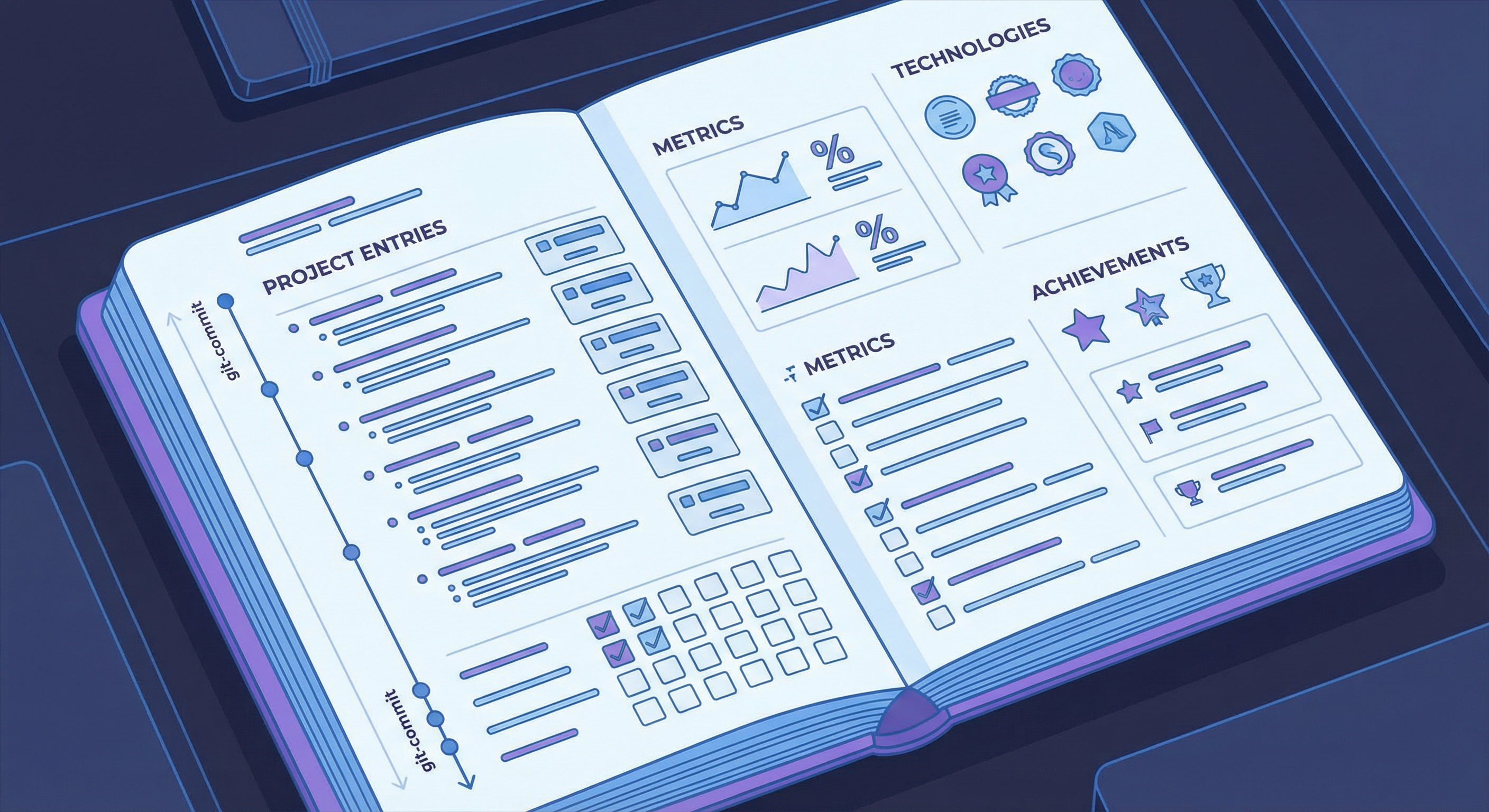 A systematic approach to capturing career wins: the engineering changelog for your professional growth
Step 3 - Set Update Intervals and Triggers
Align with engineering rhythms. Choose an update cadence that matches your work cycles. Industry advisors recommend reviewing your resume every three to six months or after any significant career milestone. [11] Job search experts suggest every three months, [7] while LinkedIn career advisors endorse quarterly updates. [3] Tie updates to sprint retrospectives, quarterly OKR reviews, or performance evaluations.
Use calendar reminders. Set recurring calendar events to prompt you to review your brag document and integrate updates into your master resume. Treat these reminders like code release deadlines so they don't slip into "someday" territory.
Trigger updates after milestones. Immediately after finishing a project, earning a certification, or receiving an award, add bullet points to your brag document and master resume. Strike while the details are fresh and the accomplishment feels tangible.
Step 4 - Update the Master Resume and Tailor Versions
Integrate new achievements. During your scheduled update, review your brag document and integrate the most impactful items into your master resume. Career advisors note that adding a few lines about your new role or job duties takes only minutes and prepares you for any situation. [5] Prioritize achievements with measurable outcomes, technical depth, or clear business impact.
The key is that your master list doesn't need to be beautifully formatted or perfectly worded. A straightforward bullet-point list with the facts - what you built, which technologies, what results - is sufficient. The formatting, visual design, and final polish can be applied later when you generate specific versions for job applications.
Tailor for specific roles. When applying for a job, copy relevant sections from the master resume into a tailored version. Industry research and hiring experts emphasize that tailored resumes targeted to each job opening are more effective than generic ones. [12] Use the job description to select the most relevant projects and keywords, which improves both human reviewer engagement and ATS performance. [11]
This is where structured resume data shines. With tools like CoreCV.ai, you can maintain all your accomplishments in one place and quickly generate role-specific versions by selecting which bullets to emphasize, adjusting ordering, or even using AI to reframe achievements for different contexts. The time investment is in capturing your accomplishments once; tailoring becomes a few minutes of selection and refinement rather than hours of reformatting.
Sync online profiles. Ensure your LinkedIn and portfolio reflect the updates. LinkedIn's career articles note that consistency across platforms strengthens your personal brand, [3] and career advisors recommend aligning online profiles with your resume to avoid discrepancies that raise red flags. [11]
Step 5 - Reflect and Plan
Analyze your trajectory. Each update is an opportunity to evaluate your career direction. Ask yourself: Are there skill gaps? Are you progressing toward your desired role? LinkedIn's guidance emphasizes that regular resume updates help you reflect on needed skills and career gaps. [3] This introspection transforms resume maintenance from a chore into strategic career planning.
Set learning goals. Given the rapid skills half-life (approximately four years across industries and two years in AI-related fields), [4] continuous learning is essential. Identify courses, certifications, or side projects to pursue and log them in your planning document. Treat skill acquisition as an investment with a measurable depreciation curve.
Tips for Making the Process Sustainable
Keep the process lightweight. Updates don't need to be perfect. BioSpace advises simply jotting down the most important points and revising later. [1] The goal is to capture the essence of your accomplishments, not to craft publication-ready prose in the moment. You can always refine the wording during your quarterly review.
Focus on high-impact metrics. Quantify achievements such as performance improvements, revenue increases, or efficiency gains for each update. [10] Even approximate numbers communicate scale and impact better than vague descriptors like "improved performance" or "enhanced user experience."
Document soft skills and leadership. Note mentoring activities, cross-functional collaboration, or public speaking events. These experiences often get lost but help you stand out by demonstrating leadership, communication, and teamwork capabilities that complement technical skills.
Involve peers. Periodically ask colleagues or mentors to review your resume. Fresh eyes can catch outdated jargon and highlight achievements you may overlook. Peer feedback also surfaces alternative ways to frame accomplishments that resonate more strongly with hiring managers.
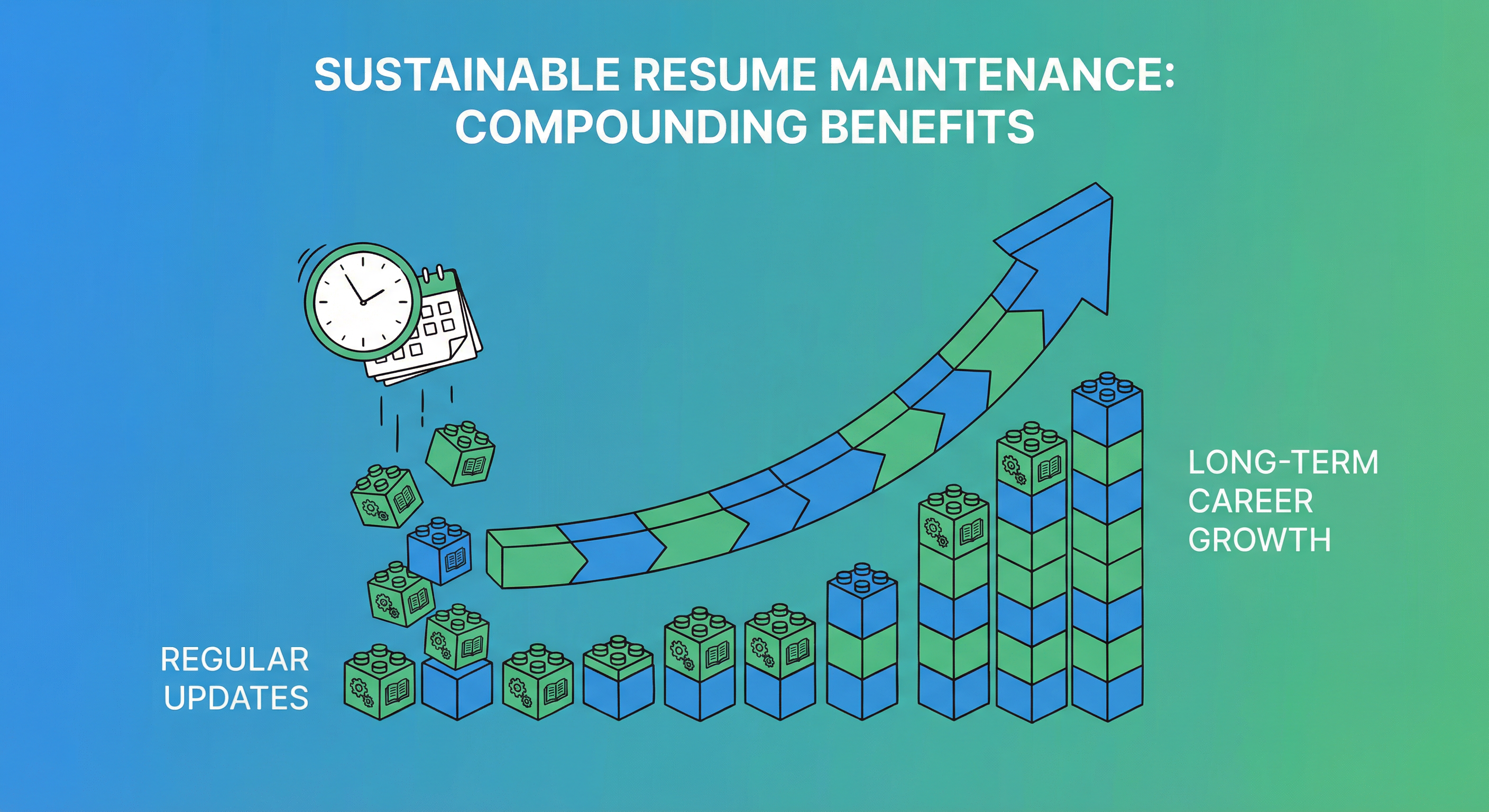 Building a lightweight system: small, regular investments yield compounding career benefits
Conclusion
Treating your resume as a living document aligns with how engineers manage code: incremental updates, systematic tracking, and continuous improvement. Doing so helps you remember achievements, adapt to a changing job market, seize unexpected opportunities, self-assess honestly, and remain visible to recruiters. As career experts note, maintaining your resume is a smart investment that saves you time and keeps you competitive. [5]
By building a master resume repository, maintaining a brag document, scheduling regular updates, tailoring versions for specific roles, and reflecting on your growth, you create a lightweight yet powerful system that ensures your professional story remains current and compelling. This approach transforms resume maintenance from a dreaded, infrequent scramble into a sustainable habit that compounds your career advantages over time.
For engineers managing complex career narratives across multiple domains, technologies, and projects, maintaining structured resume data becomes essential. Tools that treat resumes as structured data rather than static documents make it dramatically easier to tailor versions, track changes systematically, and maintain consistency across platforms.
For the next step after maintenance discipline, see how to design your resume like a product and how to tailor your tech resume with AI.
Ready to maintain your resume like production code? Try CoreCV.ai for structured resume management with version-aware editing and AI-powered tailoring that keeps your professional narrative current and compelling.
Sources
- 1. Why You Should Update Your Resume Now, Even If You're Not Looking for a Job - BioSpace: https://www.biospace.com/why-you-should-update-your-resume-now-even-if-you-re-not-looking-for-a-job
- 2. Tips to Keep Your Resume Updated - Monster: https://www.monster.com/career-advice/article/five-steps-for-updating-your-resume-hot-jobs
- 3. How Often Should You Update Your Resume? - LinkedIn Advice: https://www.linkedin.com/advice/0/how-often-should-you-update-your-resume-skills-resume-writing
- 4. The Half-Life of Skills Is Shortening - Skillable: https://www.skillable.com/resources/hands-on-learning/half-life-of-skills-is-shortening/
- 5. Why Is a Resume Considered a Living Document - Optim Careers: https://optimcareers.com/expert-articles/why-is-a-resume-considered-a-living-document
- 6. Update Your LinkedIn Resume: Essential Tips for December 2025 - Sprout: https://www.usesprout.com/blog/update-linkedin-resume
- 7. How to Make a Good Resume: A Simple 5-Step Process - Bosscoder Academy: https://www.bosscoderacademy.com/blog/software-engineer-resume-tips
- 8. The Art of Resume Writing: Insights from STS Technical Services: https://www.ststechnicaljobs.com/the-art-of-resume-writing/
- 9. Resume Hacks for Industrial Engineers: Crafting the Perfect CV - ESGI: https://www.esgi.net/2023/11/22/resume-hacks-for-industrial-engineers-crafting-the-perfect-cv/
- 10. Turn Side Projects Into Credible Resume Entries with Impact - Resumly: https://www.resumly.ai/blog/how-to-turn-side-projects-into-credible-resume-entries-with-measurable-impact
- 11. A Guide to Keeping Your Resume Up to Date - Zobility: https://www.zobility.com/blog/keeping-your-resume-up-to-date/
- 12. Refresh Your Resume - Onrec: https://www.onrec.com/news/news-archive/refresh-your-resume---
Disclosure: This article is authored by the CoreCV team. While we mention CoreCV.ai, the strategies and advice presented apply to any modern job search approach. We've focused on providing actionable insights based on industry research and hiring trends.