10 Common Mistakes Tech Professionals Make on Their Resumes
A technical resume isn't just a formality - it's your marketing document. According to research by The Ladders (updated in their 2018 study), recruiters spend an average of 7.4 seconds scanning a resume before deciding whether you're a fit, though this varies by role and experience level. Small missteps can keep your application from making it to the "yes" pile.
Below is a list of the most common mistakes developers and IT professionals make on their resumes - along with how to fix them.
 The top 10 resume mistakes and their estimated impact on rejection rates
Understanding the Impact
Before diving into specific mistakes, it's important to understand that resume errors don't just make you look unprofessional - they actively trigger rejection filters in both automated systems (ATS) and human reviewers. Each mistake compounds the others, creating a cumulative effect that can sink even strong candidates.
The graphic above shows the estimated rejection impact of each mistake based on industry research and recruiter feedback. Notice how Poor ATS Compatibility and No Impact/Metrics top the list with significant impact (estimated at 75-80% based on industry patterns). These aren't just minor issues - they're deal-breakers in modern tech hiring.
 Transforming a generic resume into an impact-focused one: see the difference
1. Only Listing Responsibilities, Not Impact
Too many tech resumes sound like job descriptions. Listing what you were supposed to do isn't the same as showing what you actually achieved.
Why it's harmful: It makes it hard for hiring managers to assess your effectiveness.
How to fix it: Focus on accomplishments and measurable outcomes. For example:
❌ "Built and maintained APIs."
✅ "Built and maintained APIs that reduced internal response time by 35%."
(Source: GeeksforGeeks)
2. Generic, One-Size-Fits-All Resumes
Submitting the same resume to every job wastes the opportunity to highlight the most relevant skills and experience.
Why it's harmful: Recruiters are looking for alignment, not generalists.
How to fix it: Tailor your resume to the specific role by emphasizing technologies, tools, and outcomes that match the job description. Learn how to efficiently tailor your resume with AI to save time while maximizing relevance.
(Source: Jobscan)
3. Failing to Quantify Results
Saying you "improved performance" or "led a team" is vague. Numbers show scale and impact.
Why it's harmful: You leave your accomplishments open to interpretation.
How to fix it: Use metrics like performance gains, uptime, load time reductions, or user growth.
✅ "Reduced CI pipeline duration from 12 minutes to 4 minutes, improving deployment speed by 3x."
(Source: theSeniorDev)
4. Too Much Focus on Tools Instead of Outcomes
Listing every technology you've touched can come across as noise.
Why it's harmful: Tools change. What matters is how you used them to solve problems.
How to fix it: Instead of a laundry list, show how specific tools enabled better outcomes.
✅ "Used Postgres and Redis to scale API to 10k+ concurrent users with <100ms latency."
(Source: index.dev)
5. Using Vague or Inflated Titles
If your actual title was "Software Engineer" but you wrote "CTO" because you were solo, that's misleading.
Why it's harmful: Recruiters may question your credibility or assume you're exaggerating.
How to fix it: Use your real title and explain scope. For example:
✅ "Software Engineer (sole developer on project, reporting directly to CEO)"
(Source: Resumly)
6. No Mention of Projects
If your resume only shows full-time roles and omits open-source work, side projects, or hackathons, you're missing key differentiators.
Why it's harmful: Projects often showcase initiative and learning velocity - especially for juniors or career switchers.
How to fix it: Include a "Projects" section that highlights your most technically interesting work.
(Source: GeeksforGeeks)
7. Writing in Paragraphs Instead of Bullet Points
Dense blocks of text kill skimmability.
Why it's harmful: Recruiters won't read long paragraphs - they'll skip them.
How to fix it: Use 1–3 line bullet points. Start with strong action verbs and keep language tight.
(Source: Jobscan)
8. Including Irrelevant Personal Information
Your marital status, full address, or hobbies like "playing chess" aren't helpful.
Why it's harmful: It wastes space and can introduce bias.
How to fix it: Stick to professional, relevant details. Only include links (like GitHub or portfolio) that show work.
(Source: index.dev)
9. Weak or Missing Summary Section
A vague summary like "Motivated software engineer seeking opportunities" tells us nothing.
Why it's harmful: It's a missed opportunity to quickly align yourself with the role.
How to fix it: Use your summary to pitch your strengths in one or two concise sentences.
✅ "Backend engineer with 6+ years of experience building distributed systems in Go and Python. Passionate about scalable APIs and platform reliability."
(Source: theSeniorDev)
10. Overlooking ATS Compatibility
Stylized layouts with columns, graphics, or unusual fonts often break when parsed by applicant tracking systems.
Why it's harmful: Your resume might never be read by a human.
How to fix it: Stick to clean, text-based formats that parse well. Use standard headings like "Experience" and "Education." For comprehensive ATS optimization strategies, read our guide on beating the bots with ATS-friendly resumes.
Tools like CoreCV.ai offer ATS-friendly templates and structured JSON output to avoid parsing issues without sacrificing style.
(Source: Jobscan)
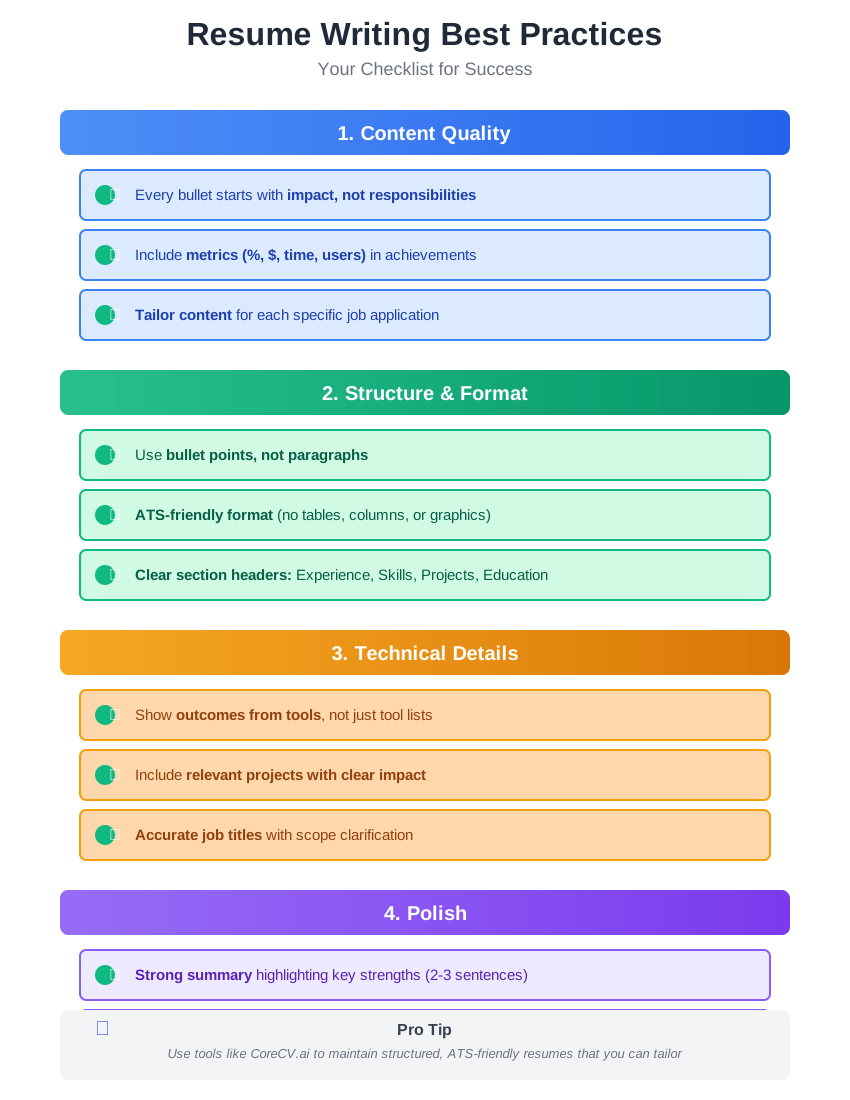
 Your comprehensive checklist for creating an effective tech resume
Final Thought
Even highly skilled engineers get filtered out due to avoidable resume mistakes. The good news? Most of these are easy to fix with a more structured, outcome-focused approach. Treat your resume like production code: readable, purposeful, and tailored to its end user. To understand what hiring managers prioritize when evaluating resumes, see our guide on what tech recruiters really look for.
Use this checklist to audit your current resume:
- Content Quality: Are you leading with impact? Have you quantified your achievements?
- Structure & Format: Is your resume ATS-friendly? Are you using bullet points?
- Technical Details: Are you showing outcomes from your tools, not just listing them?
- Polish: Is your summary strong? Have you removed irrelevant information?
The difference between a rejected resume and an interview invitation often comes down to these fundamentals. Take the time to get them right.
Ready to build a resume that stands out? Try CoreCV.ai for structured, ATS-friendly resumes with AI-powered tailoring - so you can focus on showcasing your best work, not fighting with formatting.
Sources
This article synthesizes insights from multiple industry sources:
- GeeksforGeeks: Common Resume Mistakes for Software Engineers
- Jobscan: Software Engineer Resume Examples
- theSeniorDev: 6 Mistakes to Avoid in 2024
- index.dev: Tech Resume Red Flags
- Resumly: Backend Developer Resume Mistakes
Disclosure: This article is authored by the CoreCV team. While we mention CoreCV.ai, the strategies and advice presented apply to any ATS-friendly resume approach. We've included alternative tools and objective information where applicable.