27 posts tagged with "tech-careers"

View All Tags

How to List Personal Projects on a Resume for Tech Roles

· 8 min read
How to List Personal Projects on a Resume for Tech Roles

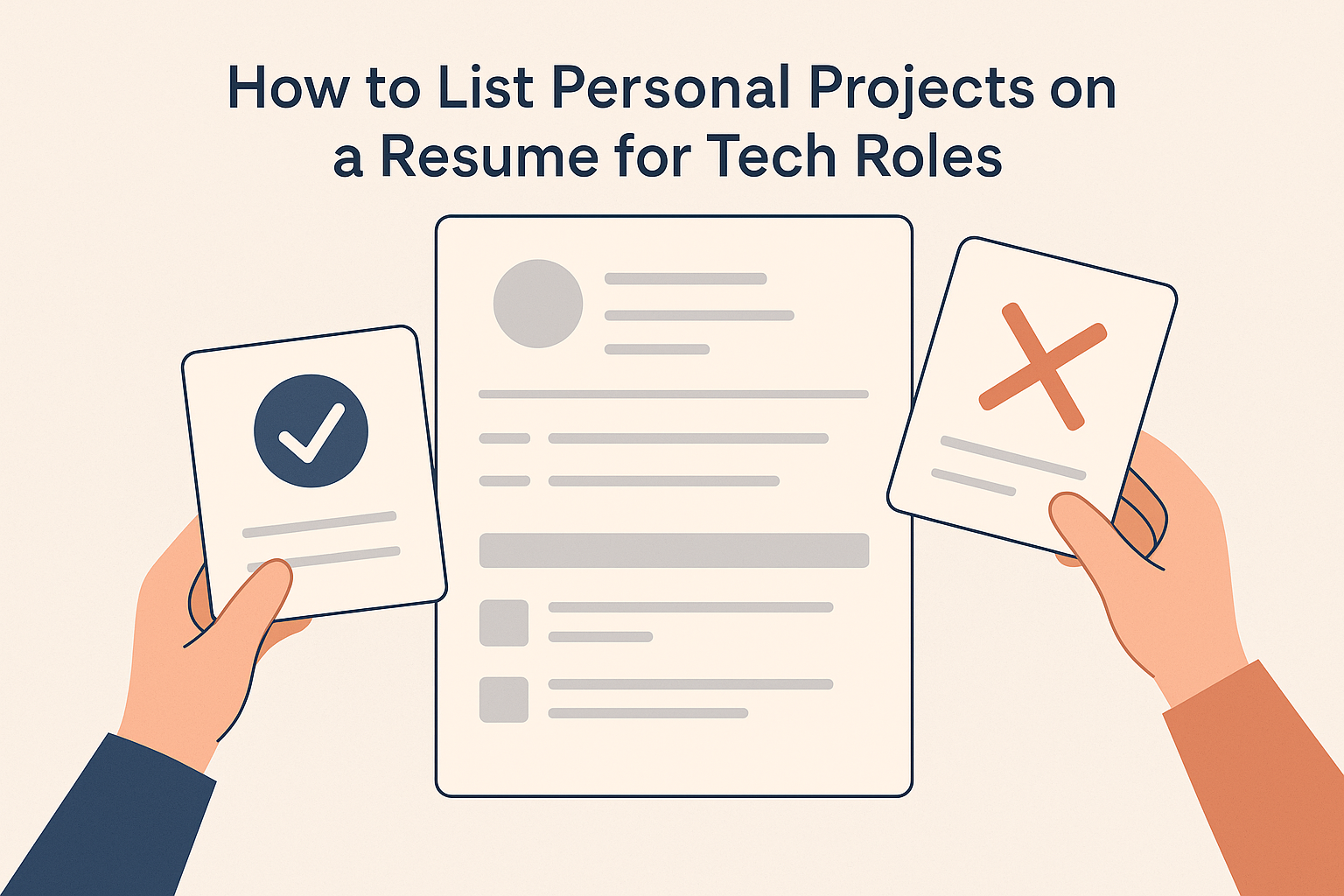
Personal projects belong on a tech resume when they prove something your job history does not prove yet. MIT explicitly notes that relevant experience can include class projects, competitions, and personal projects, as long as you make the relevance clear, while Harvard stresses tailored, specific, fact-based writing that is easy to scan.[1][2] That is the right standard: a project earns space when it adds evidence, not just because you spent time on it.

Engineering Your Professional Growth: Agile Approaches to Career Development

· 7 min read
Engineering Your Professional Growth: Agile Approaches to Career Development

A lot of career advice still assumes you should pick one big destination and follow a long-range plan without changing much. That is a poor fit for most developers. Technologies shift, teams reorganize, and the market moves with them. Agile is useful here because it treats progress as something you inspect and adapt, not something you lock in once and defend forever.[1][2] In a field where the U.S. Bureau of Labor Statistics projects 15% growth for software developers, QA analysts, and testers from 2024 to 2034, static career plans tend to go stale faster than people expect.[3]

Career Pivot 101: Rebranding Yourself for a New Tech Path

· 6 min read
Career Pivot 101: Rebranding Yourself for a New Tech Path

A tech career pivot usually fails for a simple reason: the story looks wider than the evidence. Harvard and MIT both advise candidates to tailor resumes so relevant skills and accomplishments are visible immediately rather than buried in a generic work history.[1][2] If you want to move from developer to product manager, or from QA to DevOps, the goal is not to pretend you already held the new title. It is to make the overlap legible.

How to Show AI-Native Work on a Resume Without Sounding Generic

· 14 min read
How to Show AI-Native Work on a Resume Without Sounding Generic

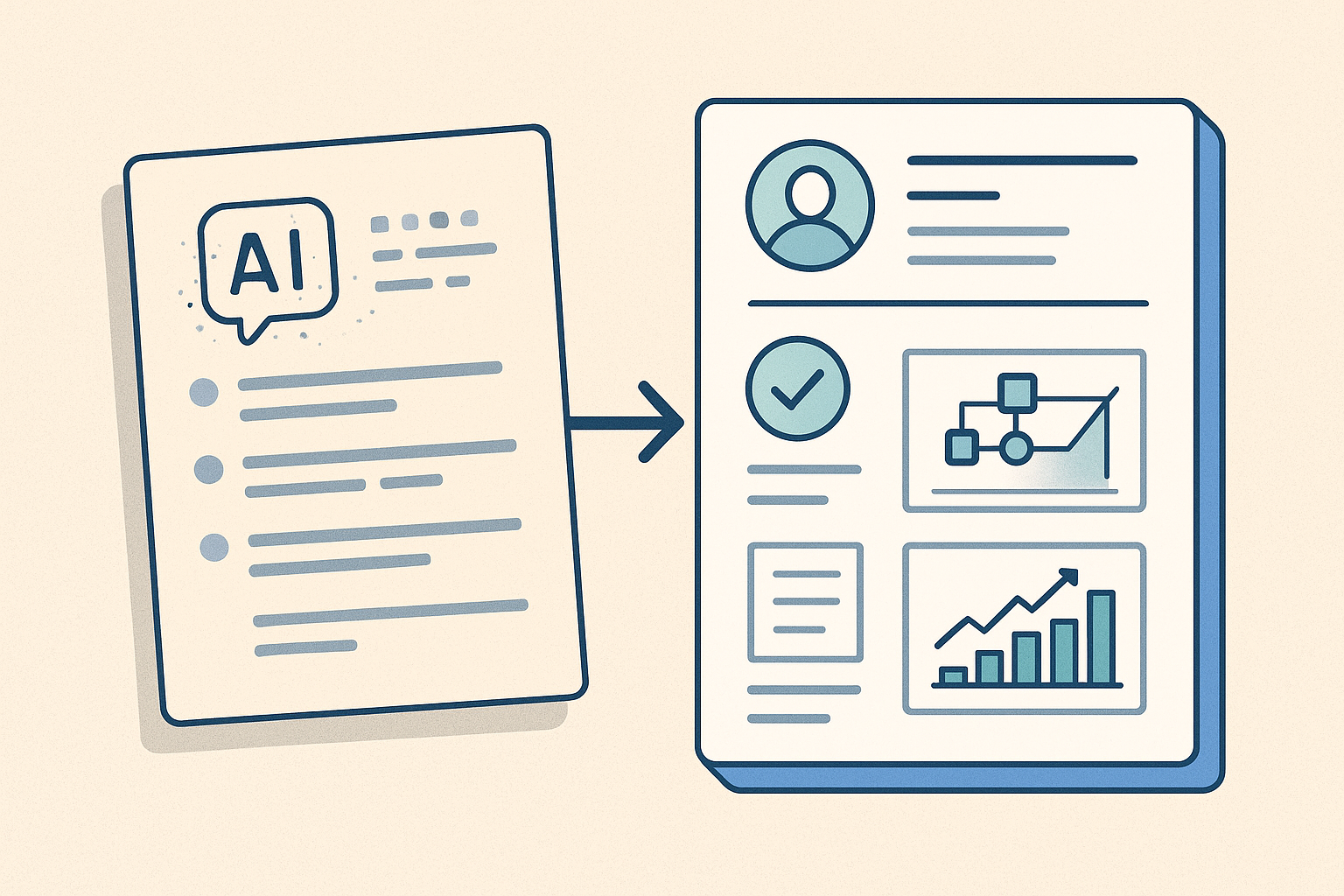
If you want to put AI on a resume in 2026, the main risk is not underselling yourself. It is sounding like everyone else. "Used ChatGPT," "leveraged AI," and "familiar with LLMs" can read a lot like "used Google" now. They may be true, but they do not tell an employer much about how you work, what you owned, or whether your output holds up under real constraints.

Addressing Employment Gaps: Turning Time Off into a Narrative of Growth

· 8 min read
Addressing Employment Gaps: Turning Time Off into a Narrative of Growth

Employment gaps become a problem mostly when the resume leaves too much work for the reader. If a hiring manager cannot quickly tell what happened, whether your skills stayed relevant, or why you still fit the role, the gap starts to carry more weight than it should. Harvard advises candidates to tailor resumes to the job they want and to write for people and systems that scan quickly. MIT similarly recommends using the position description to decide what belongs on the page. That is the right frame for gaps too: keep the document clear, credible, and focused on evidence.[1][2]

Should You Add a Summary to a Software Engineer Resume?

· 7 min read
Should You Add a Summary to a Software Engineer Resume?

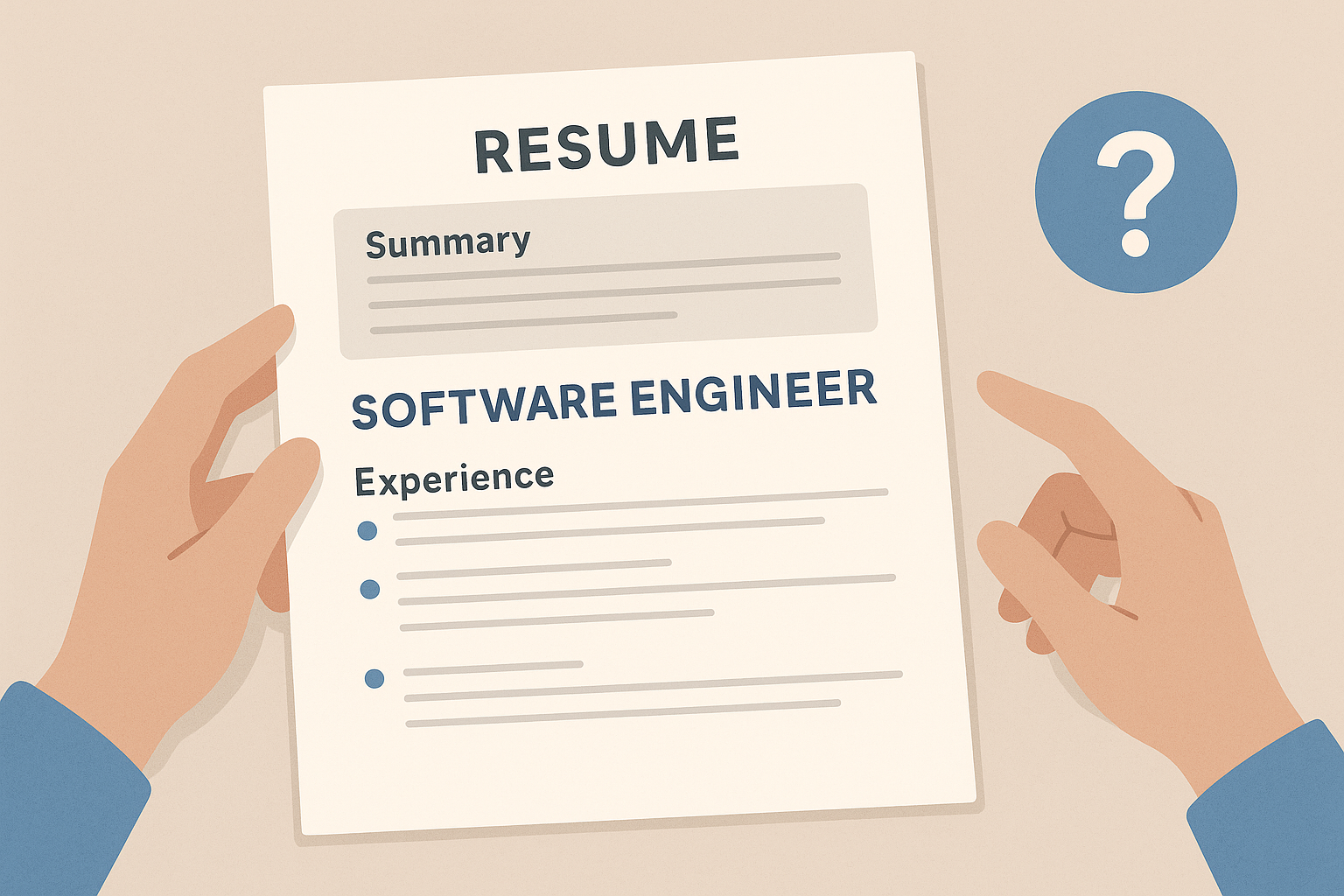
Sometimes yes, often no. A resume summary is useful only if it helps a recruiter understand your fit faster than your experience section already does. Harvard advises candidates to tailor the resume to the role they want and to write for readers and systems that scan quickly. MIT similarly recommends using the position description to decide what to include and making relevant information immediately visible.[1][2]

Contributing to Open Source: Why and How to Get Started

· 11 min read
Contributing to Open Source: Why and How to Get Started

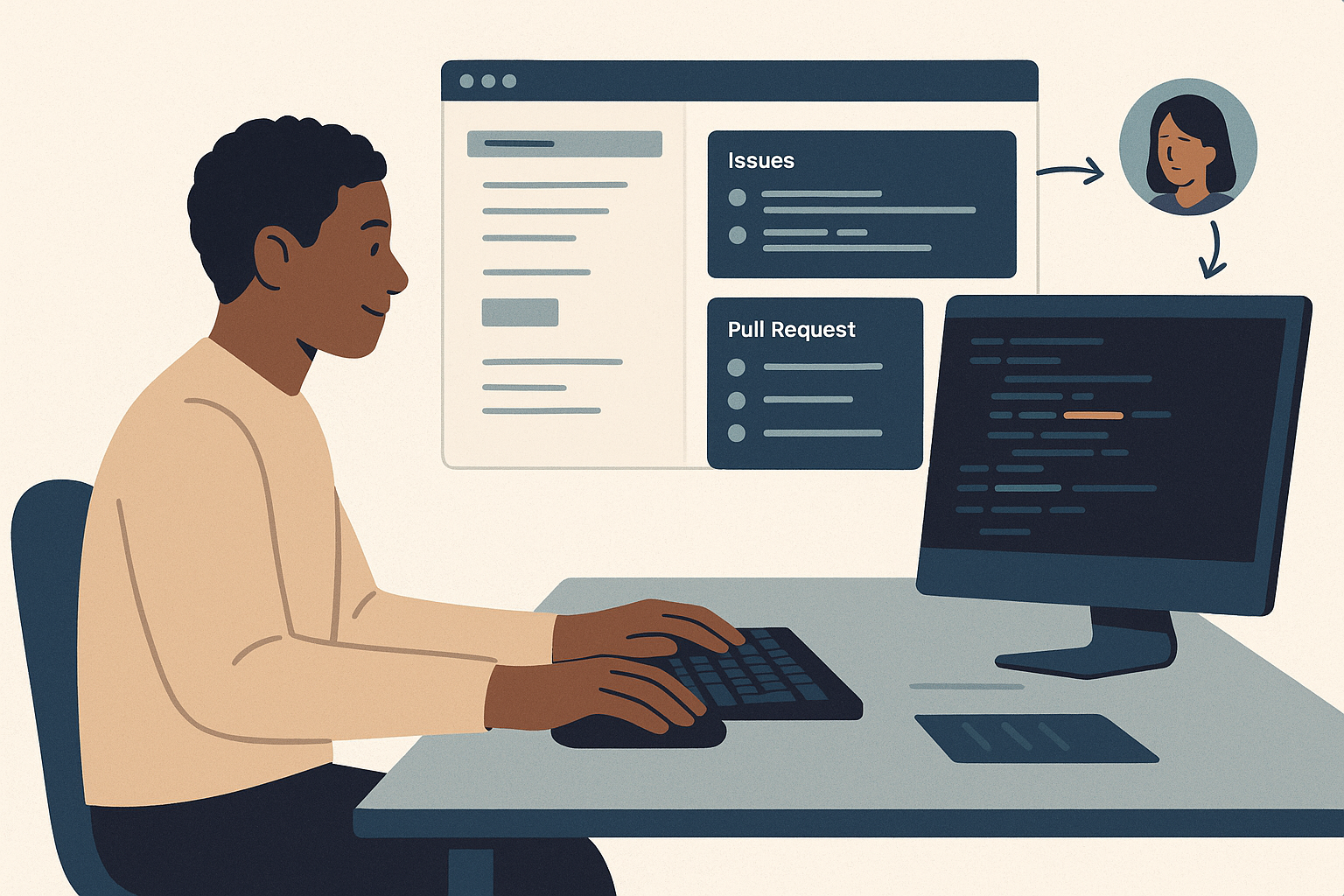
Open source can absolutely help your career, but not for the shallow reason people sometimes assume. Hiring managers are not automatically impressed because your GitHub profile shows activity or because you touched a well-known repository once. What matters is the evidence behind the contribution: you found your way into an unfamiliar codebase, respected project norms, collaborated in public, and shipped something useful. That is real professional signal.

Do You Need to Tailor Your Resume for Every Job?

· 7 min read
Do You Need to Tailor Your Resume for Every Job?

No, you probably do not need to rewrite your resume for every single job. But sending the exact same version to every company often leaves the match too vague. The goal is not constant rewriting. It is making sure a recruiter or hiring manager can see quickly why your background fits this kind of role. Harvard recommends tailoring your resume to the position you want, and MIT similarly advises using the position description to decide what to include so relevant information is immediately visible.[1][2]

What Anthropic's AI Labor Market Study Really Says, and What It Means for Your Resume

· 9 min read
What Anthropic's AI Labor Market Study Really Says, and What It Means for Your Resume

Anthropic's new report on AI and the labor market is one of the more useful pieces of evidence we have so far, partly because it is more careful than most hot takes. The paper does not claim that AI has already caused mass job loss. It claims something narrower: tasks that large language models can plausibly help with are showing up in real usage patterns, those patterns are concentrated in certain occupations, and the most exposed occupations also tend to line up with weaker long-run growth projections from the U.S. Bureau of Labor Statistics. That is worth paying attention to, but it is not the same as proof that AI is already replacing workers at scale.[1]

Making Data-Driven Career Moves: Using Industry Trends and Statistics

· 6 min read
Making Data-Driven Career Moves: Using Industry Trends and Statistics

Career decisions get worse when they are based only on mood, headlines, or one recruiter's opinion. In a noisy hiring market, the better move is to look for patterns: which roles are growing, what employers are paying, which skills keep showing up, and where your experience already overlaps with real demand. Data will not tell you exactly what job to take next, but it can help you avoid guessing.