Making 2026 Your Year in the Tech Job Market
Happy New Year! The start of 2026 isn't just a calendar change; it's a strategic moment for tech professionals to recalibrate, sharpen their tools and get ahead. The slowdown that followed the pandemic and the AI-driven restructurings of 2025 have reshaped the talent landscape. By preparing early - before panic hiring seasons begin - you can approach the market calmly, intentionally and with an edge.
How 2025 reset the market
The past year brought another wave of tech restructuring. A mid‑year surge in cost‑cutting and AI adoption saw more than 60,000 jobs cut between June and November 2025, with major restructurings at companies like Intel, Microsoft and Amazon. [1] These layoffs were often framed not as company distress but as strategic shifts to become leaner and to reinvest in AI‑centric operations. [2] Reuters reported that Amazon's October 2025 announcement planned to cut about 14,000 corporate employees - about 4% of its workforce - while hinting that reductions could climb to 30,000 as the company reduces bureaucracy and leans more heavily on artificial‑intelligence tools. [3] Employees were given 90 days to find internal roles before separation.
This reset widened the talent pool as experienced engineers and managers re‑entered the market. Rather than shrinking opportunity, it signals to candidates that companies are reorganizing around new priorities. Many of those displaced were tenured specialists whose skills remain valuable; the difference is that employers are being more selective. Viewing the 2025 cuts as a pause and recalibration - not a collapse - enables candidates to see the openings that will emerge as firms invest in growth areas.
Where competition will be high in 2026
A selective hiring environment doesn't mean there will be few jobs. It means the bar has been raised. Expect strong competition in:
-
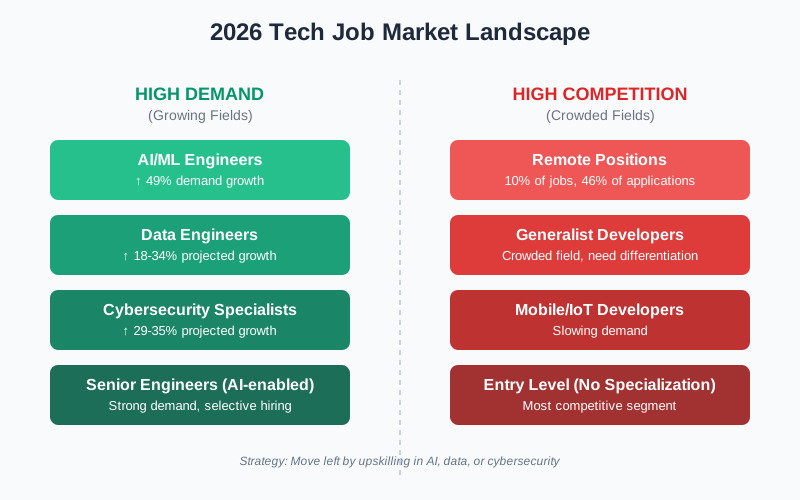
Senior engineering roles and engineering leadership. Employers are looking for specialists who can architect AI‑enabled systems and mentor leaner teams. Industry analyses show that by 2025 there were three engineering jobs for every qualified candidate, yet hiring cycles for mid‑ and senior‑level roles grew longer as employers waited for the right fit. [4] This signals that openings exist, but only candidates who convey relevance and depth will make it through.
-
Data and AI roles. Growth in AI and data positions remains brisk. Built In reported that demand for AI specialists rose 49% in 2025, with companies investing in machine‑learning engineers, data engineers and AI product managers while demand for generalist mobile and IoT developers slowed. [5] Nucamp forecasted that AI/data roles will grow 18–34% and cybersecurity jobs 29–35%, with nearly half a million open positions. [6] The takeaway: specialists in data, machine learning, cybersecurity and cloud infrastructure will see abundant opportunities but will also face a high bar on expertise.
-
Remote‑first positions. Flexible roles continue to be highly sought but scarce. A 2024 LinkedIn analysis found that only about 10% of U.S. job postings were fully remote, yet they attracted 46% of all applications. [7] Deliberate Directions' 2025 hiring guide noted that remote roles make up roughly 20% of postings yet attract about 60% of applications, creating intense competition for flexible positions. [8] Robert Half's Q3 2025 data showed that just 12% of new job postings were fully remote while 24% were hybrid. [9] Expect remote openings in 2026 to draw applicants worldwide; to stand out, candidates must demonstrate exceptional communication and self‑management skills and readiness to collaborate across time zones.
-
Generalist roles. Broad engineering or IT positions still exist but are increasingly crowded. Refactor's 2026 outlook notes that the market is selective and divides between AI specialists and AI‑enabled professionals; generalist roles receive the most applicants, so candidates must show up‑to‑date skills and clear impact. [4]
Competition in these categories is not a sign of scarcity but of employers raising expectations. With the right preparation - upskilling, targeted resumes and clarity on value - candidates can thrive. To understand what hiring managers actually prioritize, read our guide on what tech recruiters really look for.
 Understanding where demand is growing versus where competition is most intense
Why getting past the first filter matters
In today's hiring process, reaching a human reviewer is half the battle. The University of North Carolina at Charlotte points out that by 2025 more than 98% of Fortune 500 companies and a growing number of small and mid‑sized firms use Applicant Tracking Systems (ATS) to scan, filter and rank resumes before anyone reads them. [10] These systems rely on keywords, structure and algorithms; they reward clarity and penalize tables, graphics or creative job titles. Multiple studies show that over 90% of employers use automated systems for initial screening and that about 88% of companies use AI to filter candidates. [11]
Even once a resume reaches a recruiter, time is short. The résumé‑advice site StandOut CV reports that recruiters spend only 6–8 seconds on an initial scan and that roughly 80% of resumes are not shortlisted. [12] This may sound harsh, but it's an opportunity: a concise, well‑structured resume that mirrors the language of the job description and showcases measurable achievements will immediately stand out. Candidates who adapt their resumes for ATS and recruiter triage early in their search will clear the first hurdle while others fall away. Learn more about creating ATS-friendly resumes that pass automated filters.
 The journey from 100 applications to 2 interviews: understanding the ATS filter
Lessons from late‑year Amazon layoffs
The late‑2025 Amazon layoffs reinforced that even highly tenured professionals are not immune to restructuring. Reuters noted that Amazon planned to cut about 14,000 corporate roles (roughly 4% of its workforce) as part of an effort to reduce bureaucracy and adopt AI‐driven processes. [3] Internal memos gave employees 90 days to find new roles. Anecdotally, many engineers with 15 + years of experience were affected - professionals with strong credentials, leadership experience and domain knowledge. Their situation highlights an important truth: past tenure doesn't guarantee future interviews. Even seasoned engineers need modern resumes that speak to today's hiring systems and emphasize current skills, outcomes and adaptability. Updating your résumé is a solvable problem; ignoring it is not.
Adopt an early‑bird mindset
With the competitive landscape mapped, the biggest differentiator is timing. Candidates who modernize their resumes and sharpen their narrative early in the year gain a meaningful advantage. By aligning your résumé with ATS requirements, refreshing skills in AI, data or cybersecurity and clarifying the impact of your past work now - before urgency sets in - you'll be ready when attractive roles appear. This preparation also reduces stress: instead of scrambling to update materials when a dream job is posted, you can focus on customizing and networking.
Early action also offers psychological benefits. Starting your search in January allows space to reflect on your strengths, update your portfolio, and reconnect with mentors and peers. Employers notice candidates who engage proactively rather than reactively. In a market where first impressions are often made by algorithms, a polished resume and a clear sense of direction can carry you into interview rounds ahead of the crowd.
 Early preparation versus last-minute panic: the timeline comparison
Moving forward: making 2026 your year
The tech job market of 2026 is shaping up to be selective yet rich with opportunity. Companies are investing heavily in AI, data and cybersecurity while trimming roles that aren't aligned with these priorities. Remote and hybrid work remain popular but intensely competitive, and senior engineering and leadership roles demand clear evidence of impact. By understanding these dynamics, embracing modern résumé practices, and preparing early, you position yourself not just to survive but to thrive.
Remember, 2026 can be your year - not by chasing quick fixes, but by aligning your experience with today's hiring reality. Treat the New Year as your runway: invest in learning, refine your narrative, and approach the market with confidence. The candidates who prepare deliberately will be the ones who seize the opportunities emerging from the post‑2025 reset. To streamline your application process, learn how to efficiently tailor your resume with AI for each role you target.
Ready to optimize your resume for 2026? Try CoreCV.ai to build ATS-friendly, impact-focused resumes with AI-powered tailoring - so you can approach the market with confidence and clarity.
Sources
This article draws insights from multiple industry sources and research studies:
- 1. TechCrunch: Tech Layoffs 2025 List: https://techcrunch.com/2025/12/22/tech-layoffs-2025-list/
- 2. InformationWeek: Tech Company Layoffs - The COVID Tech Bubble Bursts: https://www.informationweek.com/it-leadership/tech-company-layoffs-the-covid-tech-bubble-bursts-sep-14
- 3. Reuters: Amazon to Lay Off About 14,000 Roles: https://www.reuters.com/sustainability/amazon-lay-off-about-14000-roles-2025-10-28/
- 4. Refactor Talent: 2026 Tech Job Market Outlook: https://refactortalent.com/2026-tech-job-market-outlook/
- 5. Built In: 5 Tech Work Trends 2026: https://builtin.com/articles/5-tech-work-trends-2026
- 6. Nucamp: Most In-Demand Tech Jobs in 2026: https://www.nucamp.co/blog/most-in-demand-tech-jobs-in-2026-roles-hiring-fast-why
- 7. Forbes: Fully Remote Jobs Are Getting Harder to Find: https://www.forbes.com/sites/lindsaykohler/2024/04/02/fully-remote-jobs-are-getting-harder-to-find/
- 8. Deliberate Directions: Remote Hiring Trends: https://deliberatedirections.com/remote-hiring-trends/
- 9. Robert Half: Remote Work Statistics and Trends: https://www.roberthalf.com/us/en/insights/research/remote-work-statistics-and-trends
- 10. UNC Charlotte Career Center: ATS and Guide to Resumes 2025: https://career.charlotte.edu/blog/ats-and-guide-resumes-2025
- 11. World Economic Forum: AI Hiring and the Human Touch in Recruitment: https://www.weforum.org/stories/2025/03/ai-hiring-human-touch-recruitment/
- 12. StandOut CV: How Long Recruiters Spend Looking at Your Resume: https://standout-cv.com/usa/stats-usa/how-long-recruiters-spend-looking-at-resume---
Disclosure: This article is authored by the CoreCV team. While we mention CoreCV.ai, the strategies and advice presented apply to any modern job search approach. We've focused on providing actionable insights based on industry research and hiring trends.