13 posts tagged with "resume-tips"

View All Tags

From Job Description to Resume Wins: A Practical Breakdown

· 9 min read
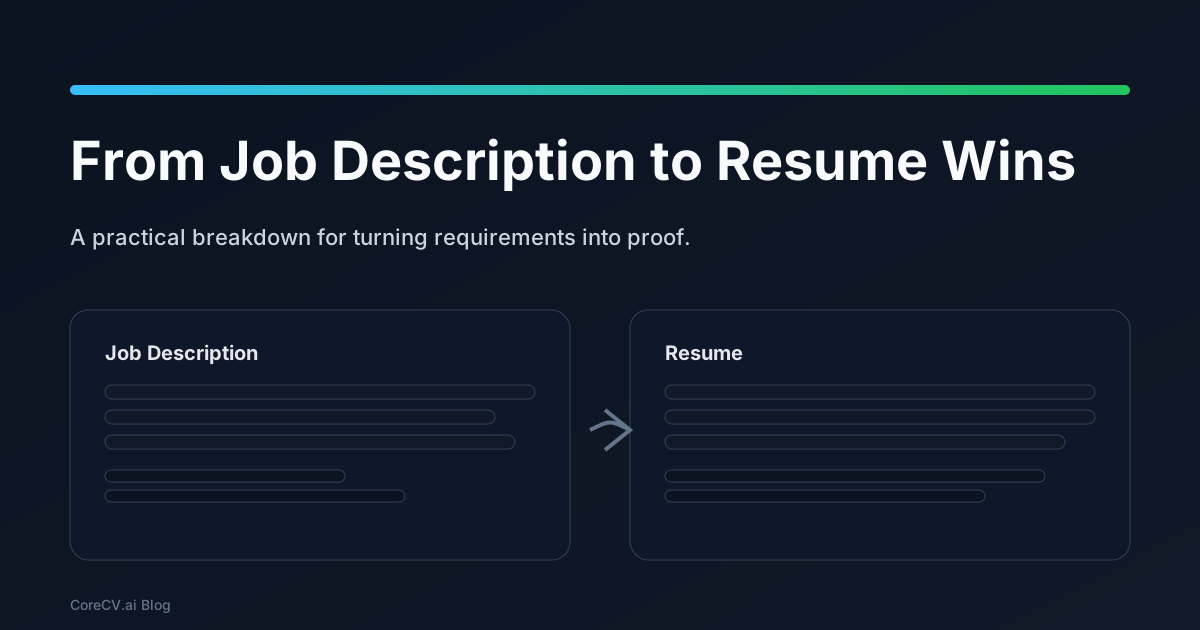
From Job Description to Resume Wins: A Practical Breakdown

Job descriptions are messy. They are written by committees, copied from older roles, padded with nice-to-haves, and optimized for internal alignment instead of candidate clarity. Then candidates try to mirror every line back and wonder why their resume still does not convert.

The better approach is to treat the job description as an input to a small translation process. Your goal is not to match the post word-for-word. Your goal is to extract what the team will evaluate, then surface the strongest proof you already have.
The Resume Stack: How to Organize Multiple Versions

· 10 min read
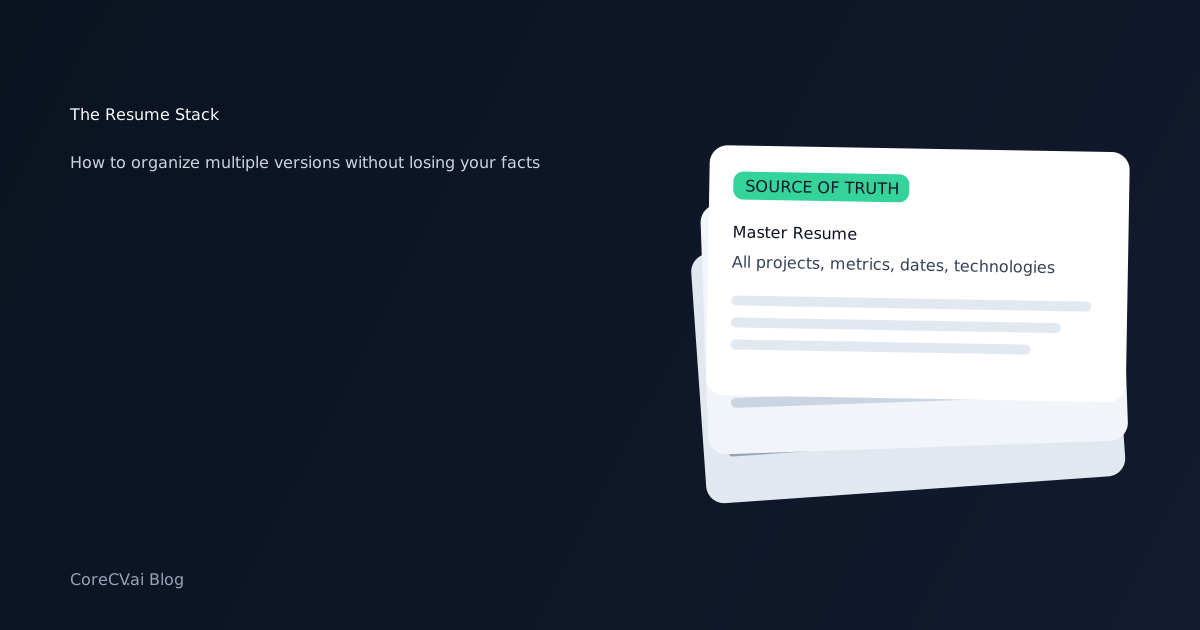
The Resume Stack: How to Organize Multiple Versions

Most engineers don't fail because they're unqualified. They fail because the resume they sent didn't match the role that was hiring.

That mismatch is rarely dramatic. It's usually small, avoidable drift.

You apply to a backend role, but the resume you used last week leans full-stack. You swap a couple bullets, forget to update a date, and now you have two "truths" floating around. Two weeks later a recruiter replies and asks for the same resume again. You can't remember which file you sent.

Recruiters and hiring managers scan fast. If the first screen doesn't make the match obvious, you lose the opportunity before anyone gets to the interesting parts. Multiple sources put that first pass in seconds, not minutes [1], [2].

The fix isn't "write one perfect resume." The fix is to build a small system: a resume stack.

Design Your Resume Like a Product: UX Principles for Job Seekers

· 7 min read
Design Your Resume Like a Product: UX Principles for Job Seekers

A resume is not just a work-history document. It is an interface.

The user is a hiring manager or recruiter with limited time, high volume, and a fast yes/no decision loop. Tufts Career Center notes that recruiters may spend only about 6 to 8 seconds on an initial resume pass, often while managing many openings and large applicant volume. [1] If your strongest evidence is buried, you lose before your experience is evaluated.

Treat your resume the way product teams treat high-stakes screens: design for the real user, under real constraints.

Your Resume Is a Living Document - Update It Like Engineers Maintain Code

· 13 min read
Your Resume Is a Living Document - Update It Like Engineers Maintain Code

Software engineers understand continuous integration, version control, and incremental updates. Yet many treat their resume as something that only gets attention during active job searches. Research shows this habit leaves accomplishments undocumented and resumes outdated. BioSpace emphasizes that a resume should be a "living, breathing document" representing ongoing growth, and failing to update it regularly means forgetting details of key projects, skills, and results. [1] Monster career experts note that 40% of workers shelve their resumes once comfortably employed, even though regular updates help you remain visible to recruiters and seize unexpected opportunities. [2] This article explains how to apply engineering principles to resume maintenance through incremental updates, source control thinking, and systematic documentation.

Turning Side Projects Into Resume Gold - A Practical Guide for Developers

· 9 min read
Turning Side Projects Into Resume Gold - A Practical Guide for Developers

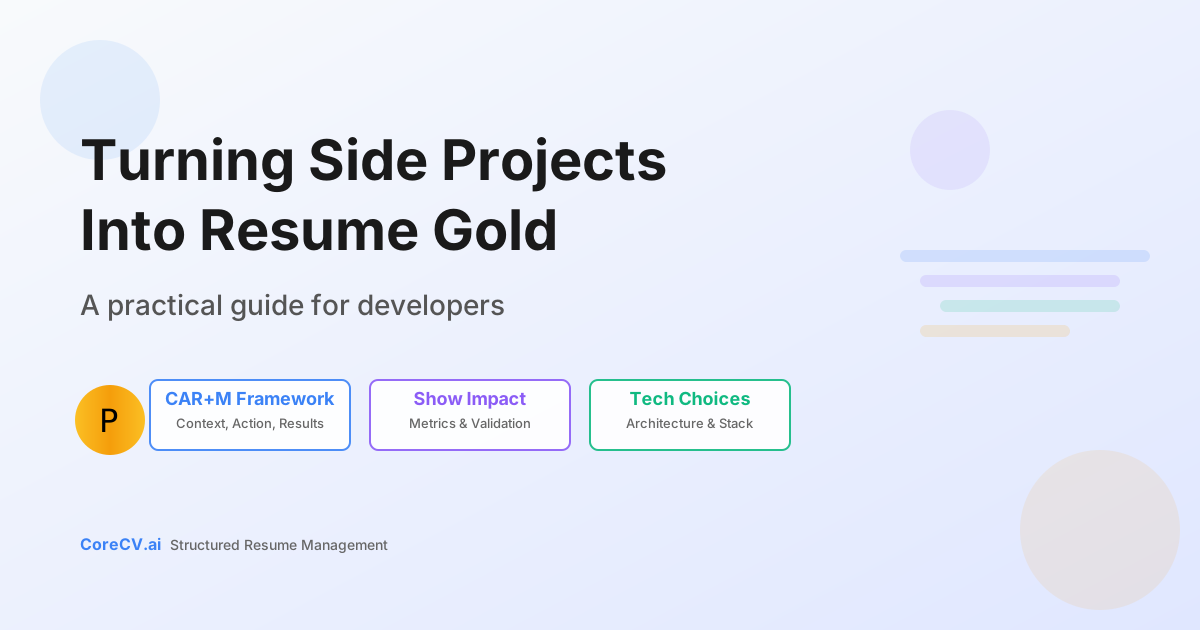
Software engineers often build small apps or tools in their spare time. Many of these side projects start as experiments or learning exercises, but with the right framing they can become powerful evidence of initiative, problem-solving and technical skill on a resume. Research shows that recruiters increasingly prioritize evidence of self-driven learning, with many ranking well-executed side projects above formal education when evaluating tech talent. [1] This article explains how to transform an informal or personal side project into a credible resume entry by focusing on scope, technologies, outcomes and framing rather than lines of code.

Design vs. Content: What Matters Most in a Tech Resume

· 12 min read
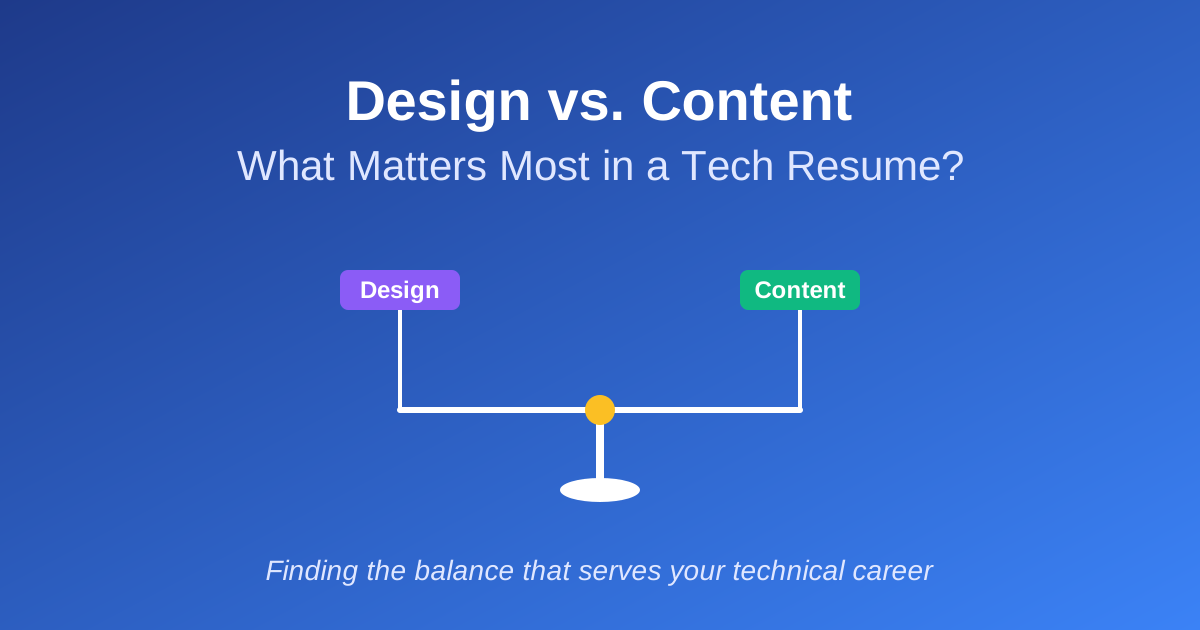
Design vs. Content: What Matters Most in a Tech Resume

The debate over resume design versus content often devolves into false binaries: either you need a visually stunning resume to stand out, or design is completely irrelevant and only content matters. Both extremes miss the point. The real question isn't whether design matters - it's what kind of design serves your content, and when design choices actively work against you.

For tech professionals, this distinction is critical. Your resume needs to communicate technical depth, project complexity, and problem-solving ability. Design can either facilitate that communication or obstruct it. Understanding where design helps, where it hurts, and how to apply structural principles that enhance readability will determine whether your resume works for you or against you.

Showcasing Your GitHub: How to Highlight Projects on Your Resume

· 11 min read
Showcasing Your GitHub: How to Highlight Projects on Your Resume

You've spent months building side projects, contributing to open-source, and polishing your GitHub profile. Your repositories demonstrate real skills - architectural decisions, code quality, problem-solving under constraints. Yet when it comes to your resume, most developers reduce this work to a single line: "GitHub: github.com/username." That's the equivalent of listing "Has code" as a skill. It tells hiring managers almost nothing.

The gap between having impressive projects and effectively communicating their value is where strong candidates become invisible. A GitHub link alone doesn't convey impact, complexity, or the depth of your technical judgment. Hiring managers won't dig through your repositories to figure out what you've built. You need to do that work for them - on your resume, in a format they can quickly evaluate.

One Page or Two? The Real Answer for Tech Professionals

· 18 min read
One Page or Two? The Real Answer for Tech Professionals

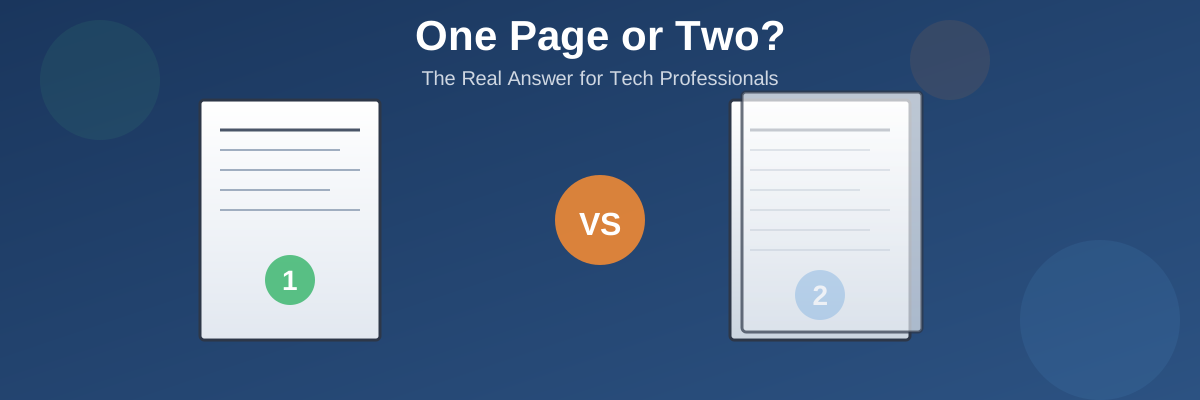
"Keep it to one page." It's the advice every job seeker has heard, repeated so often it's become gospel. But for tech professionals with complex project histories, diverse tech stacks, and years of experience, this rule can feel like trying to compress a production codebase into a single file. At some point, enforced brevity becomes a liability, not an asset.

The truth? Resume length isn't a binary choice. The real answer depends on relevance, structure, and what the role actually demands. Let's break down when one page works, when two pages are justified, and how to make the decision based on data rather than outdated conventions.

Resume Privacy 101 - Sharing Your CV Securely

· 12 min read
Resume Privacy 101 - Sharing Your CV Securely

You secure your code repositories with authentication. You encrypt sensitive data in transit. You follow the principle of least privilege in your infrastructure. Yet when it comes to your resume - a document containing your name, contact information, employment history, and professional network - many tech professionals upload it to public job boards without a second thought. This disconnect between professional security practices and personal data protection is a gap worth closing.

In 2026, your resume is more than a career document. It's a data asset that can be scraped by AI systems, harvested by data brokers, weaponized for phishing, or used to track your job search without your knowledge. Understanding resume privacy isn't paranoia; it's applying the same security mindset you use at work to your career data.

Making 2026 Your Year in the Tech Job Market

· 10 min read
Making 2026 Your Year in the Tech Job Market

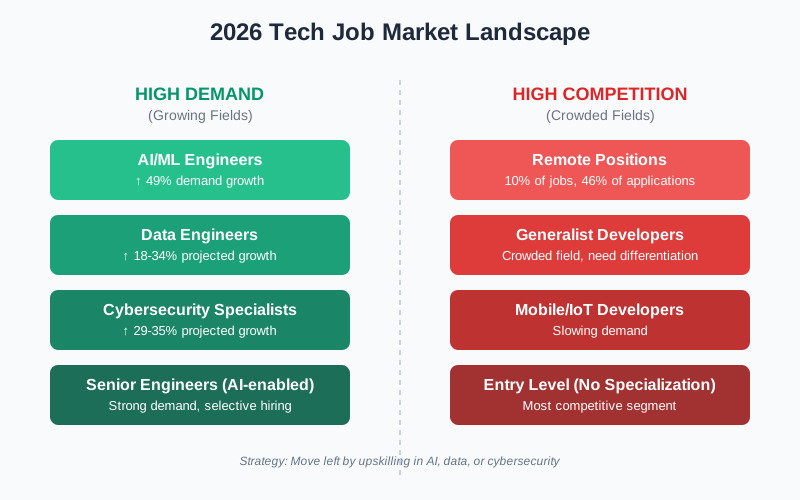
Happy New Year! The start of 2026 isn't just a calendar change; it's a strategic moment for tech professionals to recalibrate, sharpen their tools and get ahead. The slowdown that followed the pandemic and the AI-driven restructurings of 2025 have reshaped the talent landscape. By preparing early - before panic hiring seasons begin - you can approach the market calmly, intentionally and with an edge.