18 posts tagged with "job-search"

View All Tags

Negotiating Tech Job Offers: Compensation, Equity, and Remote Work

· 7 min read
Negotiating Tech Job Offers: Compensation, Equity, and Remote Work

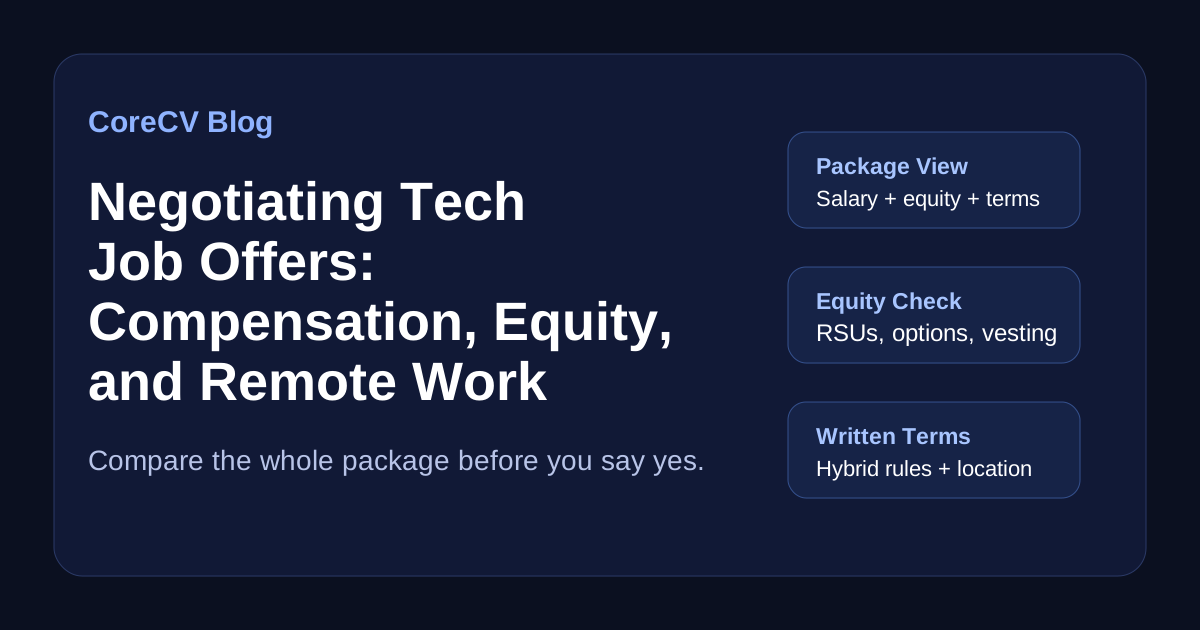
A strong tech offer is rarely just a salary decision. It is a bundle of cash, equity, work arrangement, level, and expectations - and one weak piece can quietly erase the value of a strong-looking number. Good negotiation starts when you stop asking "Can I get more?" and start asking "What exactly am I being asked to trade off?"
Prepping for Tech Interviews: System Design vs. Coding Challenges

· 6 min read
Prepping for Tech Interviews: System Design vs. Coding Challenges

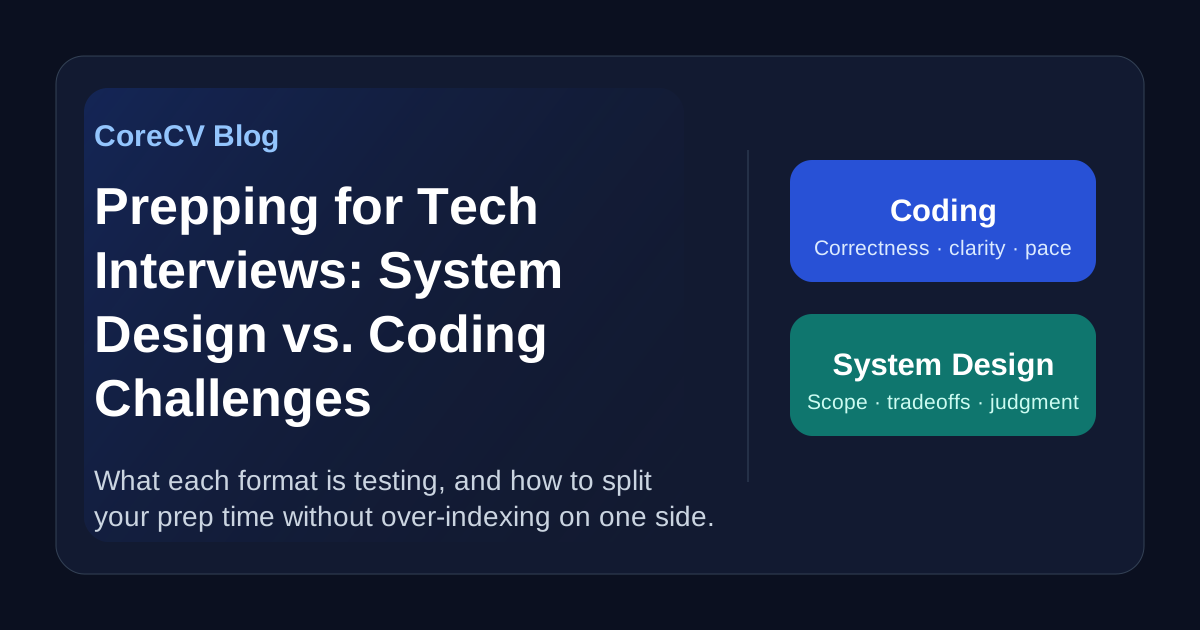
A lot of interview prep goes sideways for one simple reason: candidates often train for whatever feels familiar. Strong builders may over-focus on system design because it sounds like real work. LeetCode-heavy candidates may over-focus on coding rounds because they are easier to schedule and score. In many interview loops, those formats are separated because they are looking for different evidence, and your prep is usually stronger when it reflects that.

Using AI Beyond Resumes: Smart Job Search Tools and Tactics

· 10 min read
Using AI Beyond Resumes: Smart Job Search Tools and Tactics

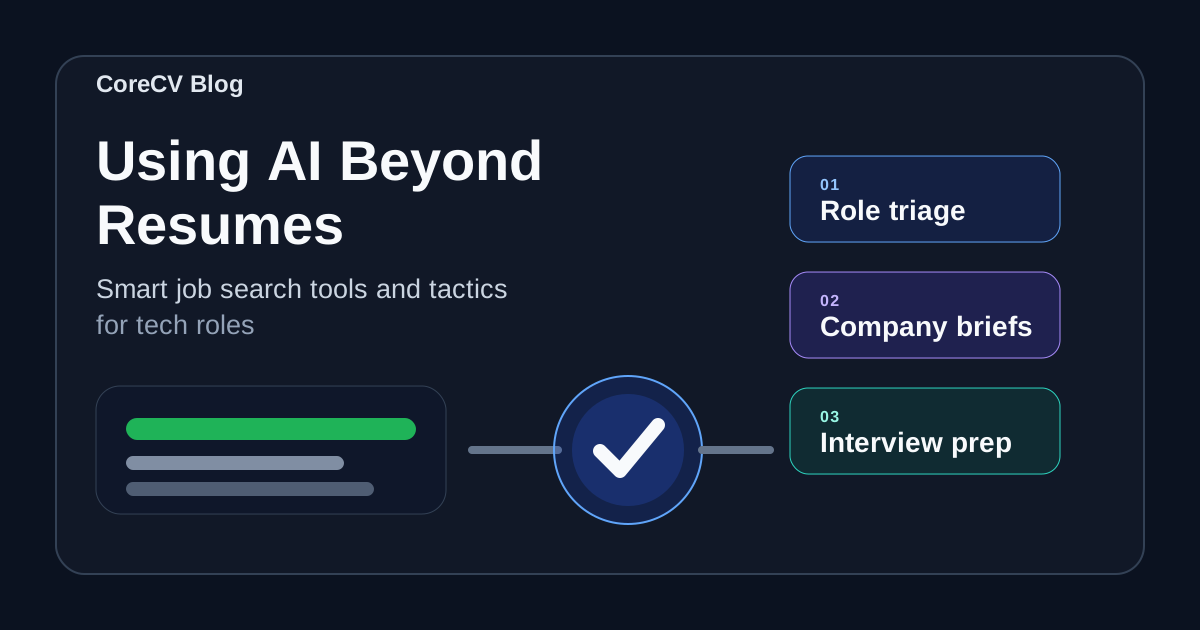
Most advice about AI in hiring stops at resume tailoring. That is still useful, but it is not where the biggest gain is in this market. When openings are tighter, screens are heavier, and too many candidates are sending fast low-signal applications, the real value of AI is triage: deciding which roles deserve effort, where your evidence is actually strong, what needs to be verified, and how to prepare for a slower, more skeptical process.

Optimizing Your LinkedIn Profile for Tech Recruiters

· 7 min read
Optimizing Your LinkedIn Profile for Tech Recruiters

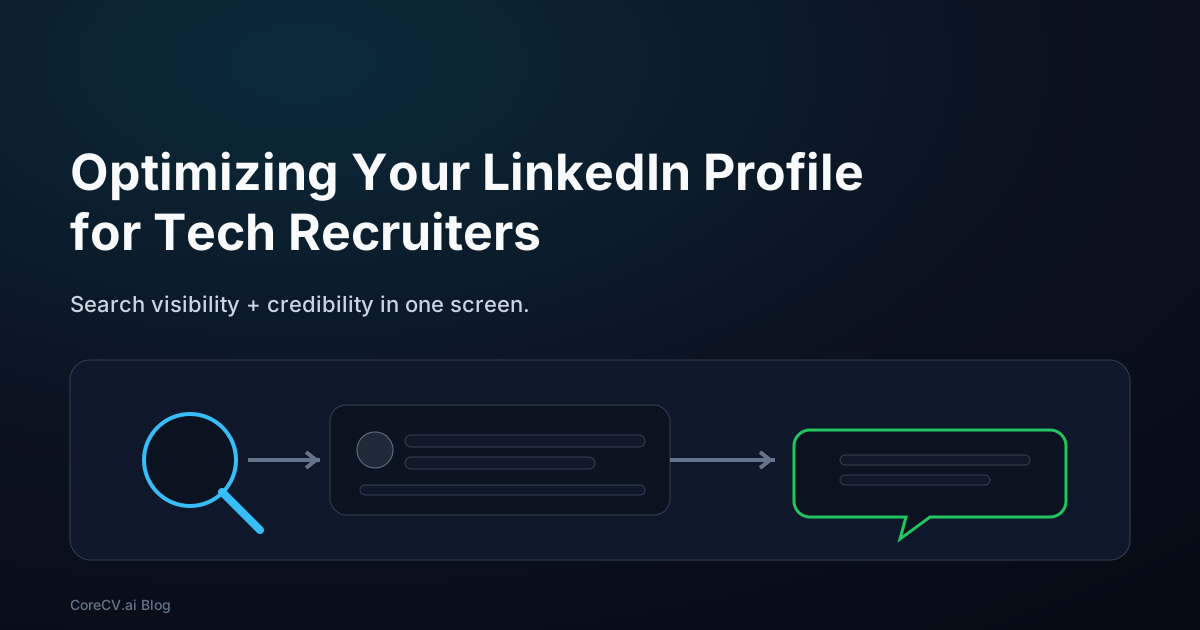
LinkedIn is not your resume. It is closer to a searchable database plus a landing page.

If you treat it like a copy-paste job, you end up with the worst of both worlds: a profile that is too long to scan, too vague to trust, and still missing the keywords recruiters search for.

This guide shows a practical way to fix that: make it easier for a recruiter to find you in search, then make the first screen credible enough that a hiring manager believes you.

Building a Standout Portfolio Website for Tech Professionals

· 10 min read
Building a Standout Portfolio Website for Tech Professionals

A portfolio website is not a vanity project. It is your chance to control what a skeptical reviewer sees when they click your name.

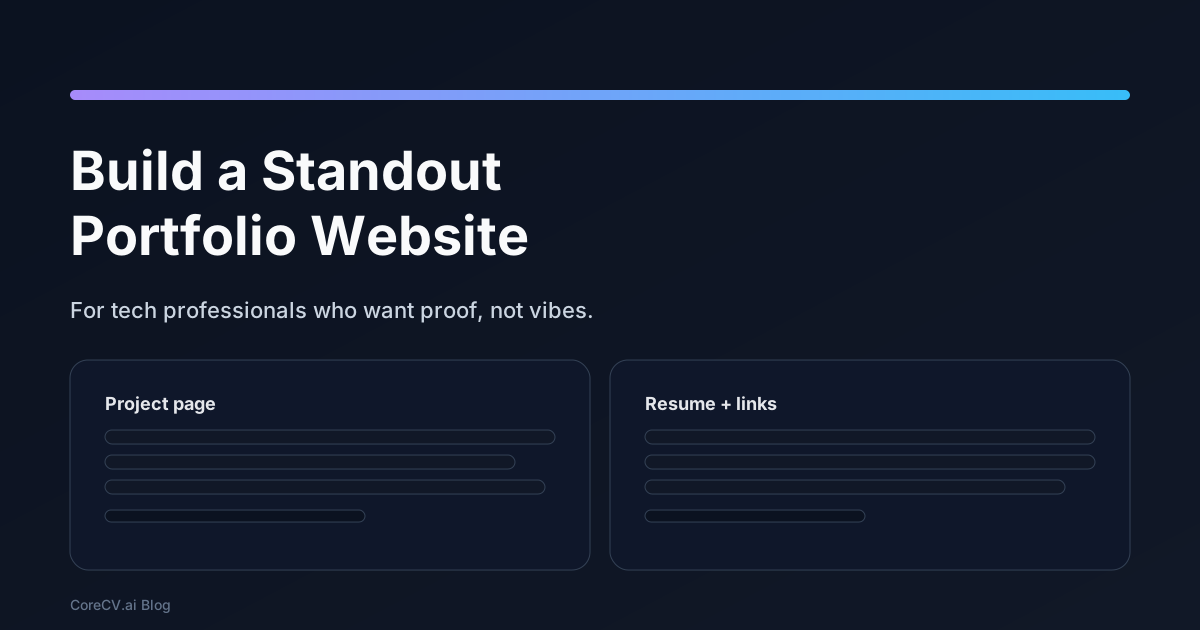
Your resume is the summary. Your site is the proof. When it works, a hiring manager can skim one project page and come away with three things: what you built, what constraints you operated under, and what changed because you were there.

Most engineers miss this and end up shipping a site that looks like a template gallery. The typography is nice, the animations are smooth, and the content says almost nothing. This post is a safer path: a structure you can ship in a weekend, plus the details that make it feel credible.

From Job Description to Resume Wins: A Practical Breakdown

· 9 min read
From Job Description to Resume Wins: A Practical Breakdown

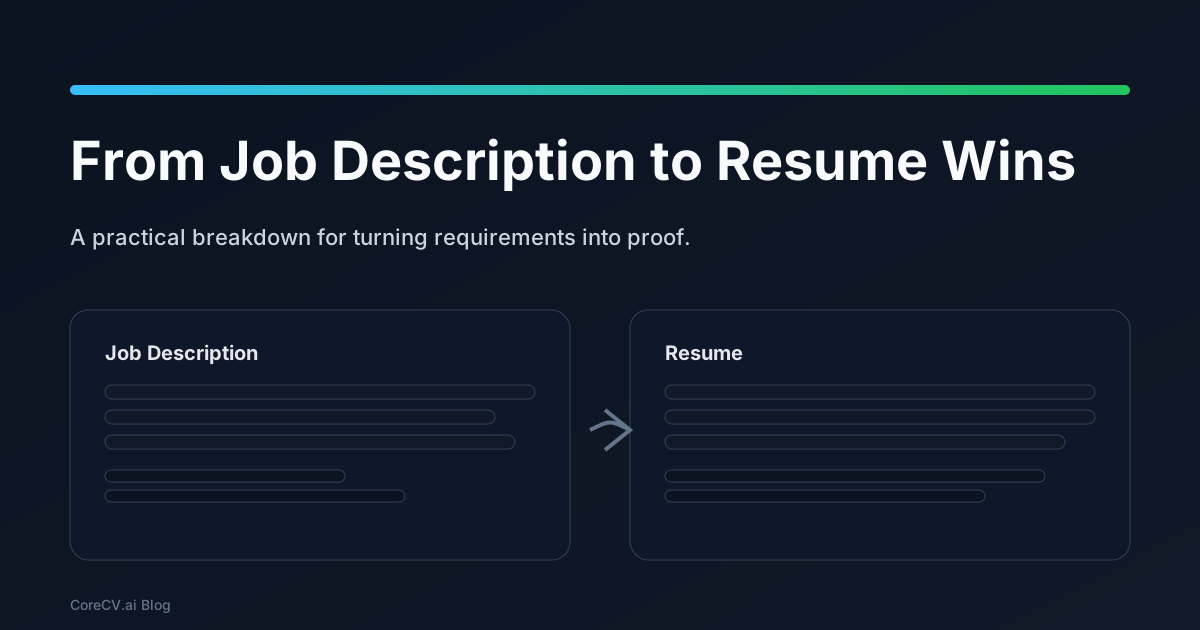
Job descriptions are messy. They are written by committees, copied from older roles, padded with nice-to-haves, and optimized for internal alignment instead of candidate clarity. Then candidates try to mirror every line back and wonder why their resume still does not convert.

The better approach is to treat the job description as an input to a small translation process. Your goal is not to match the post word-for-word. Your goal is to extract what the team will evaluate, then surface the strongest proof you already have.

The Hidden Cost of 'Pretty' Resume Templates

· 8 min read
The Hidden Cost of 'Pretty' Resume Templates

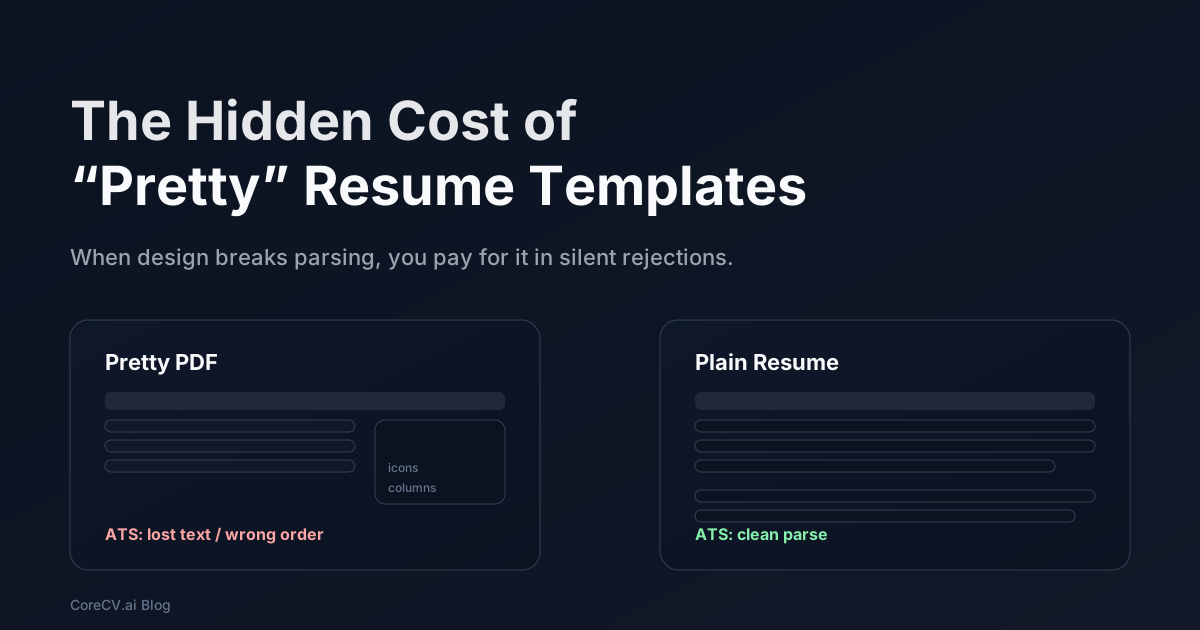
A "pretty" resume template feels like a shortcut. Paste your experience into a modern two-column layout, add a skills sidebar with icons, export a clean PDF, and you are done.

The hidden cost is that many hiring pipelines never see your resume the way you do. They parse it, guess a reading order, index whatever text survived, and only then does a recruiter scan it quickly. If the design breaks that chain, you do not get an error message. You just get silence.

No CS Degree? Build a Resume That Highlights What Matters

· 8 min read
No CS Degree? Build a Resume That Highlights What Matters

A CS degree is a strong signal. Some teams still treat it like a hard gate.

But hiring is not a philosophical debate about credentials. It's a fast filter for risk.

If you don't have the degree, your job is to replace that missing signal with better ones: scoped work, measurable outcomes, and evidence that you can operate like a professional engineer.

Also, don't sugarcoat reality. The U.S. Bureau of Labor Statistics still lists a bachelor's degree as the typical entry-level education for software developers [1]. If you're targeting companies that enforce that, a perfect resume won't change the policy.

Your goal is to win everywhere the degree is not a hard requirement, and to make "no degree" feel like a detail instead of the headline.