Which AI Skills Actually Help You Get Hired in 2026
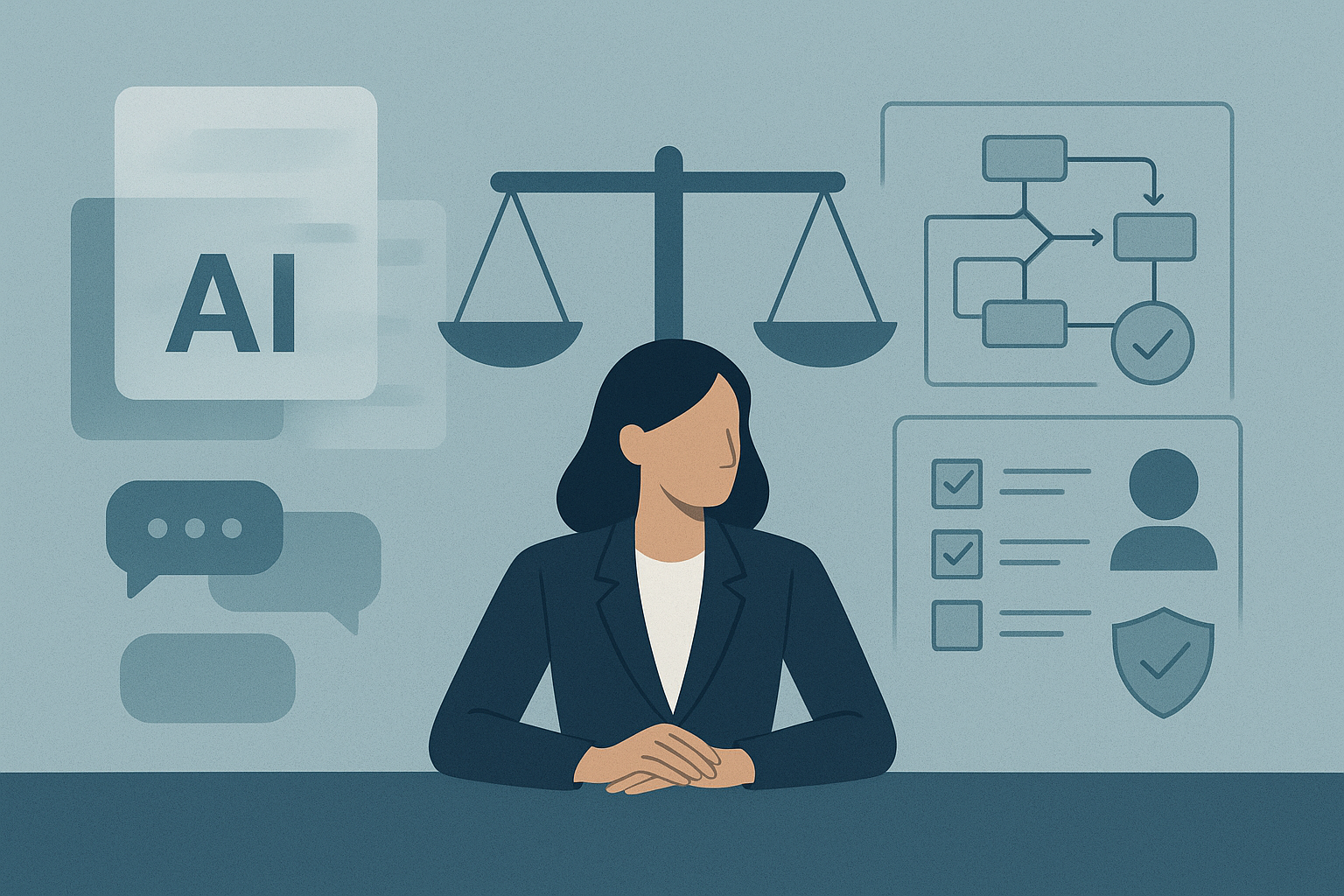
The most useful question for a job seeker in 2026 is no longer "Which AI tool should you learn next?" It is "What kind of AI-related work will another person actually trust you to do?"
That sounds like a small wording change, but it leads to a much better career strategy. Access to AI tools is spreading quickly. OpenAI's recent B2B Signals write-up argues that the frontier gap is no longer just about who has access, but about how deeply companies use AI in real workflows and delegated work.[1] Anthropic's engineering posts on agents, evals, and managed systems point in a similar direction: as models get more capable, the hard part increasingly becomes workflow design, verification, recovery, visibility, and safe execution.[2][3][4] OpenAI's developer case studies say much the same in product language: the interesting systems are not clever one-shot prompts, but architectures with context building, monitoring, orchestration, and review loops.[5][6]
If you zoom out, that creates a very practical hiring read. A lot of candidates will be able to say they use AI. Fewer will be able to show that they can make AI-assisted work reliable, reviewable, and safe enough to matter in a real team. That is the gap worth aiming at.
So when people ask which AI skills actually help you get hired in 2026, our best answer is this: the strongest signals are no longer just tool fluency. They are task framing, workflow design, verification, guardrails, and the ability to explain tradeoffs clearly.
The real shift: access is becoming normal, trusted use stands out
This is the part many readers feel intuitively but have trouble naming.
Two years ago, simply being early with AI tools could sound impressive. Now that signal is weakening. We should be careful not to overstate this into a neat universal rule, because adoption still varies a lot by company, team, and function. Anthropic's labor-market research shows meaningful exposure to AI assistance across knowledge work, especially in computer and math-heavy occupations, but it does not say every exposed role is being transformed at the same speed, or that usage has fully saturated hiring markets.[7] Still, the direction is clear enough to matter: generic AI familiarity is getting easier to claim, so employers need stronger filters.
The strongest current filter is trust.
Can you use AI in a way that holds up under review? Can you keep quality from drifting? Can you explain what the model did, what you checked, and where human judgment still mattered? Those questions fit the way frontier product teams are actually building. Anthropic's managed-agent work emphasizes durable interfaces, recoverability, security boundaries, and separation between the brain, the tools, and the execution environment.[4] OpenAI's write-up on running Codex safely focuses on bounded execution, approval policies, telemetry, and explicit review for higher-risk actions.[8] GitHub's Copilot guidance keeps returning to the same professional baseline: generated output still needs review, validation, testing, and secure coding practices.[9]
That is why generic claims about AI use are becoming thin stories on their own. The stronger story is knowing how to get value from AI without asking a team to suspend its standards.
A simple test for whether an AI skill is real hiring signal
Here is a simple way to judge whether an AI skill is real hiring signal.
When you look at an AI project, resume bullet, side project, or interview story, run it through this 4-part test:
- Can you frame the task clearly?
- Can you design the workflow?
- Can you verify the output?
- Can you explain the tradeoffs and guardrails?
If your story fails two or more of those tests, it is probably weak hiring evidence.
That sounds simple, but it cuts through a lot of noise.
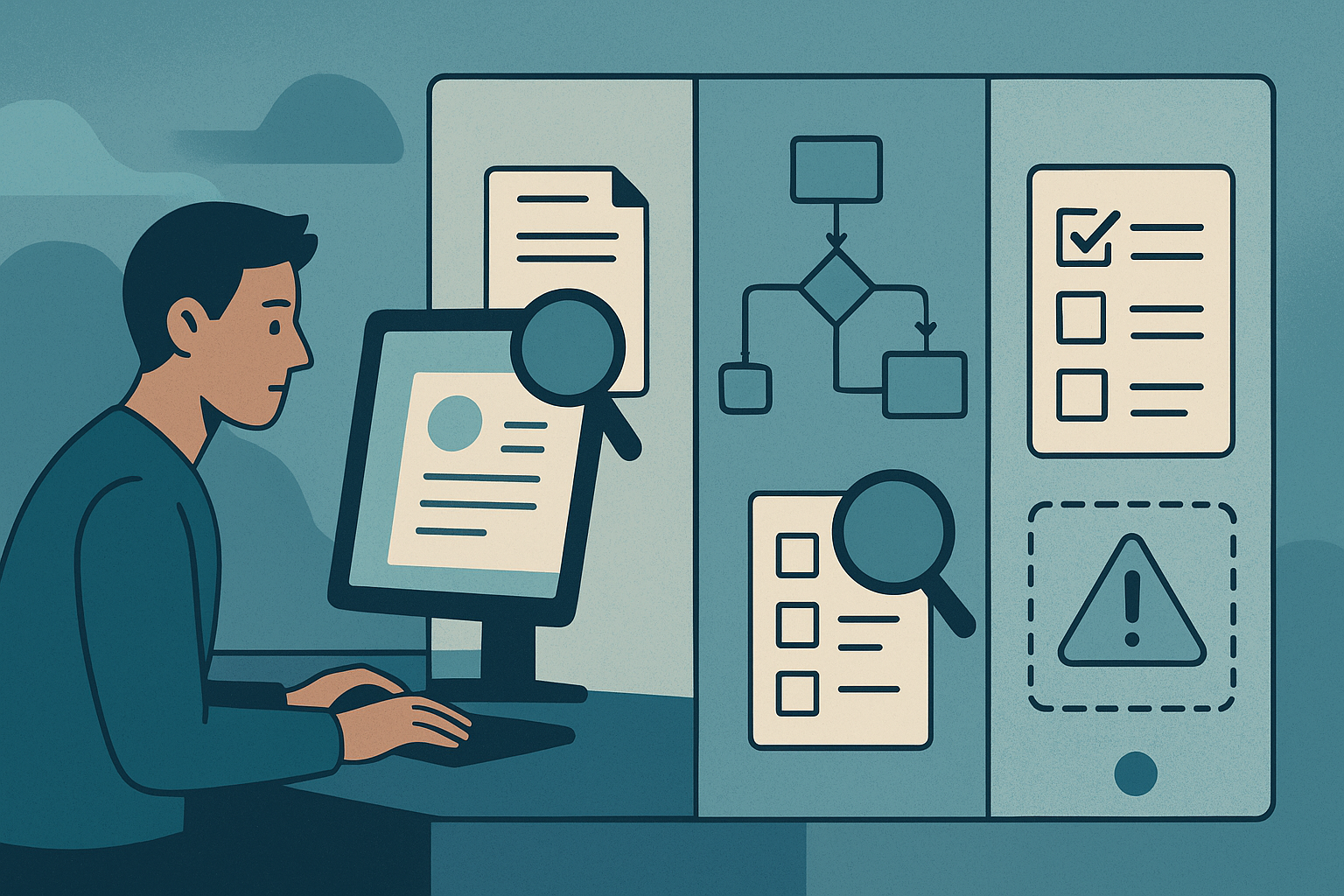
A candidate who says, "Used ChatGPT and Copilot to move faster," may be telling the truth. But as hiring evidence, that statement usually fails the test. The task is vague. The workflow is missing. Verification is invisible. Tradeoffs are unspoken.
Now compare that with a stronger version: "Built an AI-assisted incident-summary workflow that drafted first-pass reports from logs, then required deterministic checks for timestamps and service IDs before human review. That cut turnaround time for internal summaries while keeping the final sign-off manual." That is not perfect copy for every situation, but it passes the test much better. The task is clear. The workflow is visible. Verification exists. Human ownership is explicit.
This is the real distinction between AI use and AI employability.
Which skills are actually rising
Once you use that filter, the market starts to look much less chaotic.
1. Problem framing and decomposition
This is the ability to decide what part of a messy task should be delegated, what part should be structured, and what part should stay fully human.
Anthropic's agent guidance strongly favors simple workflows over autonomy theater when a task can be broken into reliable steps.[2] OpenAI's long-running product examples also show that useful systems often separate context gathering, reasoning, execution, and review rather than pretending one magic prompt should do everything.[5]
In hiring terms, this matters because it reveals judgment. Teams benefit from people who know when AI should draft, when it should classify, when it should search, when it should summarize, and when it should back off.
2. Workflow design
Workflow design is where a lot of real value is hiding.
It includes questions like:
- what context the model needs before it starts
- what tool or data boundary it should stay inside
- where a human checkpoint belongs
- what artifacts should be produced
- what counts as success or failure
This is one reason the OpenAI B2B Signals piece is useful for job seekers. Its central claim is that leading firms are separating themselves through deeper AI use, especially in agentic workflows, not just higher message volume.[1] Whether or not every organization is there yet, that is a very good clue about where skill value is heading.
3. Verification and evals
This is probably the clearest rising skill cluster.
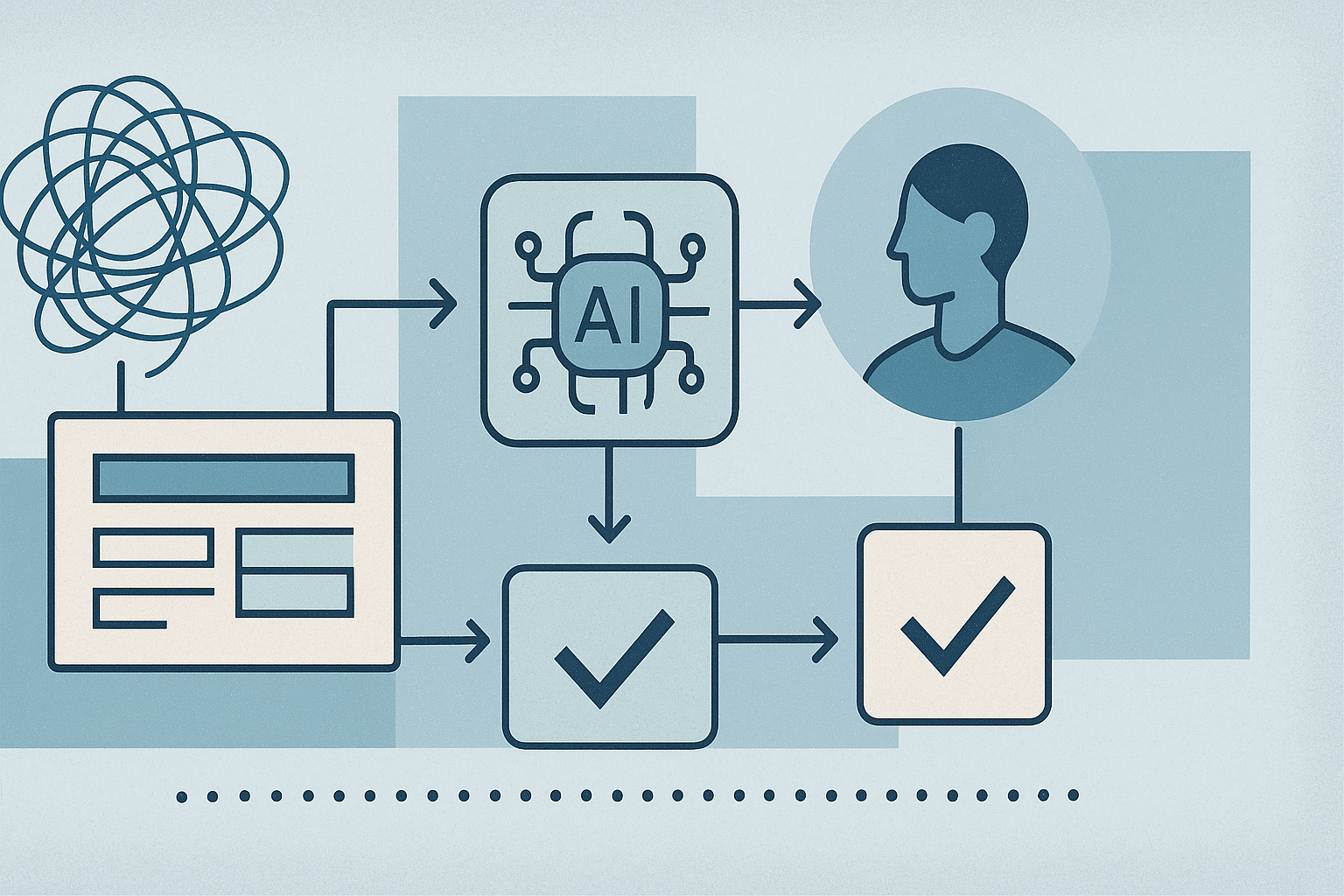
Anthropic's evals post argues that teams eventually hit a wall if they build agents without systematic evaluation, because they end up debugging reactively and guessing about regressions.[3] OpenAI's piece on testing agent skills says almost the same thing from a more practical angle: define success, capture the run, check the expected steps, and score the result against a small set of rules over time.[6]
For job seekers, this translates beautifully. If you want an AI-related accomplishment to sound credible, show how you checked it. Did you compare output against deterministic rules? Did you require review before release? Did you test edge cases? Did you use a rubric, sample review, or monitoring signal?
The phrase "used AI to speed things up" is weak because it hides the most important professional question: speed at what cost?
4. Security, privacy, and risk judgment
As soon as AI touches production work, security judgment stops being a niche concern.
NIST's AI Risk Management Framework is broad, but its practical lesson is simple: useful AI systems need governance, measurement, and explicit risk handling, not naive trust.[10] OpenAI's internal Codex safety post talks about the same issues more concretely: bounded environments, approval policies, policy-aware access, and logs that explain what the agent attempted and why.[8]
Candidates who show this kind of thinking sound more senior. They are easier to trust with real systems because they understand that fast output is not the same thing as safe output.
5. Communication and auditability
NACE's career-readiness language is helpful here because it reminds us that employers still care about communication, critical thinking, professionalism, and technology use as evidenced behaviors, not slogans.[11][12]
In AI-heavy work, communication becomes even more valuable because it is how you make your judgment legible. A strong candidate can explain:
- what the task was
- where AI helped
- what they still owned
- what checks existed
- what tradeoff they made
- what improved as a result
That kind of explanation makes the rest believable.
Not every role should optimize for the same AI story
One of the more useful points in the recent DeepLearning.AI issues is that AI acceleration is uneven. Different types of software work are speeding up differently, and many people at different seniority levels feel real uncertainty about what that means for them.[13]
That should change how you present your own AI skills.
Frontend and full-stack engineers can often show value through faster implementation, design iteration, test generation, and UI experimentation. But the stronger signal is not raw speed. It is showing that you still protected UX quality, edge cases, accessibility, and integration discipline.
Backend and infrastructure engineers usually gain more by emphasizing reliability thinking: safe automation boundaries, reviewable code changes, rollback awareness, test discipline, dependency caution, and data handling judgment.
Product, operations, analytics, and customer-workflow people can often stand out by designing strong human-in-the-loop flows. For these roles, useful AI skill often means reducing ambiguity, improving triage, structuring decisions, and making outputs easier to verify.
Early-career candidates and career changers should take this as good news. You do not need to out-research frontier labs. One small workflow that is clearly scoped, documented, and checked is much better hiring evidence than ten random tool experiments.
What signals are getting weaker
Some AI-related claims are not worthless, but they are getting noisy enough that they rarely carry much weight on their own.
Tool-name piles are the obvious one. Listing ChatGPT, Claude, Copilot, Cursor, Ollama, or similar tools may be fine as background context, but it is rarely persuasive proof of value.
Prompt-only identity is another. Prompting matters, but many useful systems now involve context retrieval, tool use, approvals, evals, logs, and handoffs. If your whole story is "good prompting," the market may hear "can drive the first five percent of the workflow."
Benchmark tourism is also weak. Model rankings, context-window trivia, and open-vs-closed debates can be interesting, but unless they changed an implementation decision in a meaningful way, they are not strong employability proof.
Local-vs-cloud posturing often has the same problem. Running local models can be a real learning asset if it taught you something about privacy, latency, portability, or constraint-driven design. But if it is presented like status jewelry, it usually lands flat.
What to change on your resume this week
This is where most readers will get the fastest payoff.
Start by finding two bullets that make AI sound decorative rather than operational.
Weak version:
- Used AI tools to improve engineering productivity.
Stronger version:
- Built an AI-assisted documentation and test-drafting workflow, then added review gates and deterministic checks before merge, reducing first-pass setup time without changing release standards.
Weak version:
- Used ChatGPT to help analyze support trends.
Stronger version:
- Designed an AI-assisted support-tagging workflow for recurring ticket themes, then spot-checked classifications against manual review before using the output in weekly ops reporting.
Notice the pattern. The stronger bullets do not just name the tool. They show the task, the role AI played, the check, and the outcome or operational standard preserved.
If you only make one change this week, make that one.
What to change in your portfolio this week
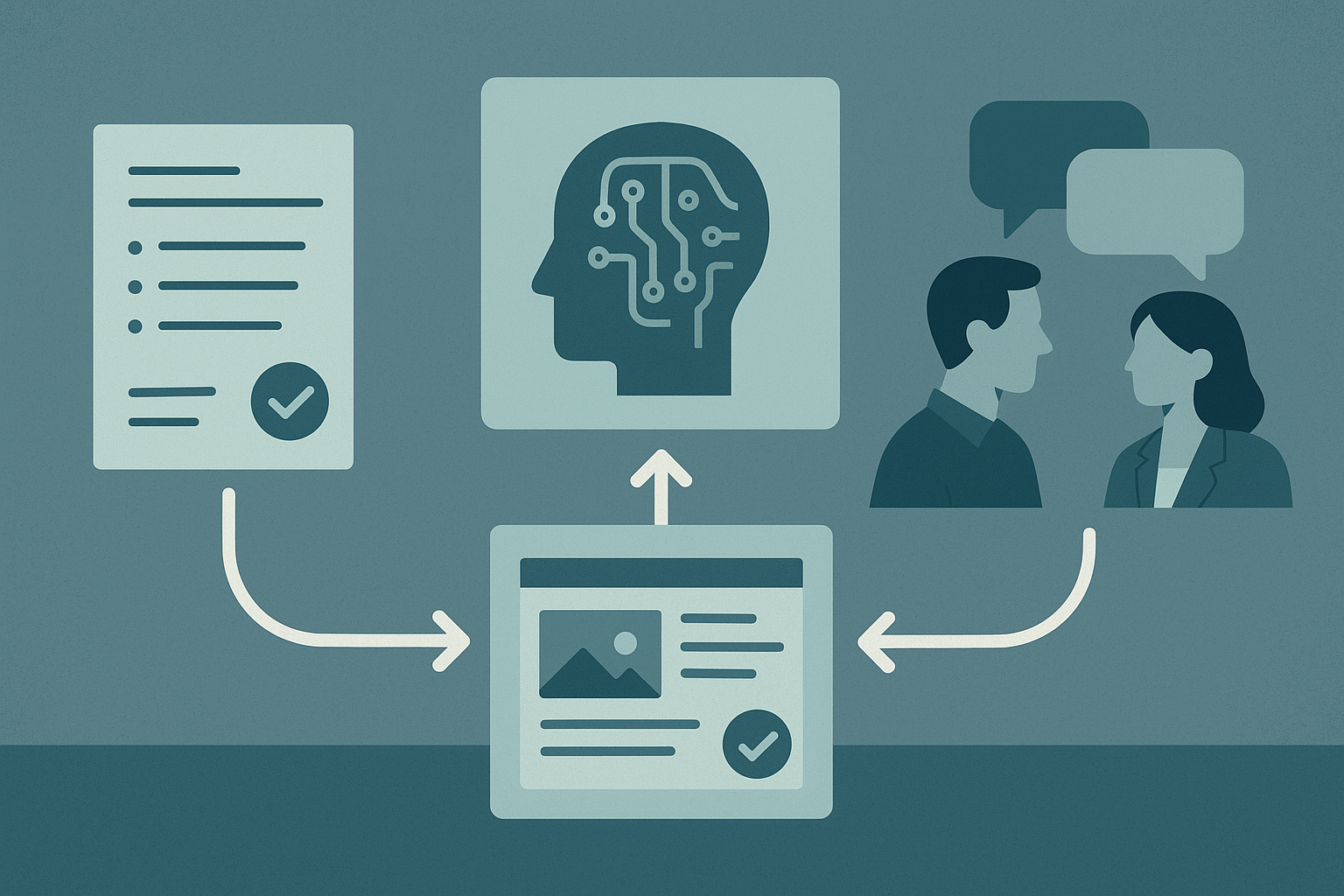
Add one short case study that makes your judgment visible.
A useful structure is:
- the problem
- the workflow you designed
- where AI assisted
- how you verified the result
- what tradeoffs or risks you managed
- what changed afterward
This can be small. It does not need to be a startup, an agent framework, or a production launch. A compact workflow that clearly shows framing, verification, and learning is enough.
What employers usually want from portfolio material is not proof that you touched an exciting tool. They want proof that you can think clearly when the tool is involved.
What to change in your interview story this week
Prepare one AI-related story in two versions.
Your 60-second version should explain the task, workflow, checks, and result.
Your 5-minute version should survive follow-up questions like:
- What could have gone wrong?
- What did you refuse to automate?
- How did you verify the output?
- What did the human still own?
- What would you change if you rebuilt it today?
If your story gets stronger when the interviewer asks those questions, you probably have a good story. If it falls apart, the underlying project may not yet be strong hiring evidence.
This is also where a system like CoreCV can quietly help. If your resume material stays structured and easy to tailor for different roles, it becomes much easier to turn one solid accomplishment into a better resume bullet and a more defensible interview answer.
If you have 30 focused hours, spend them like this
Do not burn those hours hopping across ten shiny tools.
Use them to build one compact workflow that passes the 4-part test.
For example:
- pick a familiar task
- decide what part AI should handle
- create a simple workflow
- define one or two checks
- document the tradeoffs
- write up the result as a short case study
That kind of project teaches better instincts and produces better hiring evidence than broad but shallow tool sampling.
The safest AI career bet right now
The safest bet is not trying to sound like the most current person in the room.
It is becoming the person a team trusts to use AI without lowering the quality bar.
That means you can frame tasks well, design workflows intentionally, verify outputs, respect boundaries, and explain what happened in plain language. Those skills are less flashy than hype-cycle status games. They are also much closer to what real teams can reward, defend, and rely on.
That is why we think these are the AI skills that actually help you get hired in 2026.
Sources
-
Anthropic Engineering, Building effective agents
-
Anthropic Engineering, Demystifying evals for AI agents
-
Anthropic Engineering, Scaling Managed Agents: Decoupling the brain from the hands
-
OpenAI Developer Blog, From prompts to products: One year of Responses
-
OpenAI Developer Blog, Testing Agent Skills Systematically with Evals
-
Anthropic, Labor market impacts of AI: A new measure and early evidence
-
OpenAI, Running Codex safely at OpenAI
-
GitHub Docs, Responsible use of GitHub Copilot inline suggestions
-
NACE, Career Readiness Defined
-
NACE, The Key Skills Employers Seek on College Students' Resumes
-
DeepLearning.AI, The Batch issue 350 and The Batch issue 345