Should You Add a Summary to a Software Engineer Resume?
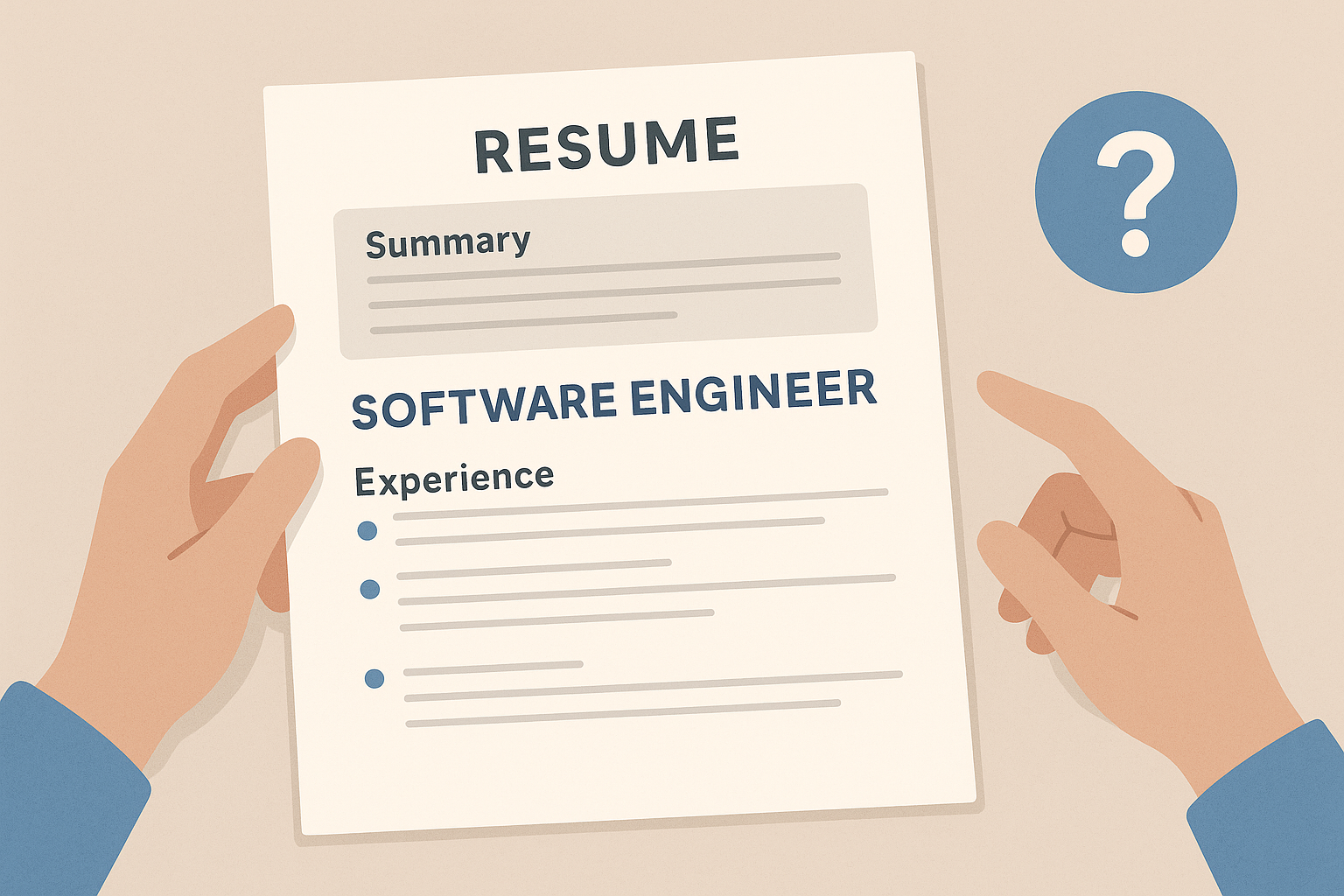
Sometimes yes, often no. A resume summary is useful only if it helps a recruiter understand your fit faster than your experience section already does. Harvard advises candidates to tailor the resume to the role they want and to write for readers and systems that scan quickly. MIT similarly recommends using the position description to decide what to include and making relevant information immediately visible.[1][2]
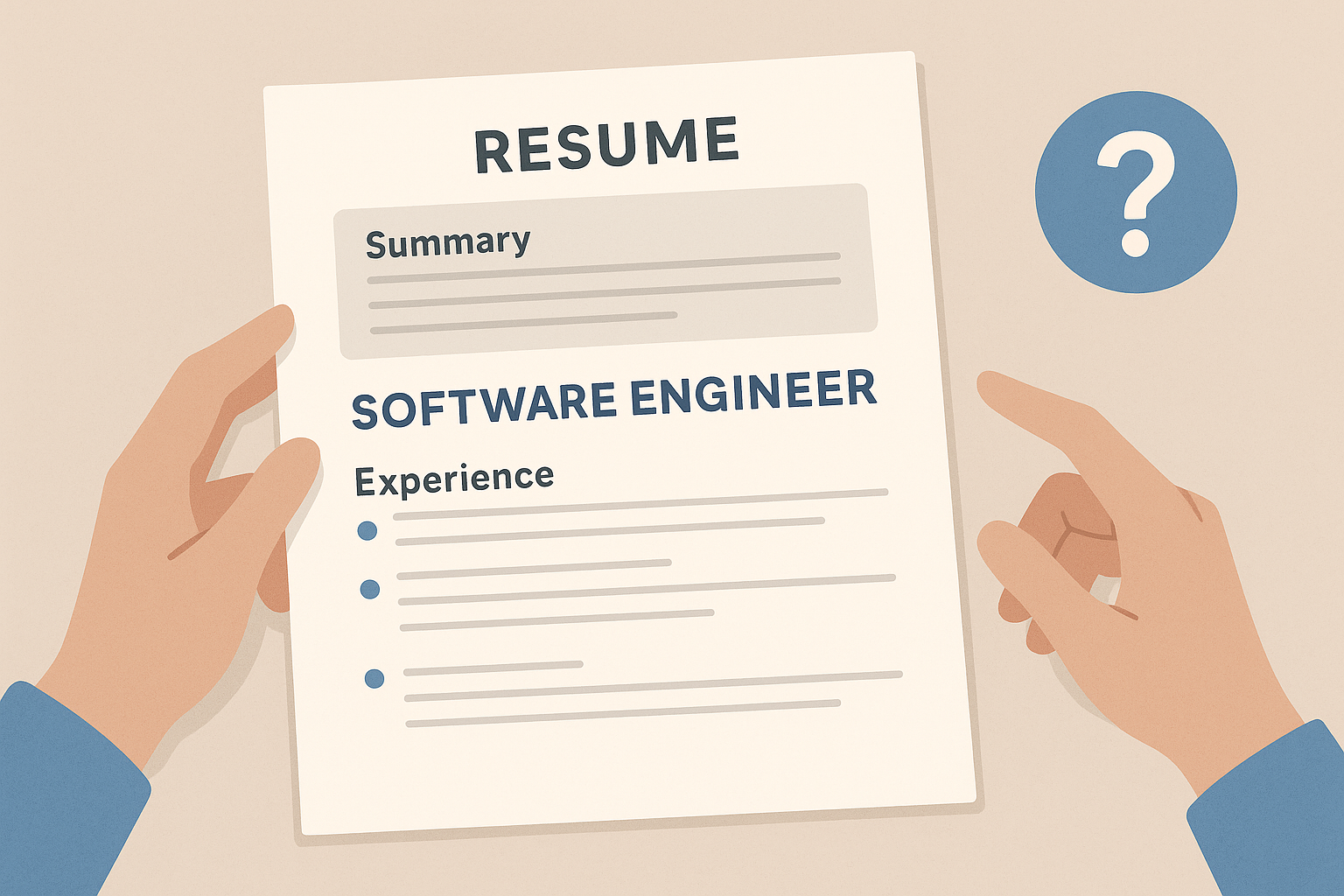
That means a summary should earn its space. If the top of your resume already shows the right title, strong recent experience, and a clear technical focus, a summary may add nothing. If your background needs quick framing, it can help a lot.
What a summary is supposed to do
A good summary is not an introduction and it is not a personality statement. It is a short positioning layer that tells the reader what kind of engineer you are, what kind of problems you have worked on, and why this resume is relevant to the role in front of them.
Berkeley's resume guidance is useful here. It emphasizes clear parallels between your experience and employer needs, with attention on outcomes and relevant skills rather than vague description.[3] That is the standard a summary should meet. It should sharpen relevance, not consume space with broad claims like "results-driven engineer" or "passionate team player."
If your summary does not make the rest of the page easier to read, it is probably filler.
Who benefits most from a summary
A summary helps most when the resume needs context fast.
Career changers are a good example. If you are moving from QA into software engineering, or from full-stack application work into platform engineering, a short summary can connect your past work to your target direction before the recruiter has to infer it alone.
It also helps experienced candidates whose scope is broader than their target job title. A senior engineer with leadership, architecture, and hands-on delivery experience may need two lines that clarify which part of that profile matters for this application.
Candidates with nontraditional backgrounds can benefit too. If your strongest evidence comes from consulting, freelance work, startups, or a mix of product and infrastructure roles, a summary can unify the story near the top of the page.
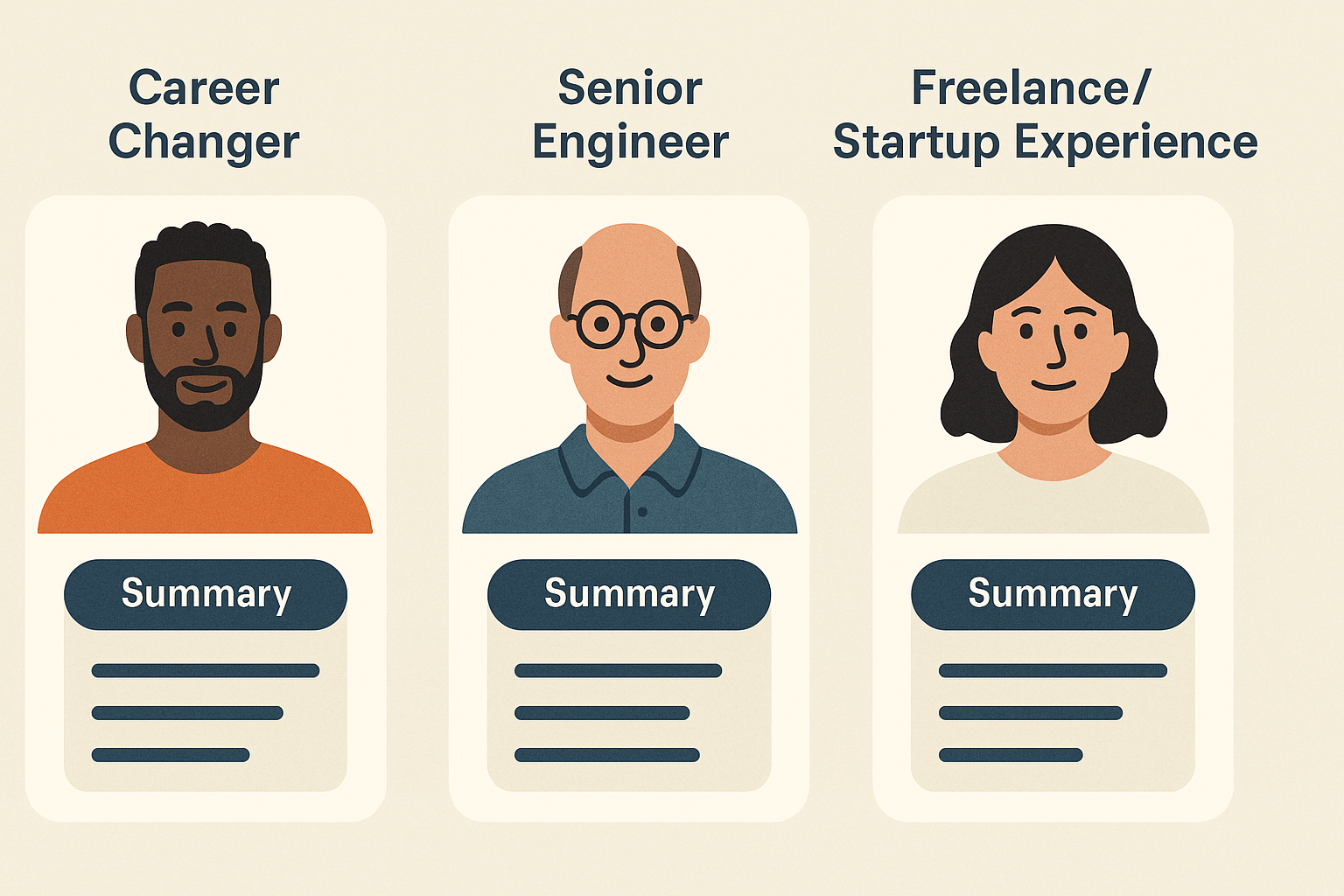
In all of these cases, the value is the same. The summary reduces interpretation work.
When engineers should skip it
Many software engineers do not need one.
If your recent title, skills, and first few bullets already make your fit obvious, the summary can become expensive redundancy. A backend engineer applying to another backend role with strong recent bullets in distributed systems, APIs, and cloud infrastructure usually does not need extra setup. The experience section is already doing the job.
You should also skip a summary if you only know how to write it in generic adjectives. Phrases like "highly motivated," "detail-oriented," or "proven track record" do not help a recruiter decide anything. MIT's advice to keep relevant information visible and Berkeley's advice to emphasize outcomes both point in the same direction: the resume should deliver evidence, not self-congratulation.[2][3]
Another bad use case is trying to stuff keywords into a paragraph at the top. That usually reads as artificial, and it wastes room that could go to projects, impact, or a stronger first role.
There is a fair counterargument here. Some candidates worry that skipping a summary leaves too much for the recruiter to infer, especially when the resume gets only a quick skim. That concern is real. The answer is not that every engineer needs a summary. It is that the top of the page needs to be clear somehow. If your headline, skills, and recent bullets already do that work, adding a summary often slows the skim instead of helping it. If they do not, a short summary can restore the missing context.
Weak summaries versus useful ones
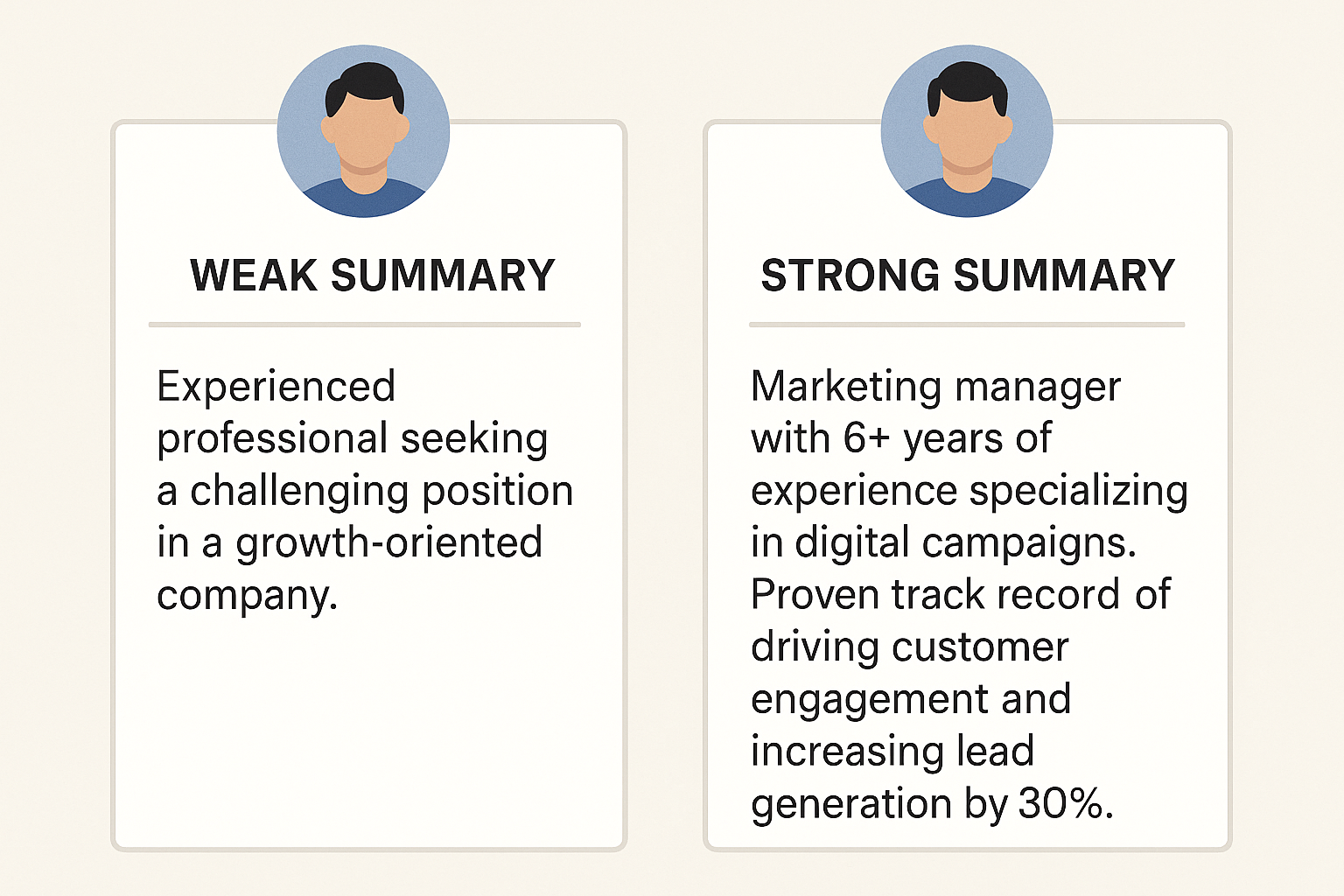
Here is the kind of summary that usually hurts more than it helps:
Software engineer with strong communication skills, a passion for innovation, and experience working in fast-paced team environments.
It sounds polished, but it tells the reader almost nothing. No domain, no scope, no evidence, no target.
Now compare that with a useful version:
Backend software engineer with 5 years of experience building internal APIs, data pipelines, and reliability tooling in AWS-based systems. Recent work includes reducing job failure rates and improving service observability for a multi-team platform environment.
This version does real work. It tells the reader what kind of engineer this is, what kind of systems they have touched, and what sort of impact they can expect to find below.
A junior candidate can use the same rule:
Junior software engineer with internship and project experience in React, TypeScript, and Node.js, with a focus on shipping clean user-facing features and collaborating closely with designers and backend teams.
That works better than a paragraph about ambition because it frames the candidate in terms of skills and work context.
A fast decision rule
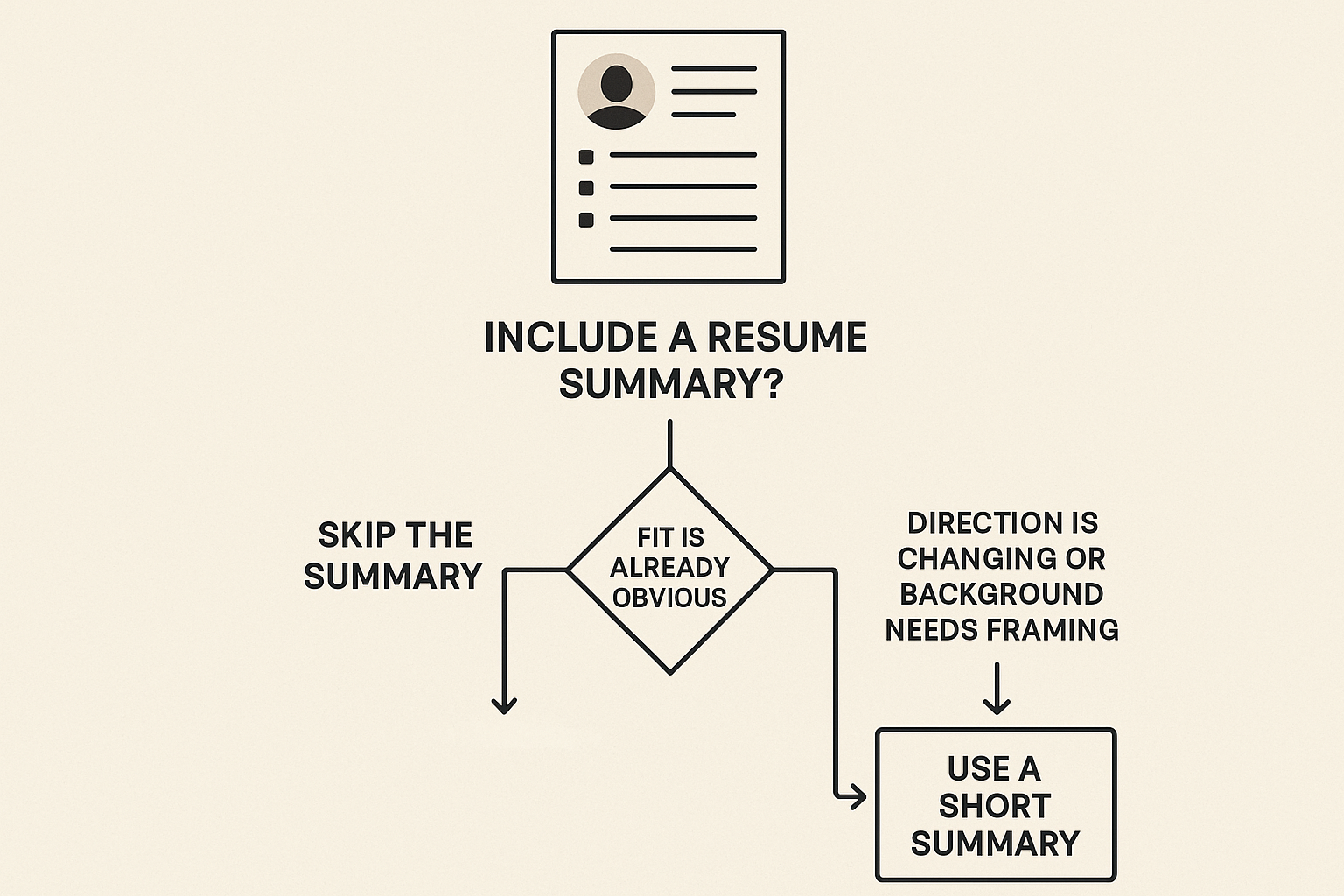
Before adding a summary, ask one question: what important context is missing from the top third of the page?
If the answer is "nothing," skip it.
If the answer is "my direction is changing," "my background needs framing," or "my strongest fit is not obvious from title alone," then a summary is probably justified. Keep it short, concrete, and tied to the target role.
A useful practical limit is two to three lines. After that, it often turns into a cover letter fragment.
If you maintain a few targeted resume versions, this gets easier. Tools like CoreCV.ai can help you test whether a summary improves clarity for one role type while leaving it out for another.
The standard to use
A summary is not a resume requirement for software engineers. It is a space tradeoff. Use it when it improves relevance and scanning speed. Skip it when your experience already speaks clearly.
The best summaries do not try to sound impressive. They make the reader's job easier.
Sources
1. Harvard FAS Mignone Center for Career Success, Create a Strong Resume: https://careerservices.fas.harvard.edu/resources/create-a-strong-resume/
2. MIT Career Advising & Professional Development, Resumes: https://capd.mit.edu/resources/resumes/
3. UC Berkeley Career Engagement, Resumes: https://career.berkeley.edu/prepare-for-success/resumes/
Disclosure: This article is authored by the CoreCV team. While we mention CoreCV.ai, the strategies and advice presented apply to any modern job search approach. We've focused on providing actionable insights based on industry research and hiring guidance.