Remote-First Careers: Succeeding and Standing Out in Distributed Teams

Remote-first teams can be great places for developers to do focused work, but they reward a slightly different kind of professionalism. In an office, people can infer a lot from hallway conversations, visible effort, and quick desk-side clarifications. In a distributed team, much of that context disappears. What stands out instead is clarity: how well you communicate, how reliably you follow through, and how easy you make it for other people to work with you.
That shift matters because remote work creates both flexibility and ambiguity. Remote work research often lands on the same tension: people value the flexibility, but teams still have to work much harder to maintain context, coordination, and trust. Buffer's State of Remote Work centers flexibility as a core benefit, while Microsoft's Work Trend Index shows a related trust gap: employees say they are productive, while many leaders still struggle to feel confident about productivity they cannot see in person. Fairly or not, remote work gives people fewer ambient cues, so concerns about slower decisions, missing context, or weaker visibility show up fast. The developers who do well in remote-first environments close that gap with habits, not performance theater.
Communicate so people do not have to guess
Strong remote communication is less about being constantly available and more about reducing uncertainty through practiced habits. Good developers on distributed teams make their work legible. They write updates that explain what changed, what is blocked, and what decision is needed. They leave useful context in tickets, pull requests, and docs so teammates in other time zones are not forced to reconstruct the story later.
This usually means getting better at asynchronous communication in a repeatable way, not just writing well once in a while. If a decision does not require a live discussion, write it down clearly. If you need input, be specific about the question, the deadline, and the tradeoff. If you are blocked, say what you already tried. Those habits compensate for one of remote work's real weaknesses: when context is thin, even small misunderstandings can slow decisions down.
Meetings still matter, but mostly for ambiguity, conflict, and alignment. Use written communication for status, handoffs, and durable decisions. Remote-first teams run better when people practice a shared communication cadence instead of turning every update into a call.
Build productivity around reliability, not online presence
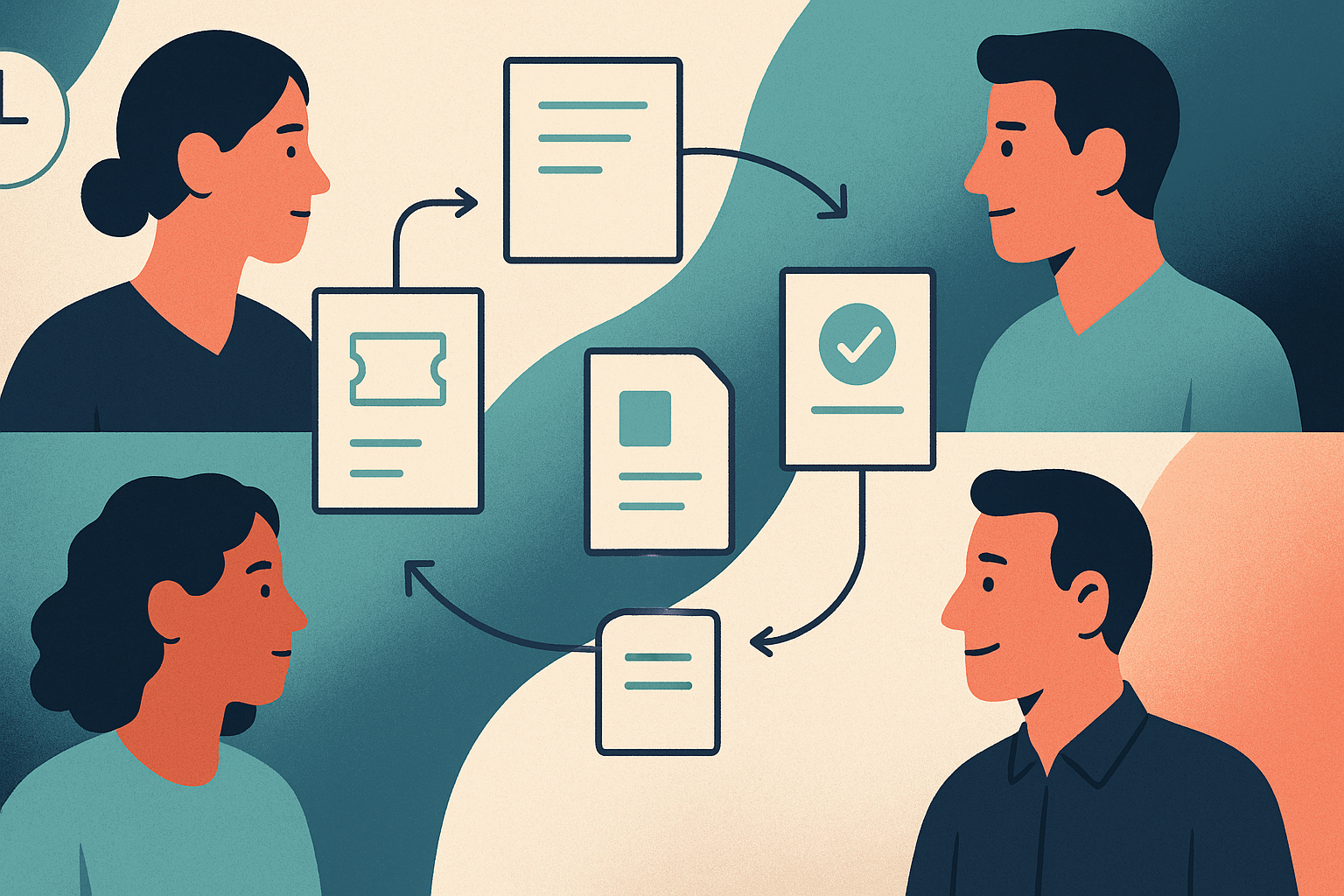
A lot of remote workers fall into a bad pattern early. They try to look active instead of trying to be dependable, which leads to fragmented days, too many messages, and an exhausting need to answer instantly. A better approach is to protect blocks of focused time, keep priorities visible, close loops when you say you will, and flag slips early. Remote-first teams trust people who are predictable.
Many distributed workplaces are overloaded with coordination, and that can make remote work feel slower than it should. The practical response is not to cram in even more activity. It is to create a calmer system around your own work with fewer but better updates, clearer task ownership, and stronger written handoffs.
Visibility should come from artifacts
One of the hardest parts of remote work is learning how to stay visible without sounding self-promotional. The answer is usually not more chatter. It is better artifacts.
Useful visibility looks like a concise weekly update, a well-scoped design note, a thoughtful pull request description, or a dashboard that makes progress obvious. These things help the team, and they also make your contribution easier to see. They also protect your reputation, because trust erodes faster in remote environments when the quality of your output swings from strong to shaky.
That matters for personal brand more than most people realize. Strong work builds your brand over time because people learn that your name on something means it will be clear, useful, and reliable. Weak work does the opposite. Once quality becomes inconsistent, people spend more time questioning the work, and you end up having to manage perception instead of earning confidence. This is especially important for mid-career and senior engineers. If your impact includes mentoring, cross-team coordination, or process improvement, make that work legible too. Summarize decisions, capture lessons learned, and write down patterns others can reuse.

Use tools to reduce friction, not to signal busyness
Remote collaboration tools only matter when they remove friction. For most developers, the core stack is already familiar: chat for quick coordination, video for high-bandwidth conversations, tickets for work tracking, docs for shared context, and version control workflows for decisions attached to code. The mistake is treating every tool like a real-time channel.
That might mean turning a Slack thread into a short document, writing acceptance criteria before implementation starts, or adding decision context to a PR so reviewers do not have to ask the same questions again. Good tool use lowers the coordination cost for the whole team.
Show remote work strengths on your resume
If you want remote readiness to show up on your resume, do not just label a job as remote and hope the signal carries. Harvard's guidance on creating a strong resume emphasizes tailoring and specific, fact-based results. MIT's resume guidance similarly recommends making relevant information immediately visible and focusing on accomplishments, not vague responsibilities.
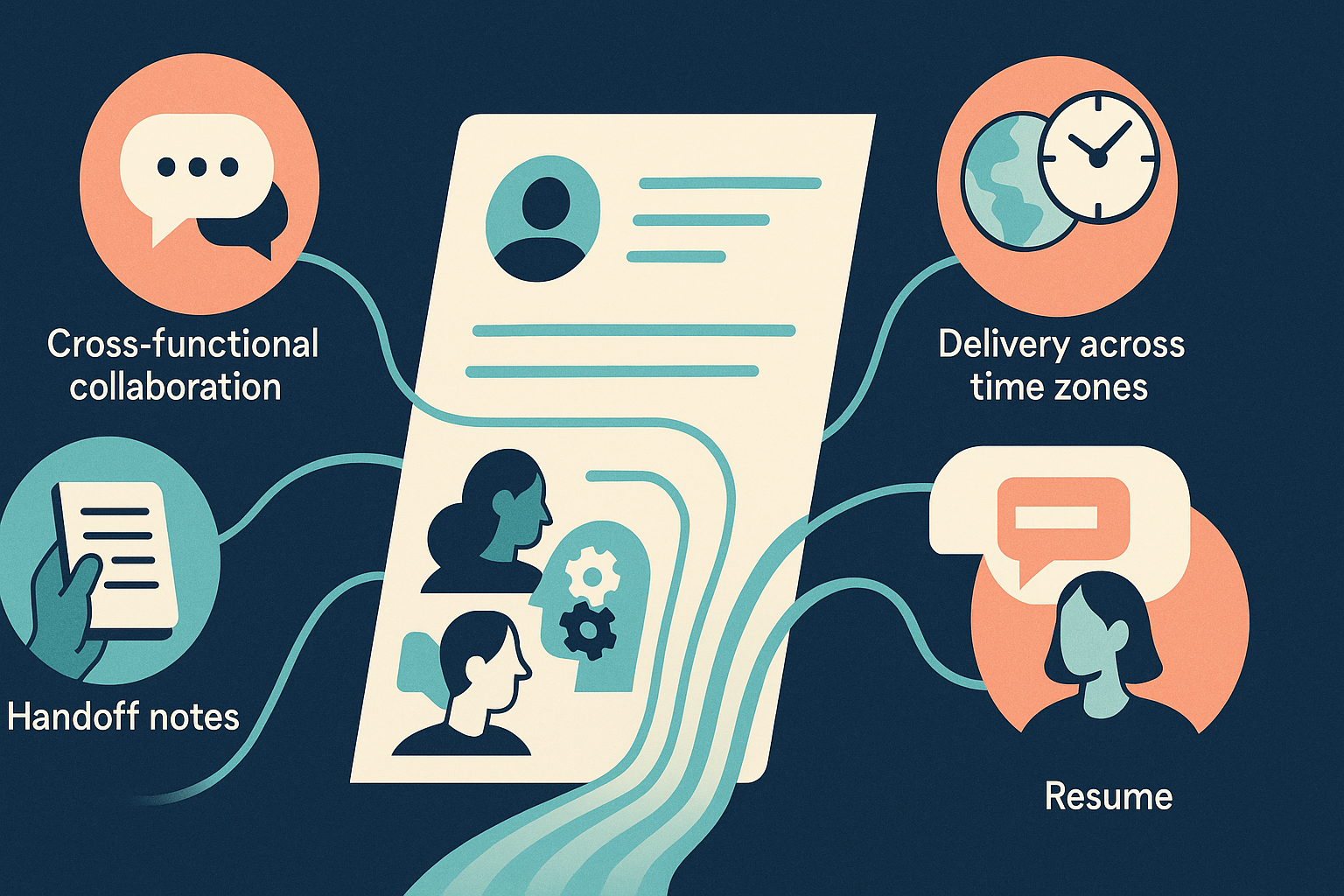
For remote-first roles, that means showing evidence of self-direction, written communication, and cross-functional collaboration. A good bullet might show that you led delivery across engineering, product, and design in a team spanning four time zones, then back it up with an outcome. You can reinforce that signal with specifics such as reducing review delays by creating clearer PR templates and async handoff notes, or documenting onboarding workflows that cut ramp time for new engineers.
Those examples work because they show how you operated, not just where you sat.
Be ready to talk about it in interviews
Interviewers hiring for remote-first teams often want proof that you can manage ambiguity without disappearing into it. Expect questions about communication, prioritization, and collaboration.
Keep your examples grounded. Explain the context, the constraint, what you did, and what changed as a result. If you have done remote mentoring, written documentation that improved execution, or created better async workflows, those are strong stories.
If you keep multiple role-specific resume versions in CoreCV.ai, it is easier to highlight remote collaboration signals for distributed roles without rewriting your entire background each time.
Sources
- Buffer, State of Remote Work: https://buffer.com/state-of-remote-work
- Microsoft Work Trend Index, Hybrid Work Is Just Work. Are We Doing It Wrong?: https://www.microsoft.com/en-us/worklab/work-trend-index/hybrid-work-is-just-work
- Harvard FAS Mignone Center for Career Success, Create a Strong Resume: https://careerservices.fas.harvard.edu/resources/create-a-strong-resume/
- MIT Career Advising & Professional Development, Resumes: https://capd.mit.edu/resources/resumes/
- GitLab Handbook, Guide to All-Remote: https://handbook.gitlab.com/handbook/company/culture/all-remote/guide/
Disclosure: This article is authored by the CoreCV team. While we mention CoreCV.ai, the strategies and advice presented apply to any modern job search approach. We've focused on providing actionable insights based on industry research and hiring guidance.