The New AI Career Signal: Can You Steer and Verify AI Work?
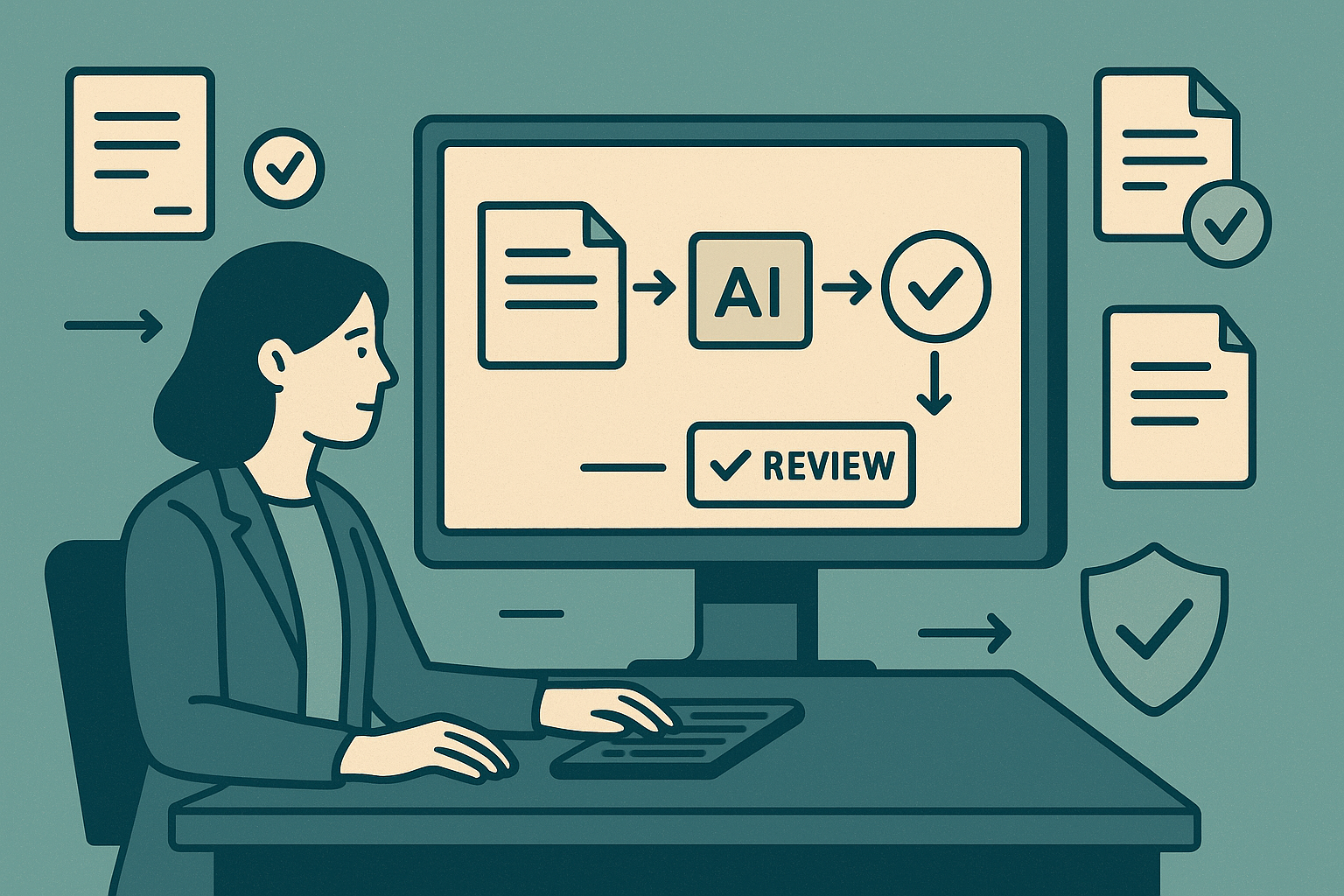
The stronger AI signal in 2026 is not that you touched an agent. It is that you can hand off part of a task, steer it mid-run, verify the output, and keep ownership clear when the work actually matters.[1][2][3]
Here is the practical version up front. If you want your AI work to land better on a resume, in a portfolio, or in an interview, show four things early:
- what slice of work you delegated
- how you checked progress before the end
- what had to pause for approval or review
- what still stayed fully yours
That payoff matters because generic AI claims are getting crowded. A lot of candidates can say they use AI. Fewer can show that they know how to manage longer-running, partially delegated work without letting quality drift. Frontier teams keep talking about evals, recoverability, approvals, visible traces, and human oversight for exactly that reason.[4][5] Microsoft Research broadens the point: the opportunity is in collective productivity, which makes workflow trust and collaboration structure matter more than novelty alone.[6]
So this article is not another general "learn AI" piece. It is about a narrower and more useful question:
Can another team trust how you manage delegated AI work once the task runs longer than one prompt?
A fast heuristic for stronger AI proof
This is a heuristic, not a universal hiring law. But it is a very useful filter.
When you describe AI-assisted work, ask:
- What exactly did you delegate?
- Where could you steer or interrupt the run?
- What checks or approvals protected quality?
- What stayed human-owned from start to finish?
If your story cannot answer at least three of those clearly, the signal is probably weaker than you think.
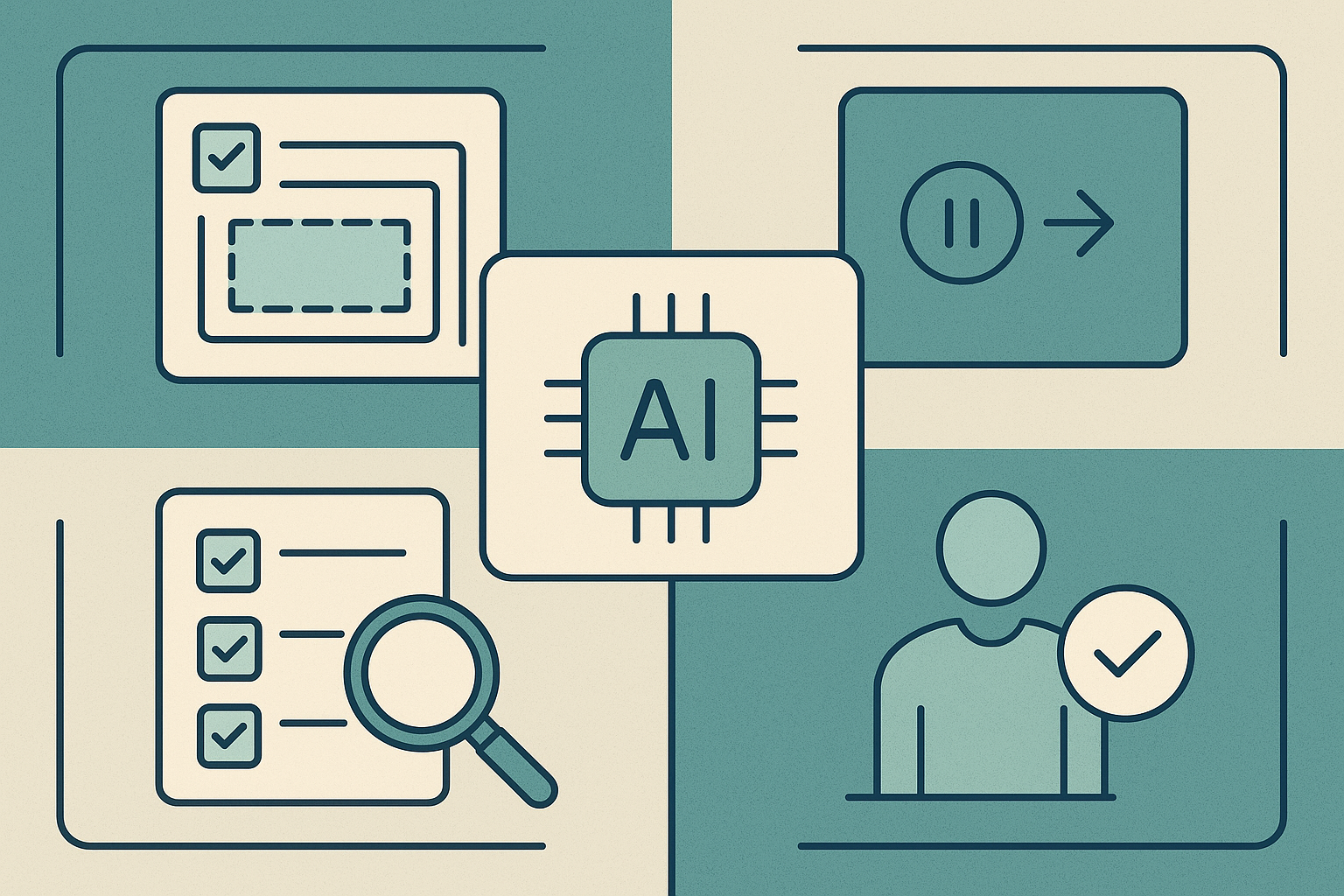
"Used AI agents to move faster" fails because it hides the handoff, the control points, and the accountability line.
"Set up an AI-assisted support-tagging workflow that drafted categories from ticket text, paused low-confidence cases for manual review, and kept escalation decisions with the ops lead" is much stronger. Now the delegated slice is visible, the checkpoint is visible, the approval path is visible, and ownership is visible.
If you want help translating one strong accomplishment into role-matched resume language, CoreCV's resume builder is useful for keeping the base facts stable while changing the emphasis for engineering, product, or operations roles.
What makes this signal different from basic AI fluency
The earlier hiring question was often: does this person know how to use AI tools at all?
That question is still relevant in some teams, but it is no longer the interesting edge case everywhere. The more distinctive signal is whether you can manage AI work that unfolds over time.
That is why recent source material keeps centering workflow structure instead of prompt theater. Anthropic's managed-agents write-up focuses on durable sessions, recoverability, and separating reasoning from execution so failures can be retried or contained cleanly.[1] OpenAI's long-horizon Codex piece emphasizes the loop of planning, editing, testing, observing, and repairing over longer tasks.[2] Its safety guidance keeps returning to approvals, telemetry, and bounded environments for higher-risk actions.[3]
The career translation is simple: the new proof is not tool access. It is whether you can supervise delegated work without becoming a passive passenger.
What hiring-relevant ownership looks like mid-run
This middle layer is where a lot of weak AI stories fall apart.
A good delegated-work story usually includes five concrete elements.
1. Scoped delegation
You did not "let AI handle it." You gave it a bounded part of the job. That might be first-pass ticket tagging, draft incident summaries, test scaffolding, document extraction, or structured research notes. Strong candidates sound deliberate about the slice they handed off.
2. Checkpoints, not just final review
Longer-running AI work often needs steering before the end. OpenAI's mobile Codex framing is useful here because it treats interruption and direction change as normal parts of the workflow, not signs that the run failed.[7] If you can explain where you reviewed intermediate output, tightened scope, or corrected drift, you sound much closer to real team practice.
3. Approvals and recoverability
Good stories also show what happened when the AI hit a boundary. Did a risky action require signoff? Could the run be retried cleanly after a failure? Anthropic's managed-agents post treats recoverability as core design, not cleanup work after the fact.[1] That matters because approval and retry paths are often the difference between a clever demo and a trustworthy workflow.
4. Verification that is visible
Anthropic's evals piece and OpenAI's eval-skills post both point to the same discipline: define checks, capture behavior, and measure whether the result holds up.[4][5] For a job seeker, that does not have to mean a formal evaluation harness every time. It can mean deterministic checks, sampling, test coverage, rubric review, or confidence-based escalation. What matters is that you can name the check.
5. Ownership boundaries
The most trustworthy candidates can also say what they refused to outsource. Security review. Final escalation calls. Publishing decisions. Customer-facing accuracy. Sensitive data handling. Policy judgment. This is where broader knowledge work matters too. A content strategist who uses AI to cluster research notes still should not let the model make final factual claims without source checking. An operations lead can use AI for first-pass categorization while keeping exception handling and stakeholder escalation human-owned.
One through-line example: support triage that did not hide the hard parts
A useful way to keep resume, portfolio, and interview language from repeating itself is to use one through-line case.
Say you built an AI-assisted support triage workflow.
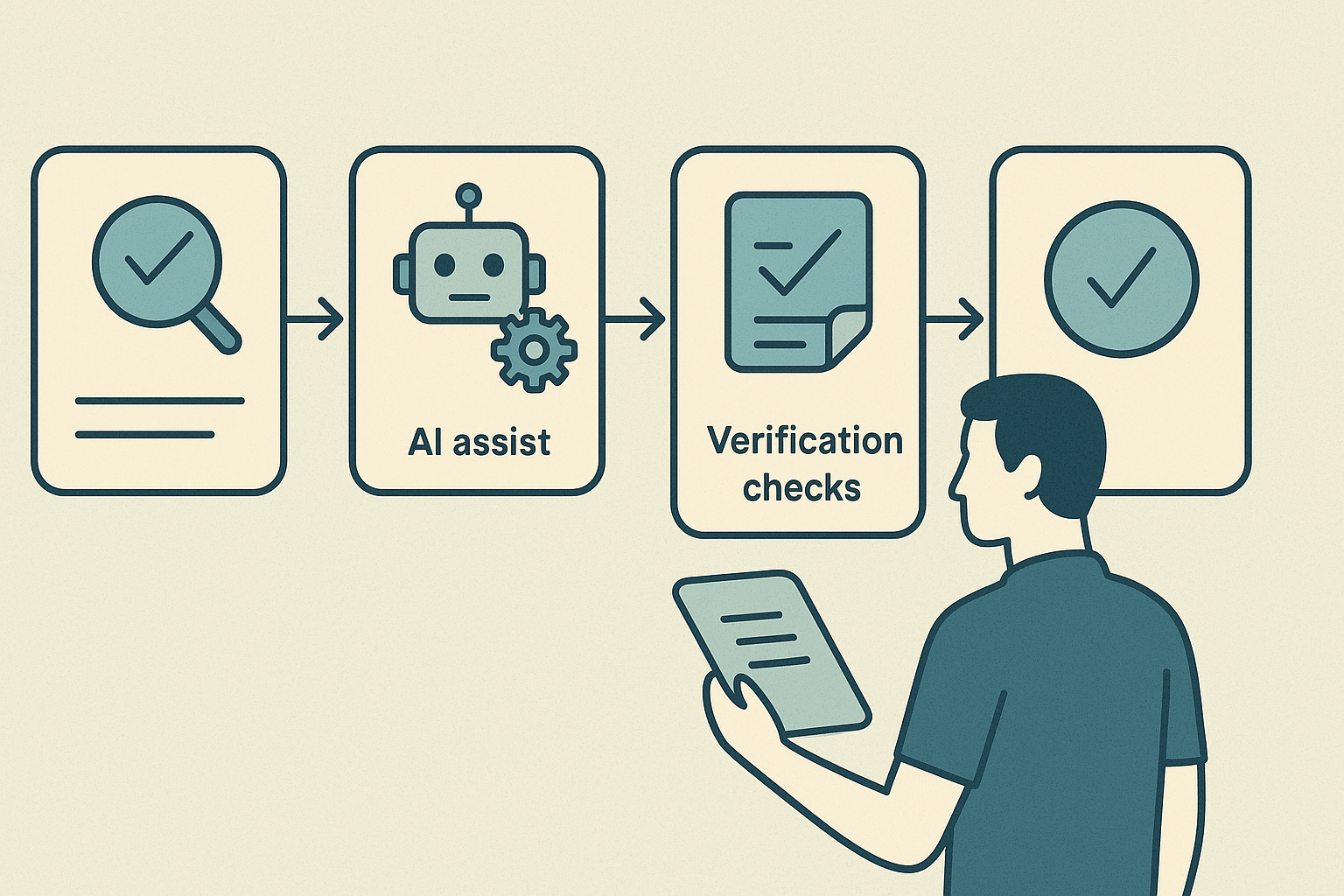
The delegated slice: the model drafted ticket categories and short summaries from inbound text.
The mid-run steering: when confidence looked low or the issue touched billing, outages, or account risk, the workflow paused for a human to redirect or relabel.
The verification: sampled outputs were checked against manual review, common fields were validated against rules, and weekly error patterns were reviewed before the workflow scope expanded.
The ownership boundary: AI could draft classification and summarize context, but customer-impact severity and escalation decisions stayed with a human operator.
That is a better hiring story than "used AI in support ops" because it shows how you managed delegated work under constraints. It also travels beyond engineering, which matters because AI signal value is spreading across technical and adjacent knowledge-work roles unevenly, not identically.[6]
How to translate that proof across formats without repeating yourself
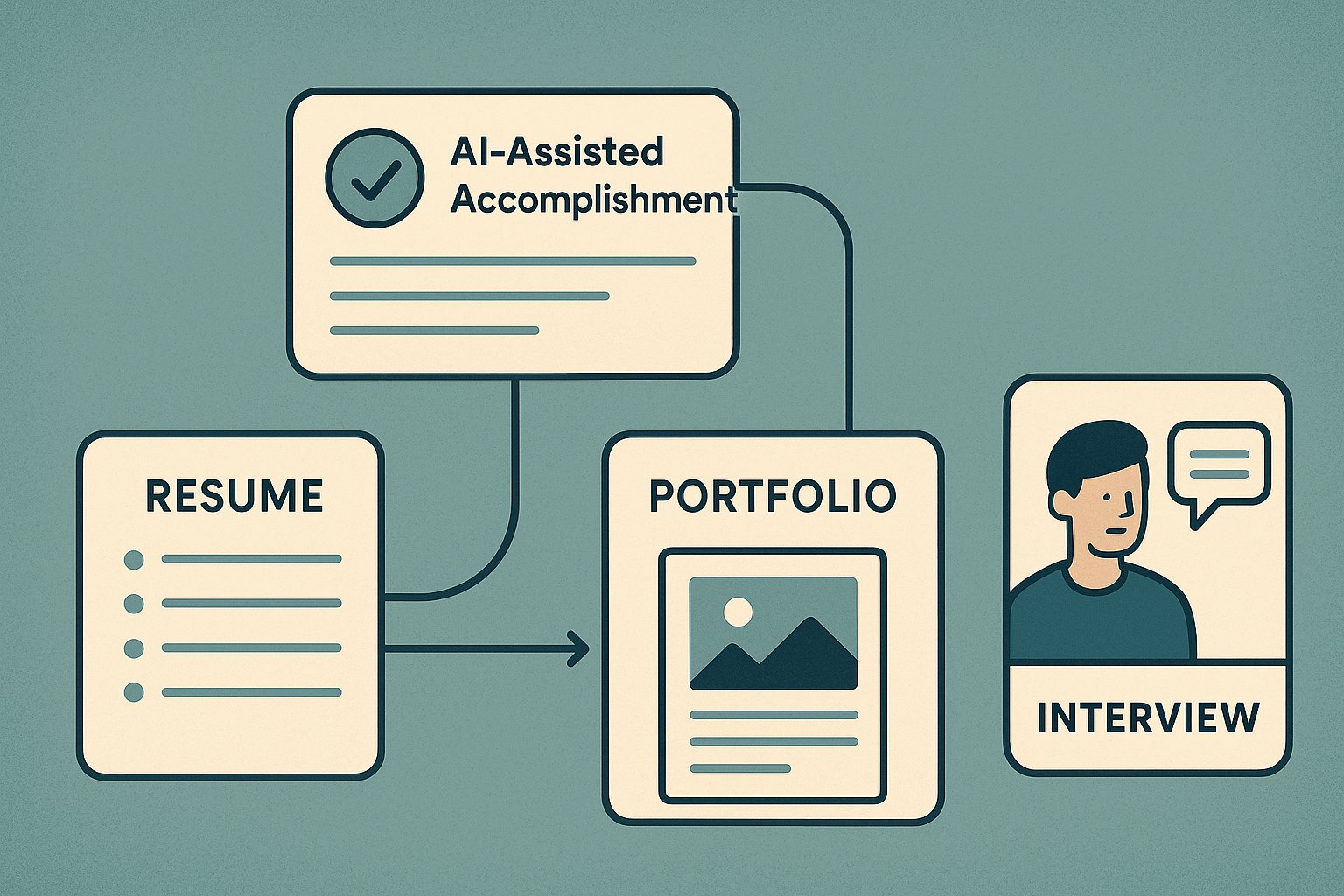
The goal is not to write three separate stories. It is to compress the same evidence differently.
Resume
Your resume should show the delegated slice, the control point, and the result.
Weak:
- Used AI tools to improve support operations efficiency.
Stronger:
- Designed an AI-assisted ticket-triage workflow that drafted categories and summaries, paused low-confidence cases for manual review, and reduced first-pass sorting time without changing escalation standards.
Portfolio
Your portfolio should show the workflow shape.
A short case study can cover:
- the bounded task you delegated
- the checkpoint where humans could redirect the run
- the approval or review path
- the checks you used to judge output quality
- the boundary that stayed human-owned
That gives the reader what the resume cannot fit.
Interview
Keep this shorter here so it does not eat the whole story space.
A solid answer is usually enough if it says: what the AI handled, where you reviewed it mid-run, what you would not automate, and what improved. If you need a deeper interview playbook, the next article in this lane will focus specifically on how to talk about AI tool use without sounding reckless.
The practical shift to make this week
If you want a concrete upgrade, do not add more tool names.
Take one existing AI bullet or project and rewrite it around delegated-work ownership:
- name the bounded task
- name one checkpoint or approval gate
- name one verification method
- name one decision that stayed yours
That one rewrite usually makes the accomplishment more believable immediately.
For a more intentional next read, start with How to Show AI-Native Work on a Resume Without Sounding Generic if your current wording is still fuzzy, then pair it with Which AI Skills Actually Help You Get Hired in 2026 for the broader market frame. This piece is the narrower layer in between: how to show delegated work that still has a clear human owner.
Disclosure: This article is authored by the CoreCV team. While we mention CoreCV.ai, the strategies and advice presented here are intended to be useful whether or not you use our product.
Sources
-
Anthropic, Scaling Managed Agents: Decoupling the brain from the hands: https://www.anthropic.com/engineering/managed-agents
-
OpenAI Developer Blog, Run long horizon tasks with Codex: https://developers.openai.com/blog/run-long-horizon-tasks-with-codex
-
OpenAI News, Running Codex safely at OpenAI: https://openai.com/index/running-codex-safely/
-
Anthropic, Demystifying evals for AI agents: https://www.anthropic.com/engineering/demystifying-evals-for-ai-agents
-
OpenAI Developer Blog, Testing Agent Skills Systematically with Evals: https://developers.openai.com/blog/eval-skills
-
Microsoft Research, New Future of Work Report 2025: https://www.microsoft.com/en-us/research/publication/new-future-of-work-report-2025/
-
OpenAI News, Work with Codex from anywhere: https://openai.com/index/work-with-codex-from-anywhere/