How to Talk About AI Tool Use in Interviews Without Sounding Reckless

The wrong interview answer is either extreme: "I use AI for everything" or "I never touch it." A better answer is more specific: here is where AI helped, here is what I still owned, and here is how I checked the result. That is the standard behind strong professional communication and accomplishment framing, even when the tool itself is new.[1][2][3]
Lead with ownership, not tool names
Hiring teams usually care less about whether you used Copilot, ChatGPT, Claude, or something local than about whether you used those tools well. Tool names are not the story. Your decision-making is.
That is why your answer should start with the task and your ownership. MIT recommends describing work with specificity and factual accomplishments, not generic responsibility language.[2] In interview form, that means saying something like: "I used AI to accelerate first drafts for tests and repetitive scaffolding, but I still owned system design, edge cases, review, and final decisions."
 The strongest answer centers your workflow and judgment, not the tool name.
Make verification the center of the answer
Verification is the difference between sounding efficient and sounding careless.
GitHub's own Copilot guidance states that users are responsible for reviewing and validating generated suggestions before accepting them.[5] NIST's AI Risk Management Framework is broader than interview advice, but the same trust-and-risk mindset applies: treat model output as something to evaluate, not something to trust by default.[4] So do not stop at "I checked it." Say what that meant in practice: you reviewed the logic against the ticket and surrounding code, ran tests, added the edge cases the model missed, and made sure the final code still matched your team's standards. A good spoken version is: "I used AI for a rough first pass on tests and boilerplate, but I validated the logic myself, filled in the gaps, and treated the output as a draft until the code actually passed review and tests."
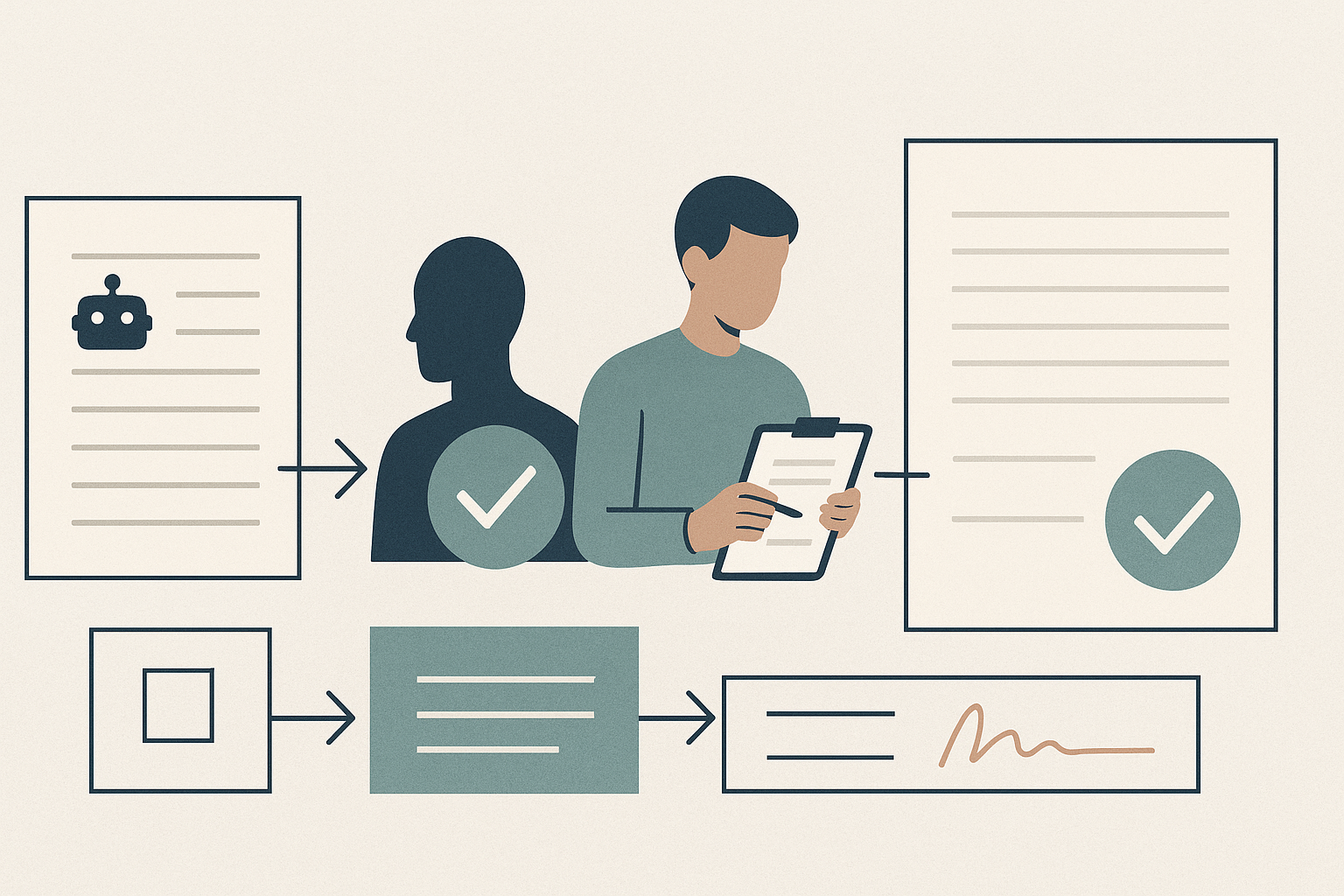 Verification is what turns AI assistance into a credible interview story.
Address security and data handling directly
OWASP's guidance for LLM applications highlights risks such as prompt injection, insecure output handling, sensitive information disclosure, and overreliance.[6] You do not need to turn a normal interview answer into a security lecture, but you should be ready to show that you understand the boundary.
A practical answer might be: "I do not paste sensitive code, credentials, customer data, or internal documents into external tools. If I use AI at work, I stay inside approved tools and company data-handling rules, sanitize inputs when appropriate, and treat generated output like untrusted code until it has been reviewed."
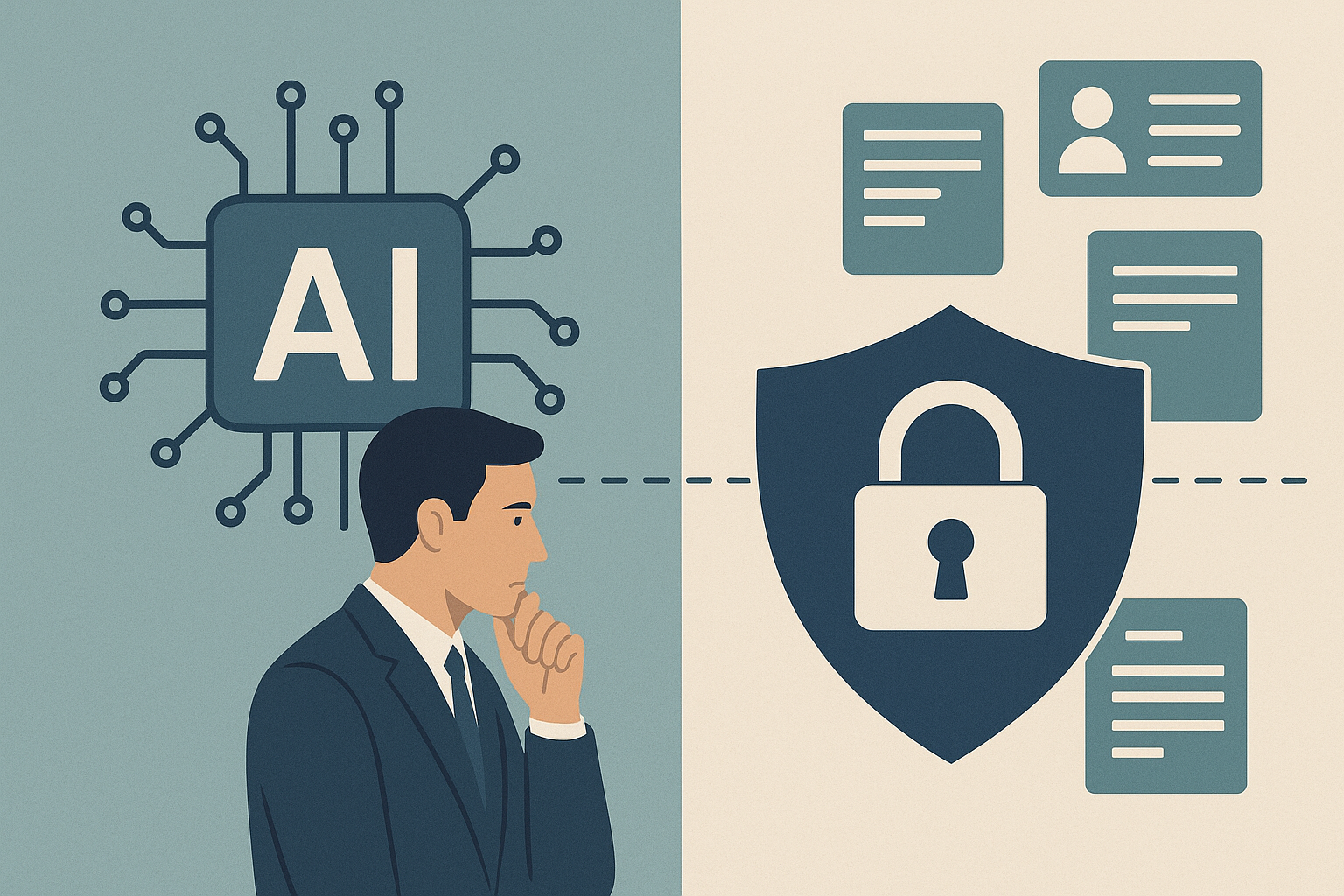 Clear boundaries around sensitive information make the answer sound disciplined instead of naive.
Be honest about where AI helped and where your expertise still mattered
Candidates get into trouble when they describe AI assistance in a way that quietly erases their own contribution. The goal is not to sound fully automated. The goal is to sound effective.
NACE frames career readiness through communication, critical thinking, technology, and professionalism.[7] That is a useful model here. If AI helped you brainstorm an approach, summarize docs, draft tests, or compare options, say that plainly. Then name the parts that still required your expertise: architecture, prioritization, debugging, performance decisions, security review, stakeholder tradeoffs, or final signoff.
That balance keeps you from sounding inflated or defensively anti-AI.
Make sure the work is still truly yours
In interviews, originality usually matters less as "did a model produce any text here" and more as "do you understand the work deeply enough to defend it." Harvard's guidance on AI use for application materials is helpful because it treats generative AI as an editing and support aid, not as a replacement for your own authentic representation.[1]
The interview version of that standard is simple: if you cannot explain why a solution works, what risk you accepted, or what you would change next time, then you should not present the output as your accomplishment.
Mention AI only for work you can fully walk through under pressure.
Use a short answer formula
If you want a reliable interview structure, keep it to four moves:
- Name the task. What problem were you solving?
- Name where AI helped. Drafting tests, exploring options, or speeding up repetitive work.
- Name what you owned. Design, validation, debugging, security, review, and final decisions.
- Name the result. Faster iteration, better coverage, or a resolved issue.
For example:
"On one backend feature, I used AI to generate a rough first pass for unit tests and to suggest a couple of refactor options. I still reviewed the code path myself, added edge cases the suggestions missed, checked security assumptions, and made the final implementation call. It saved time on repetitive setup, but the correctness work was still mine."
If you are updating your resume and interview stories together, a structured system like CoreCV can help you keep one strong base version of the work while adjusting how much detail to emphasize for different roles. The story should still show judgment, not just tool usage.
The standard to aim for
Talk about AI the same way strong candidates talk about any powerful tool: clearly, specifically, and with ownership. If you can explain where it helped, how you verified it, what risks you managed, and what still depended on your judgment, you will sound current without sounding reckless.
Sources
1. Harvard FAS Mignone Center for Career Success, Create a Strong Resume: https://careerservices.fas.harvard.edu/resources/create-a-strong-resume/
2. MIT Career Advising & Professional Development, Resumes: https://capd.mit.edu/resources/resumes/
3. Columbia Center for Career Education, Resumes with Impact: Creating Strong Bullet Points: https://www.careereducation.columbia.edu/resources/resumes-impact-creating-strong-bullet-points
4. NIST, AI Risk Management Framework: https://airc.nist.gov/airmf-resources/airmf/
5. GitHub Docs, Responsible use of GitHub Copilot inline suggestions: https://docs.github.com/en/copilot/responsible-use/copilot-code-completion
6. OWASP, Top 10 for Large Language Model Applications: https://genai.owasp.org/llm-top-10/
7. NACE, Career Readiness Defined: https://www.naceweb.org/career-readiness/competencies/career-readiness-defined