Do You Need to Tailor Your Resume for Every Job?

No, you probably do not need to rewrite your resume for every single job. But sending the exact same version to every company often leaves the match too vague. The goal is not constant rewriting. It is making sure a recruiter or hiring manager can see quickly why your background fits this kind of role. Harvard recommends tailoring your resume to the position you want, and MIT similarly advises using the position description to decide what to include so relevant information is immediately visible.[1][2]

That means the right question is not, "Should I customize every word?" It is, "How much does this role differ from my current target, and will a quick scan make the match obvious?" For many tech candidates, the best answer is a middle ground: keep a strong master resume, then make selective edits when the role meaningfully changes.
What tailoring is actually supposed to do
A tailored resume should improve relevance, not invent a new story. Berkeley advises candidates to analyze the position description, focus on outcomes, and highlight skills that map to employer needs.[3] That is different from keyword stuffing or pretending you are a closer match than you really are.
Good tailoring helps the reader answer a few fast questions. Have you solved similar problems? Do you use the tools this role cares about? Does your recent experience suggest the same level and scope? If those answers are buried, tailoring can help. If they are already obvious, more editing may not add much.
When tailoring is worth the effort
Tailoring usually matters when the target changes in a way that affects relevance on the page.
If you are applying to a backend platform role after spending months applying to full-stack product jobs, your summary, skills ordering, and top bullets may need to shift. The same is true if one role emphasizes distributed systems and another emphasizes developer tooling, data infrastructure, security, or customer-facing product work.
It is also worth tailoring when the company uses language that matches work you have done but your current resume describes it differently. For example, your bullet may say you "built internal tooling for release coordination," while the target role emphasizes "developer productivity" and "CI/CD workflow improvements." If those are genuinely the same kind of work, changing the wording can make the match easier to see.
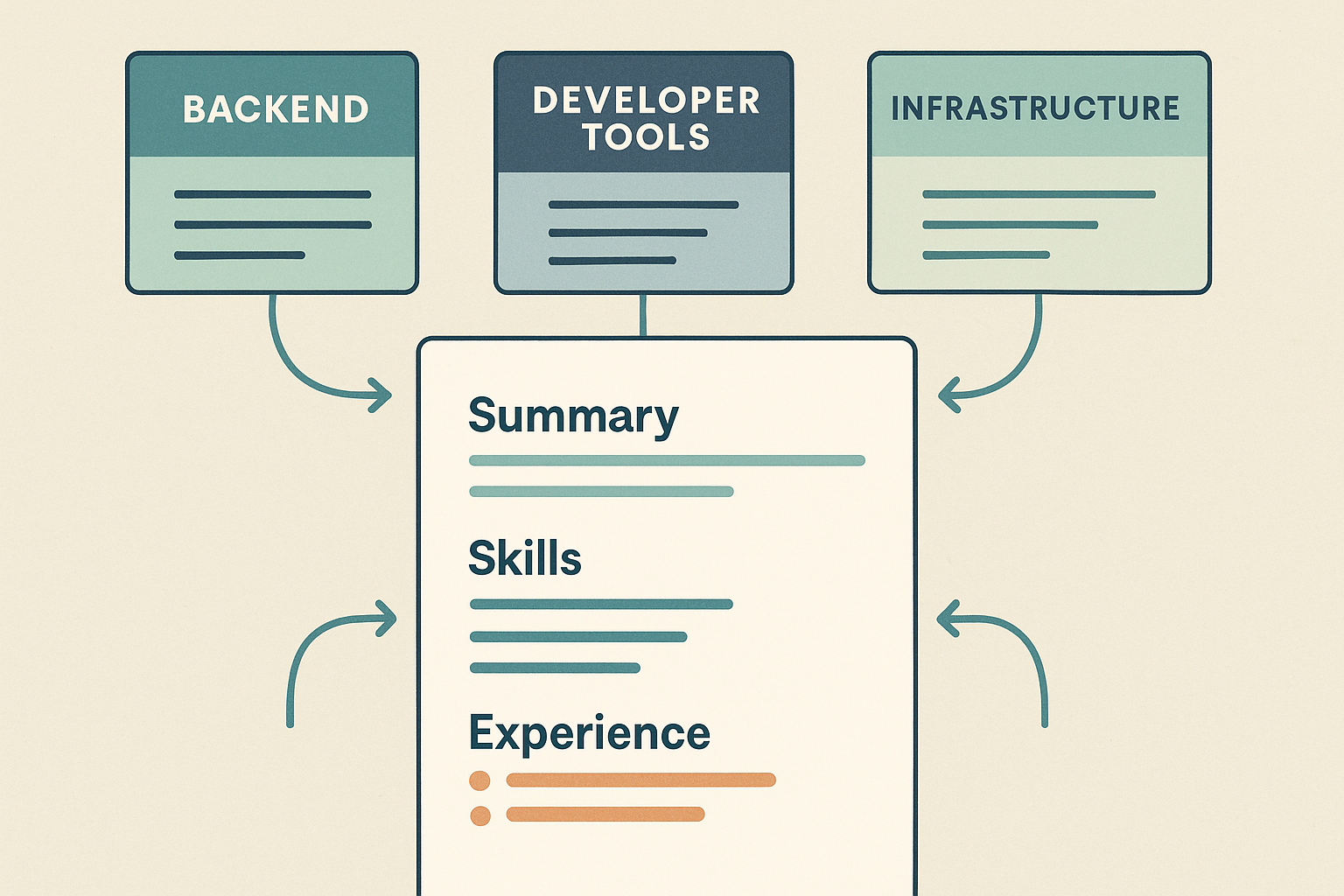
Tailoring can also help near a level change. A candidate aiming at staff-adjacent roles may need to emphasize cross-team influence, system ownership, and technical decision-making more clearly than they would for a senior IC role focused on delivery.
When tailoring becomes low-value busywork
A lot of candidates overdo this. If you are applying to ten similar roles in the same lane, rewriting your whole resume ten times is usually wasted effort. If the jobs all want roughly the same stack, scope, and level, a strong targeted base resume is often enough. Small tweaks may still help, but they should be quick.
The caveat is that even similar postings can justify tailoring if one of them highlights a real requirement your current version does not surface clearly, such as a specific cloud stack, security or compliance work, domain knowledge, work authorization, or hybrid versus on-site expectations. In those cases, reordering a few bullets, swapping in a more relevant project, or tightening the summary can make the difference without rebuilding the whole document.
It is also usually not worth chasing every keyword in a bloated posting. MIT's guidance is useful here: choose what to include based on the position description, but keep the format standard and make relevant information easy to find.[2] That does not mean copying a long requirements list into your skills section. The better move is to reflect the experience you actually have that best matches the role's core needs.
What should change, and what should stay stable
Most resumes should have a stable core. Your employers, dates, titles, and major accomplishments should not swing around from application to application. Those are your facts.
The parts most worth adjusting are usually the headline or summary if you use one, the ordering of your skills, the top few bullets under recent roles, and selected projects. Those elements shape first impression and help the reader understand your fit quickly.
For example, a software engineer applying to an infrastructure role might move reliability and platform work higher, shorten less relevant UI bullets, and surface a migration project sooner. That is tailoring. Deleting accurate context, inflating ownership, or renaming yourself into a different job family is not.
A sane process that does not eat your week
A practical workflow is to keep one detailed master resume, then spin out a small set of targeted versions for the main role types you pursue. For some candidates that might mean two or three versions. Others may need more or less depending on how wide their search is.
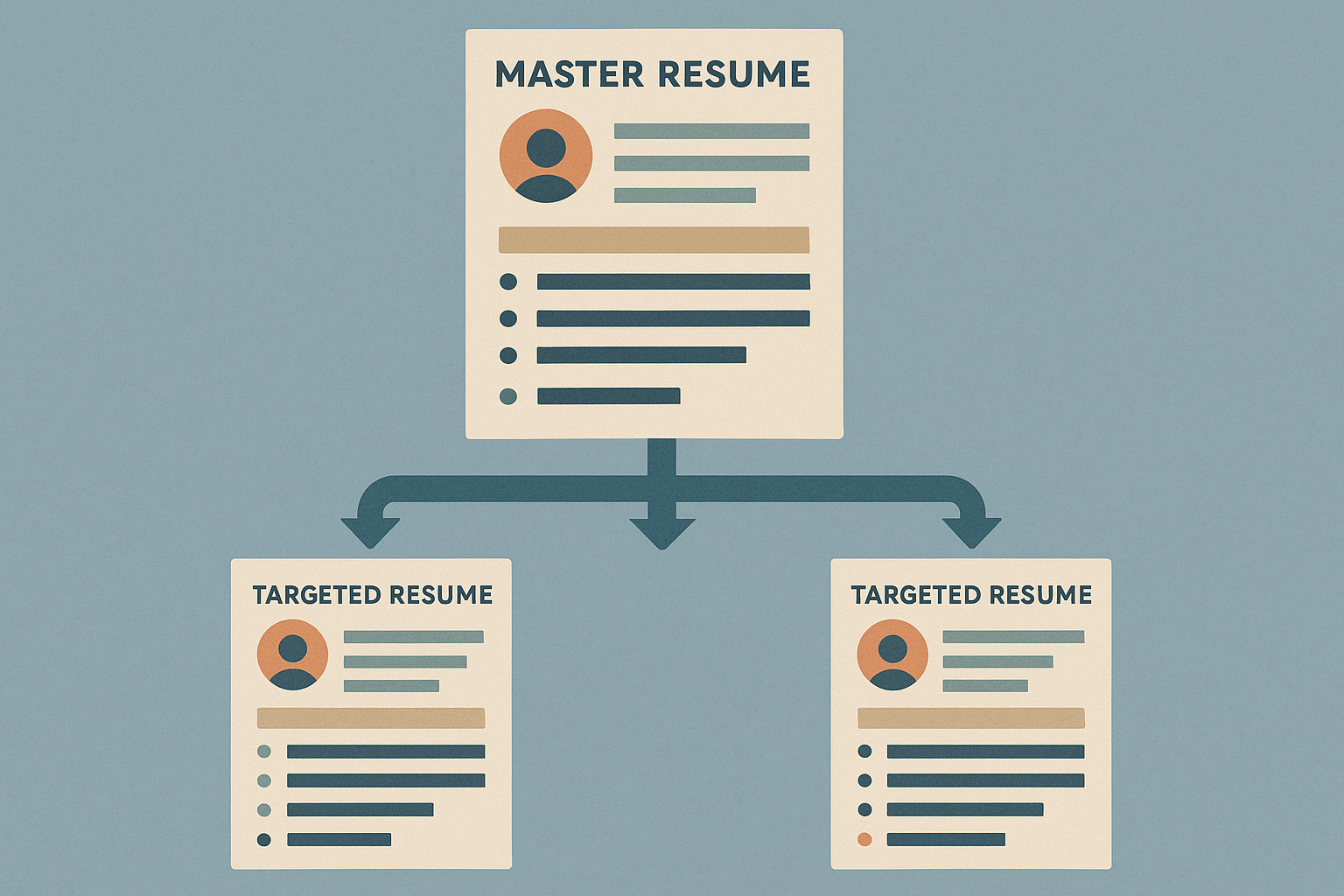
Before each application, spend a few minutes checking whether the target role needs a light edit. Look at the title, team focus, must-have skills, and scope. If the match is already clear, send your closest version. If not, make a small pass on the summary, bullet ordering, and project selection.
This is also where a structured workflow helps. If you keep multiple resume versions in CoreCV.ai, it is easier to tailor one for a specific role without rewriting everything from scratch.
The standard to use
Your resume does not need to feel handcrafted for every posting. It does need to feel relevant to the role you want. If a recruiter can understand the match in a quick skim, you have probably tailored enough. If they have to work hard to see why you belong in the stack, domain, or scope the job calls for, do a little more.
The best resume process is not maximal effort. It is consistent, honest adjustment in the places that actually change how your experience reads.
Sources
1. Harvard FAS Mignone Center for Career Success, Create a Strong Resume: https://careerservices.fas.harvard.edu/resources/create-a-strong-resume/
2. MIT Career Advising & Professional Development, Resumes: https://capd.mit.edu/resources/resumes/
3. UC Berkeley Career Engagement, Resumes: https://career.berkeley.edu/prepare-for-success/resumes/
Disclosure: This article is authored by the CoreCV team. While we mention CoreCV.ai, the strategies and advice presented apply to any modern job search approach. We've focused on providing actionable insights based on industry research and hiring guidance.