Contributing to Open Source: Why and How to Get Started
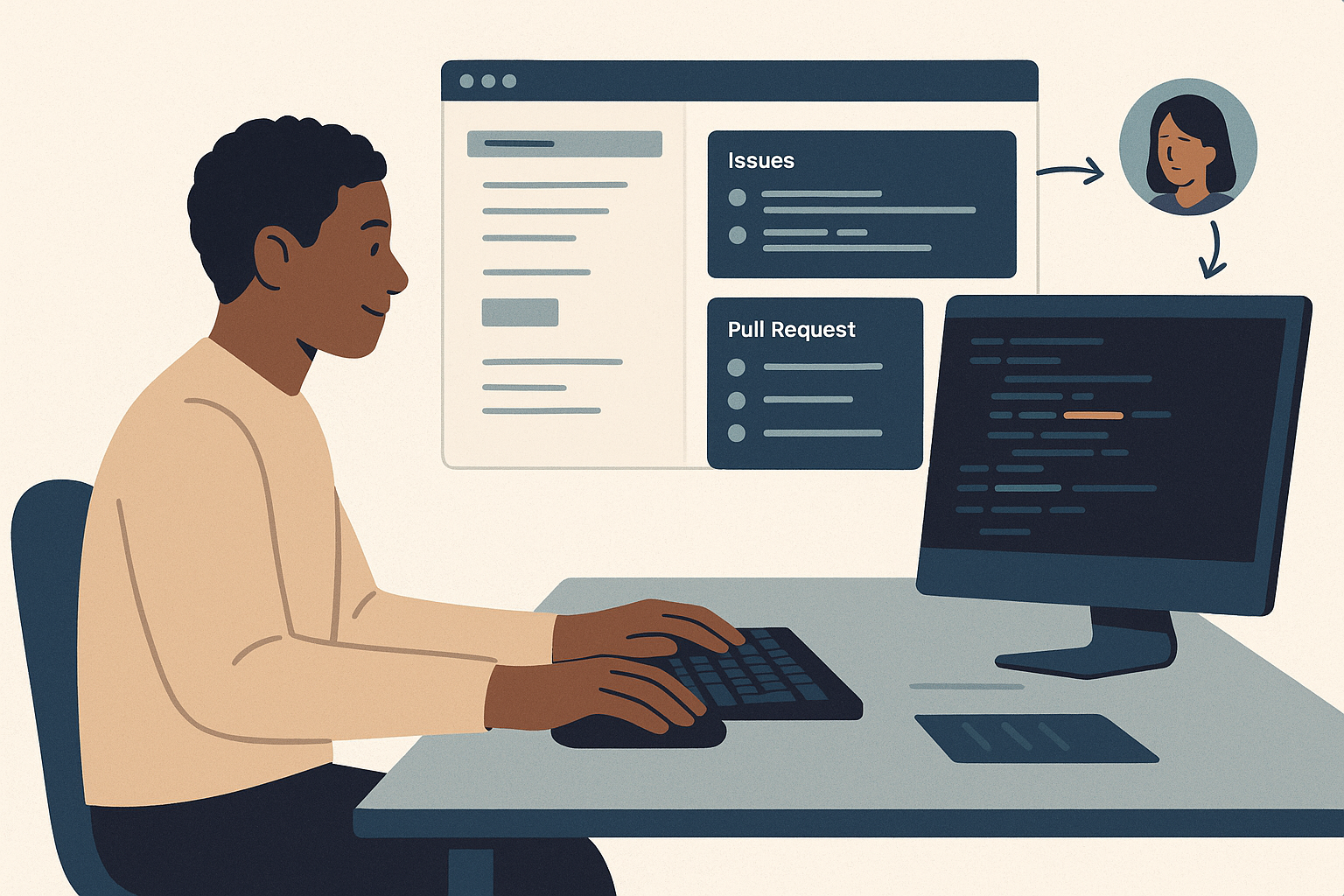
Open source can absolutely help your career, but not for the shallow reason people sometimes assume. Hiring managers are not automatically impressed because your GitHub profile shows activity or because you touched a well-known repository once. What matters is the evidence behind the contribution: you found your way into an unfamiliar codebase, respected project norms, collaborated in public, and shipped something useful. That is real professional signal.

For software engineers and other technical candidates, open source is most valuable when it shows judgment, follow-through, and communication. It can help junior candidates build experience when paid work is still limited. It can help mid-career candidates show depth in a technical niche. It can also help anyone demonstrate curiosity and community-minded execution outside a day job. But it only works when the contribution is concrete enough to discuss honestly.
The good news is that you do not need to become a famous maintainer or spend your weekends chasing prestige projects. A smaller, well-chosen contribution is often more credible than a flashy but shallow one.
Why open source helps career growth
Open source gives employers a different kind of evidence than a resume bullet alone. A resume can tell them you worked on APIs, developer tooling, tests, accessibility, or documentation. An open source contribution can show how you approached that work in a public setting where your choices, communication, and revisions are visible.
That visibility matters. GitHub's guidance on contributing to open source emphasizes reading project documentation, understanding how the project works, and working through the contribution process with the maintainers' expectations in mind.[1] The Open Source Guides make a similar point: contributing is not only about writing code, it is also about helping a project function through docs, design, triage, testing, translation, and support.[2]
For hiring, that means a contribution can signal more than one technical skill at once. It may show that you can:
- navigate an unfamiliar codebase
- communicate clearly in issues or pull requests
- respond well to feedback
- work within an existing style and review process
- finish scoped work instead of abandoning it halfway
Those are strong signals because they are close to real team work. Employers do not just want proof that you can produce code in isolation. They want proof that you can contribute inside constraints.
What counts as a contribution
A lot of developers talk themselves out of open source because they imagine the only meaningful contribution is a large code feature. That is not true, and believing it usually creates unnecessary delay.
GitHub explicitly notes that open source projects need many kinds of help, including writing, organizing, design, testing, and issue triage.[3] For many beginners, those paths are actually better entry points because they help you learn the project before you touch deeper logic.
Useful contributions often include:
- fixing a documentation gap that confused you during setup
- adding or improving tests around a bug fix
- reproducing an issue clearly with steps and context
- improving accessibility labels, error states, or copy
- cleaning up a small bug that has an obvious scope
- reviewing unanswered issues and helping maintainers narrow them
- improving examples, starter templates, or onboarding notes
Do not underestimate these contributions. If they improve the project, they count. In some teams, a strong documentation or test contribution says more about professional maturity than a rushed feature PR.
How to choose the right first project
Project choice matters more than people think. The best beginner project is usually not the most famous one. It is the one you can realistically understand, where maintainers still respond, and where the work connects at least loosely to your interests or target roles.
That usually means screening projects on three dimensions.
 A strong first project is relevant enough to discuss, active enough to respond, and clear enough to enter without guesswork.
1. Relevance
Pick something close enough to your interests that you would be willing to discuss it in an interview. If you want front-end roles, a design-system component library or developer tooling project may be more useful than a random infrastructure repo you barely understand. If you are targeting backend or data roles, choose accordingly.
2. Activity
Look for signs that the project is alive. Are issues getting responses? Are pull requests being reviewed? Are releases still happening? An abandoned repository may still be useful for learning, but it is a frustrating place to start if your goal is a real contribution.
3. Legibility
Can you understand how to get the project running? Is there a contributing guide, issue template, or label system? Open Source Guides recommend reading the room before jumping in, and that advice is practical, not ceremonial.[2] A project with clear norms is simply easier to enter.
One useful filter is to ask, "Could I explain why I picked this project without sounding random?" If the answer is yes, you are probably in a better place.
A realistic first-contribution workflow
The most effective way to start is also the least glamorous. Do not begin by promising a major feature. Begin by getting oriented.
Read the README, contributing guide, code of conduct, and issue labels. Set up the project locally if that is practical. Use the software the way a normal user would. Pay attention to where you get confused, what feels broken, and what small improvements seem clearly scoped.
From there, a good beginner workflow looks like this:
- Observe before acting. Read a few issues and pull requests to see how maintainers communicate.
- Choose a small problem. Look for issues tagged as good first issue, help wanted, docs, or bug, but still sanity-check the scope yourself.[3]
- Confirm the need. If the issue is old or unclear, ask a brief question before doing the work.
- Make the smallest useful change. Aim for one fix, one doc clarification, one test improvement.
- Write a clean PR. Explain the problem, the change, and any limitations.
- Respond well to review. This is part of the contribution, not an obstacle after it.
That last part matters a lot. Public review is often where the strongest hiring signal lives. A candidate who responds clearly, makes revisions calmly, and closes feedback loops looks much more credible than someone who submits code and disappears.
Avoid the mistakes that make open source feel fake
The biggest open source mistake is treating it as branding before it becomes contribution. People chase famous repositories, pick issues that are too large, or spray low-value pull requests across projects just to say they contributed.
That usually backfires. In an interview, shallow contributions are hard to talk about. If your only story is that you changed one line in a large project and never learned how the system worked, there is not much signal there.
A few common mistakes are worth avoiding:
- choosing a project only for prestige
- submitting work without reading project norms
- overclaiming ownership of a change or release
- forcing code contributions when docs or tests would be more useful
- picking work so complex that you stall out before shipping anything
- listing open source on a resume with no explanation of impact
A smaller but completed contribution is usually better than an ambitious one that never lands. Open source should build your confidence and your evidence, not become another half-finished side quest.
How to turn contributions into resume value
This is where many candidates undersell themselves. They either omit open source entirely or list it in a vague way such as "contributed to open source projects." That tells a recruiter almost nothing.
Harvard advises candidates to tailor resumes toward the target role and emphasize clear, specific evidence.[4] MIT similarly recommends making relevant information visible quickly and focusing on accomplishments over generic duties.[5] The same principles apply here.
If the contribution is substantial and relevant, you can include it in a projects section, selected contributions section, or even within experience if it overlaps with your professional work. The key is to describe the problem, your action, and the result.
Weak version:
- Contributed to open source projects on GitHub
Better versions:
- Contributed documentation and test improvements to an open source React component library, clarifying setup steps and reducing friction for new contributors
- Fixed API error-handling bugs in an open source developer tool and added regression tests to prevent repeat failures
- Triaged and reproduced user-reported issues for an open source CLI project, helping maintainers narrow bug scope and prioritize fixes
These examples work because they tell the reader what kind of work you actually did.
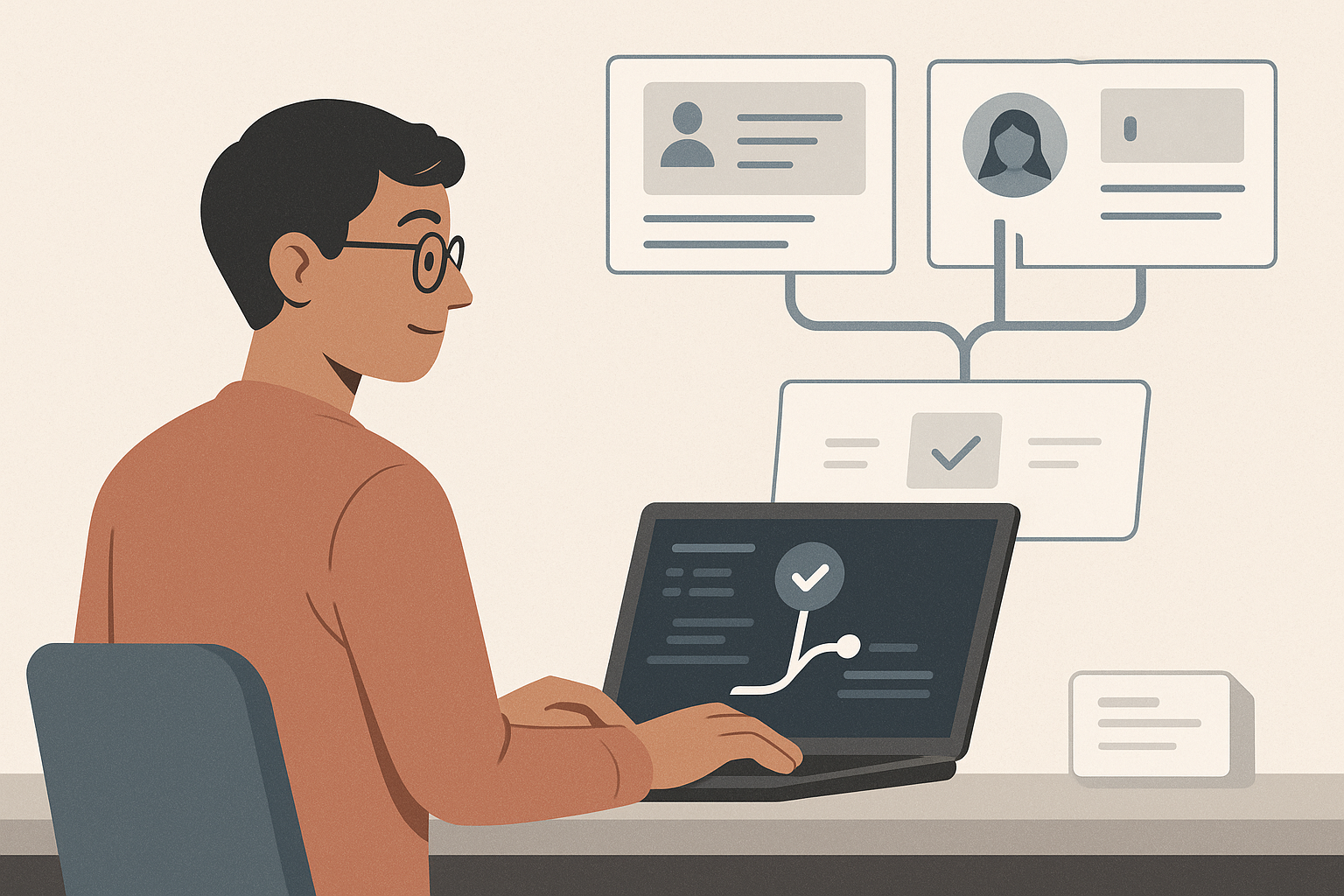 The contribution itself matters, but the career value improves when you translate it into clear evidence across your resume, LinkedIn, and portfolio.
Mention it on LinkedIn and your website too
Open source does not belong only on a resume. If you keep a LinkedIn profile or portfolio site, use those spaces to add context the resume cannot fit.
On LinkedIn, that might mean linking to a pull request, a merged fix, or a short post explaining what you learned about review, testing, or maintainability. On your website, it might mean a concise case-study style writeup: what the project does, how you found the issue, what you changed, and what you learned from the process.
This is especially useful when the repository itself is large or complex. A hiring manager may not click through every link. A short explanation on your own site makes the contribution legible faster.
If you keep multiple resume variants, a structured system like CoreCV can help you track which open source projects best support backend, front-end, platform, or developer-tooling applications without rewriting the evidence from scratch each time.
 Public contributions become stronger career signal when they show calm iteration, communication, and follow-through.
How to talk about open source in interviews
Interview value comes from your explanation, not just the link. Be prepared to describe the project context, why you chose it, what constraints you worked under, how review went, and what changed because of your contribution.
A good answer sounds grounded:
- what problem you noticed
- how you validated that it was worth fixing
- what part of the system you touched
- what tradeoffs or feedback you had to handle
- what the contribution taught you about working with other engineers
That story makes even a modest contribution useful. It shows initiative without exaggeration.
The standard to aim for
You do not need open source fame. You need a believable pattern of useful work.
Choose a project you can understand, make a contribution that genuinely helps, and document it in a way that makes the signal easy to see. If your work shows technical judgment, collaboration, and follow-through, open source becomes more than a side activity. It becomes evidence that you can join a team, learn its norms, and make things better.
That is exactly the kind of signal employers look for.
Sources
1. GitHub Docs, Contributing to open source: https://docs.github.com/en/get-started/exploring-projects-on-github/contributing-to-open-source
2. Open Source Guides, How to Contribute to Open Source: https://opensource.guide/how-to-contribute/
3. GitHub Docs, Finding ways to contribute to open source on GitHub: https://docs.github.com/en/get-started/exploring-projects-on-github/finding-ways-to-contribute-to-open-source-on-github
4. Harvard FAS Mignone Center for Career Success, Create a Strong Resume: https://careerservices.fas.harvard.edu/resources/create-a-strong-resume/
5. MIT Career Advising & Professional Development, Resumes: https://capd.mit.edu/resources/resumes/