27 posts tagged with "tech-careers"

View All Tags

Remote-First Careers: Succeeding and Standing Out in Distributed Teams

· 7 min read
Remote-First Careers: Succeeding and Standing Out in Distributed Teams

Remote-first teams can be great places for developers to do focused work, but they reward a slightly different kind of professionalism. In an office, people can infer a lot from hallway conversations, visible effort, and quick desk-side clarifications. In a distributed team, much of that context disappears. What stands out instead is clarity: how well you communicate, how reliably you follow through, and how easy you make it for other people to work with you.

How to Spot a Bad Job Posting Before You Apply

· 6 min read
How to Spot a Bad Job Posting Before You Apply

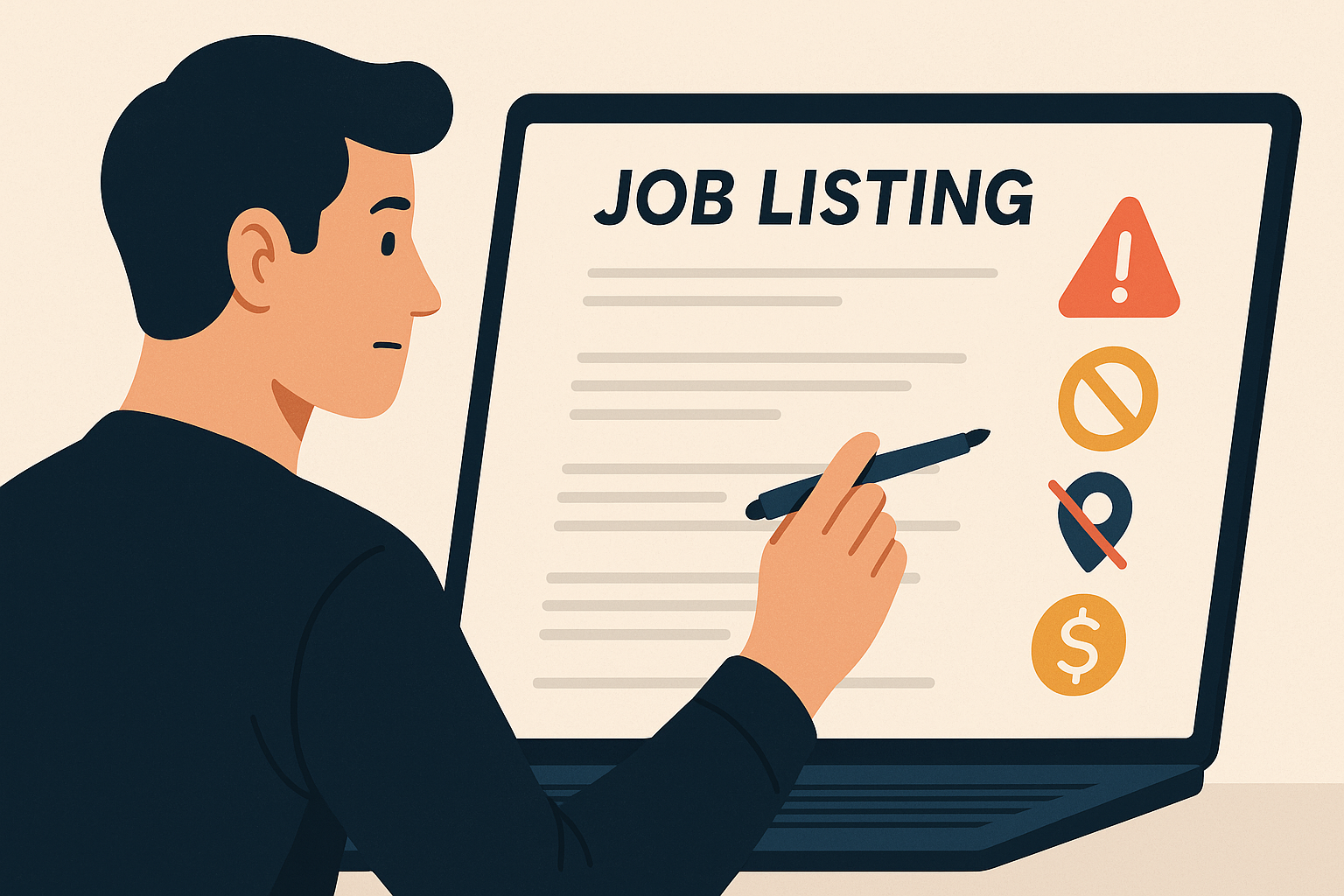
A bad job posting rarely costs just ten minutes. For technical candidates, one vague listing can turn into hours of resume tailoring, recruiter screens, take-home work, and interview prep before you discover the company never defined the role well in the first place. Learning to screen postings early is one of the easiest ways to protect your time.

How to Put Freelance or Contract Work on a Tech Resume

· 7 min read
How to Put Freelance or Contract Work on a Tech Resume

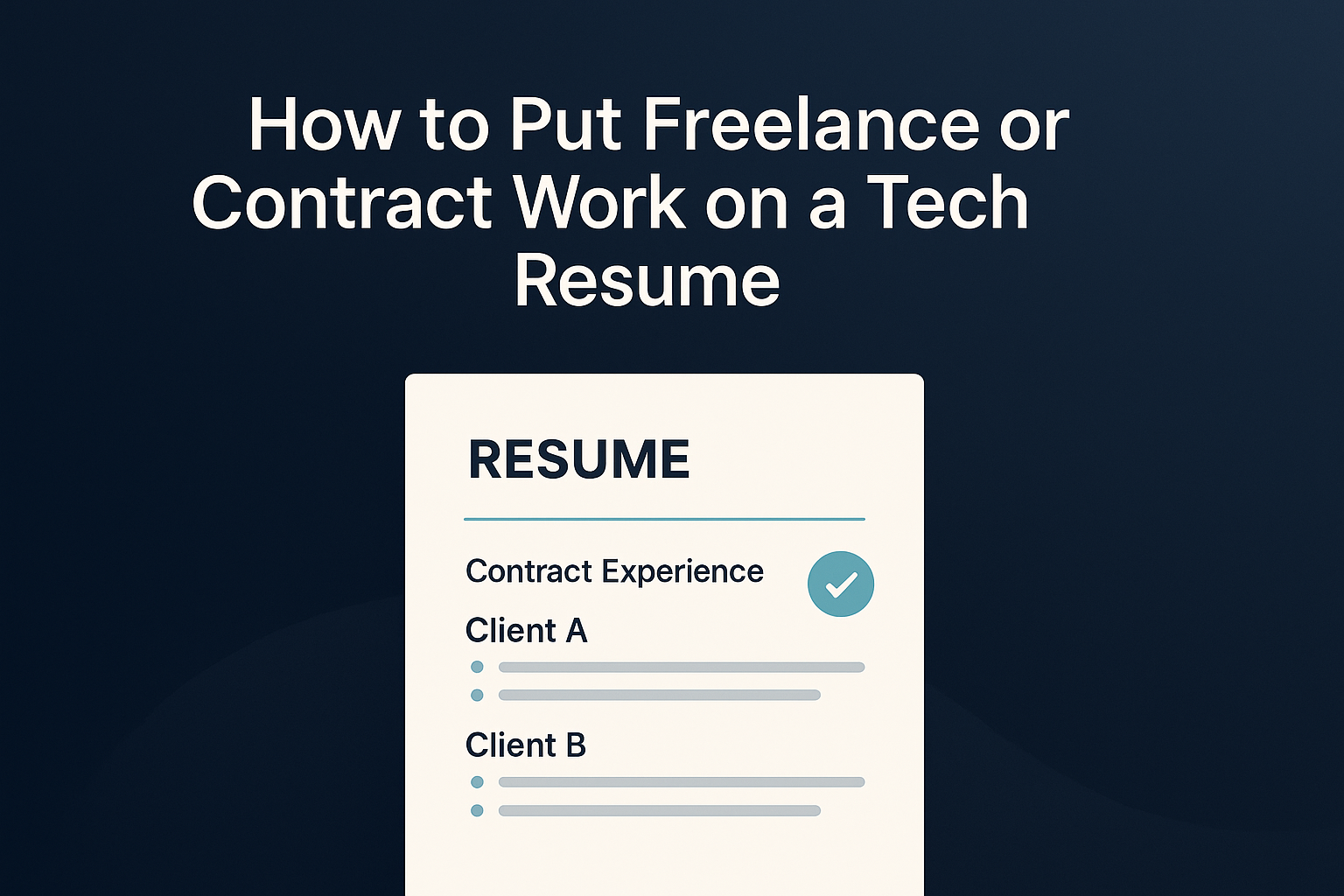
Freelance work is usually not what hurts a resume. Confusing presentation is. If your experience shows up as a pile of short dates, shifting titles, vague client labels, and generic bullets, a hiring manager may see instability before they see the actual pattern: companies kept paying you to solve problems. That matters because resumes get skimmed fast. Harvard advises writing for people and systems that scan quickly, and MIT notes recruiters often spend only a few seconds on an initial pass.[1][2]

Resume Age Bias in Tech: What to Remove, What to Keep, What Not to Hide

· 7 min read
Resume Age Bias in Tech: What to Remove, What to Keep, What Not to Hide

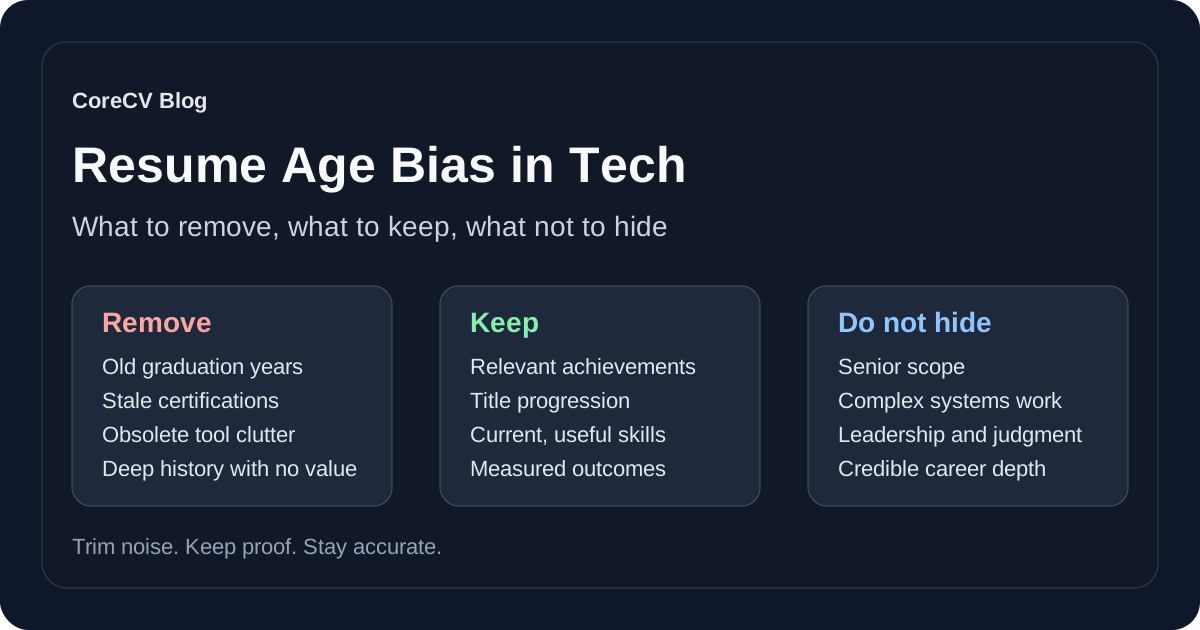
Age bias in hiring is real, and pretending otherwise does not help anyone. The U.S. Equal Employment Opportunity Commission says the Age Discrimination in Employment Act protects workers age 40 and older from discrimination in hiring and other employment decisions.[1] On a resume, that does not mean disguising your whole career. It means removing low-value details that make stereotyping easier while keeping the proof that you can do the job now.

Design Your Resume Like a Product: UX Principles for Job Seekers

· 7 min read
Design Your Resume Like a Product: UX Principles for Job Seekers

A resume is not just a work-history document. It is an interface.

The user is a hiring manager or recruiter with limited time, high volume, and a fast yes/no decision loop. Tufts Career Center notes that recruiters may spend only about 6 to 8 seconds on an initial resume pass, often while managing many openings and large applicant volume. [1] If your strongest evidence is buried, you lose before your experience is evaluated.

Treat your resume the way product teams treat high-stakes screens: design for the real user, under real constraints.

Design vs. Content: What Matters Most in a Tech Resume

· 12 min read
Design vs. Content: What Matters Most in a Tech Resume

The debate over resume design versus content often devolves into false binaries: either you need a visually stunning resume to stand out, or design is completely irrelevant and only content matters. Both extremes miss the point. The real question isn't whether design matters - it's what kind of design serves your content, and when design choices actively work against you.

For tech professionals, this distinction is critical. Your resume needs to communicate technical depth, project complexity, and problem-solving ability. Design can either facilitate that communication or obstruct it. Understanding where design helps, where it hurts, and how to apply structural principles that enhance readability will determine whether your resume works for you or against you.

Showcasing Your GitHub: How to Highlight Projects on Your Resume

· 11 min read
Showcasing Your GitHub: How to Highlight Projects on Your Resume

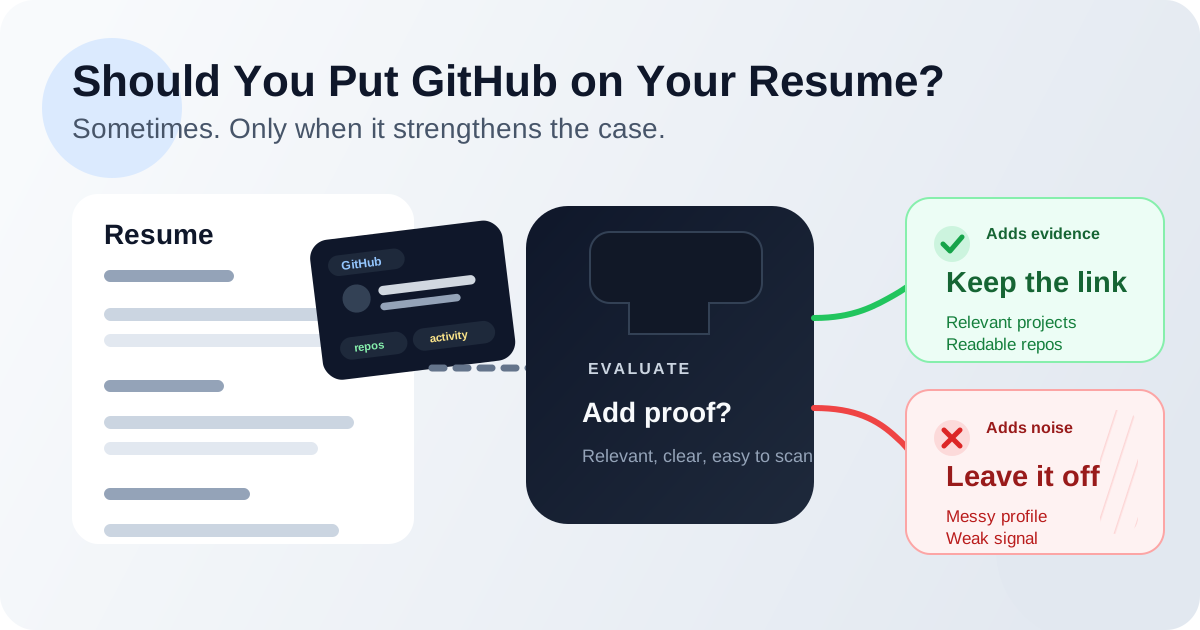
You've spent months building side projects, contributing to open-source, and polishing your GitHub profile. Your repositories demonstrate real skills - architectural decisions, code quality, problem-solving under constraints. Yet when it comes to your resume, most developers reduce this work to a single line: "GitHub: github.com/username." That's the equivalent of listing "Has code" as a skill. It tells hiring managers almost nothing.

The gap between having impressive projects and effectively communicating their value is where strong candidates become invisible. A GitHub link alone doesn't convey impact, complexity, or the depth of your technical judgment. Hiring managers won't dig through your repositories to figure out what you've built. You need to do that work for them - on your resume, in a format they can quickly evaluate.

One Page or Two? The Real Answer for Tech Professionals

· 18 min read
One Page or Two? The Real Answer for Tech Professionals

"Keep it to one page." It's the advice every job seeker has heard, repeated so often it's become gospel. But for tech professionals with complex project histories, diverse tech stacks, and years of experience, this rule can feel like trying to compress a production codebase into a single file. At some point, enforced brevity becomes a liability, not an asset.

The truth? Resume length isn't a binary choice. The real answer depends on relevance, structure, and what the role actually demands. Let's break down when one page works, when two pages are justified, and how to make the decision based on data rather than outdated conventions.