ATS Resume for Software Engineers: 3 Ways You Can Be Rejected Before a Human Reads It
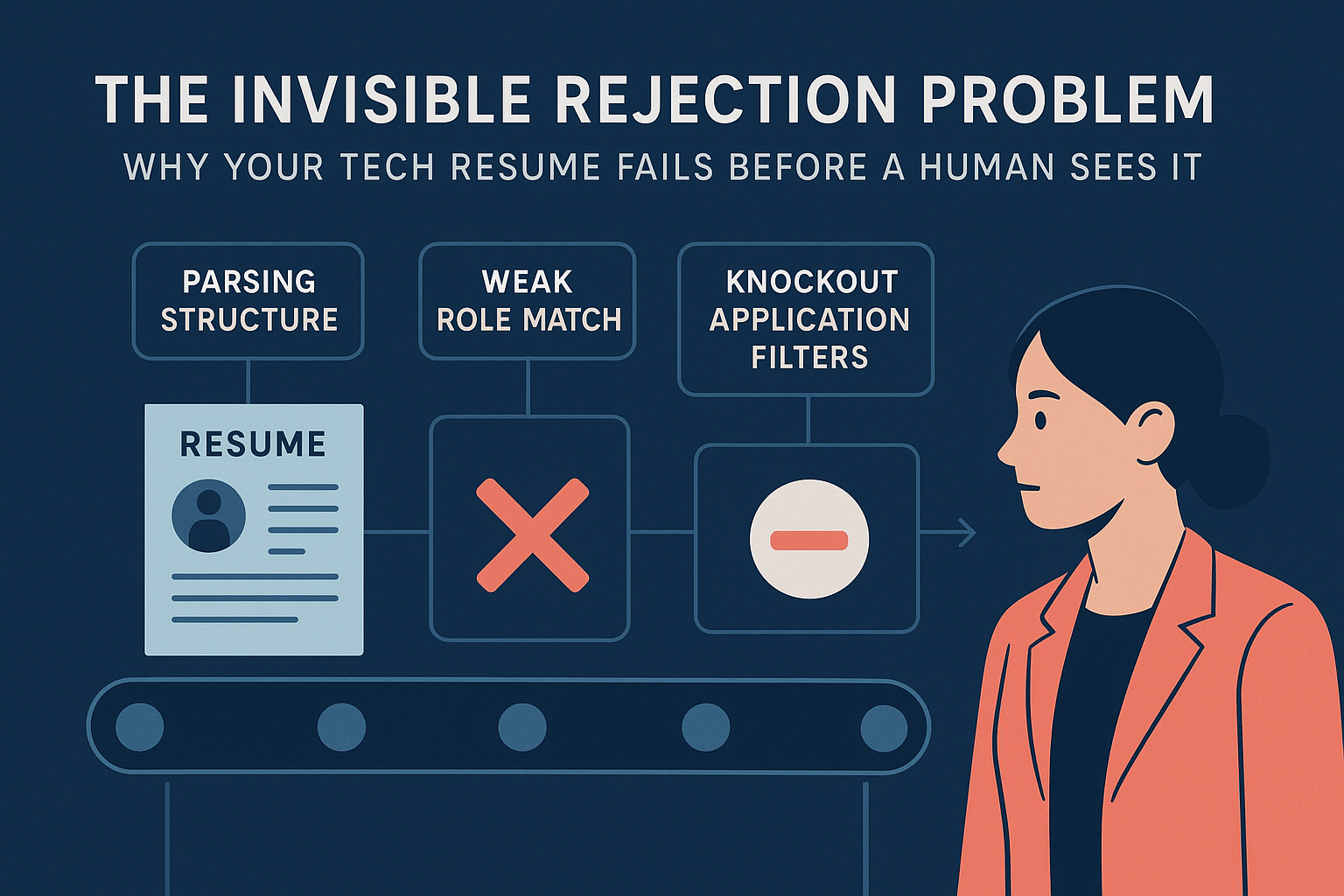
A lot of ATS resume advice for software engineers is aimed at the wrong problem. Candidates fixate on whether the system will "like" the file, when the real risk is earlier and more practical: your application can stall before a recruiter reads it because the resume does not parse cleanly, the role match is weak, or an application question closes the loop.[1][2][5][6] If you want an ATS-friendly resume for software engineers, think in terms of three pre-human failure modes, not one generic "beat the bots" checklist.
Failure mode 1: parsing breaks the basic story
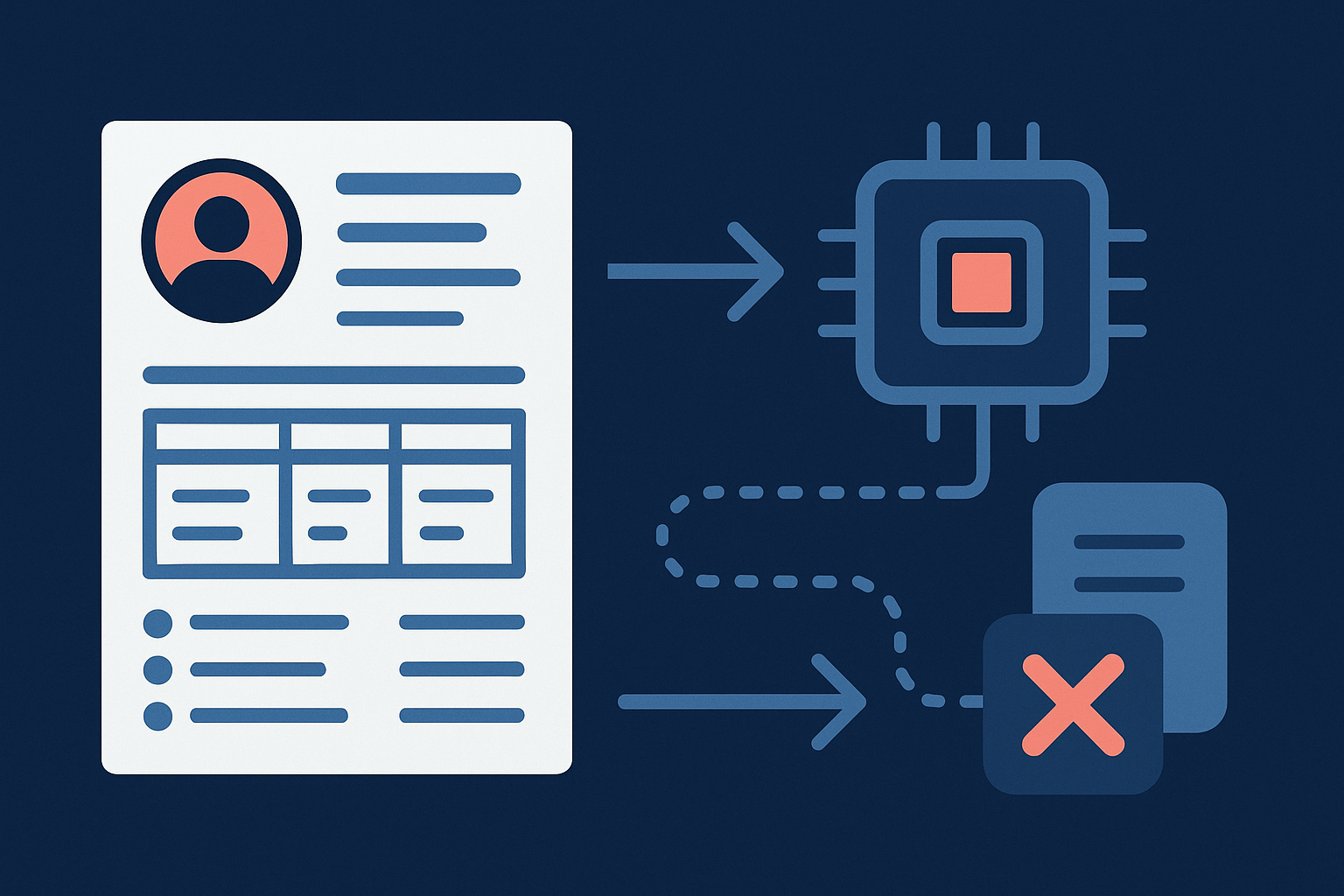
The first problem is mechanical. Hiring systems can only work with what they can reliably extract, which is why standard resume guidance keeps repeating the same basics: use familiar section labels, consistent formatting, and a simple layout that remains legible in plain text.[1][2][4] If your resume hides critical information in tables, text boxes, graphics, sidebars, or cute section names, you are creating avoidable translation risk.[5]
For software engineers, that often shows up in very ordinary ways: a multi-column template that scrambles the reading order, a custom heading instead of Experience, skills buried in a visual sidebar, or GitHub and location details tucked into a header area that may not be captured cleanly.
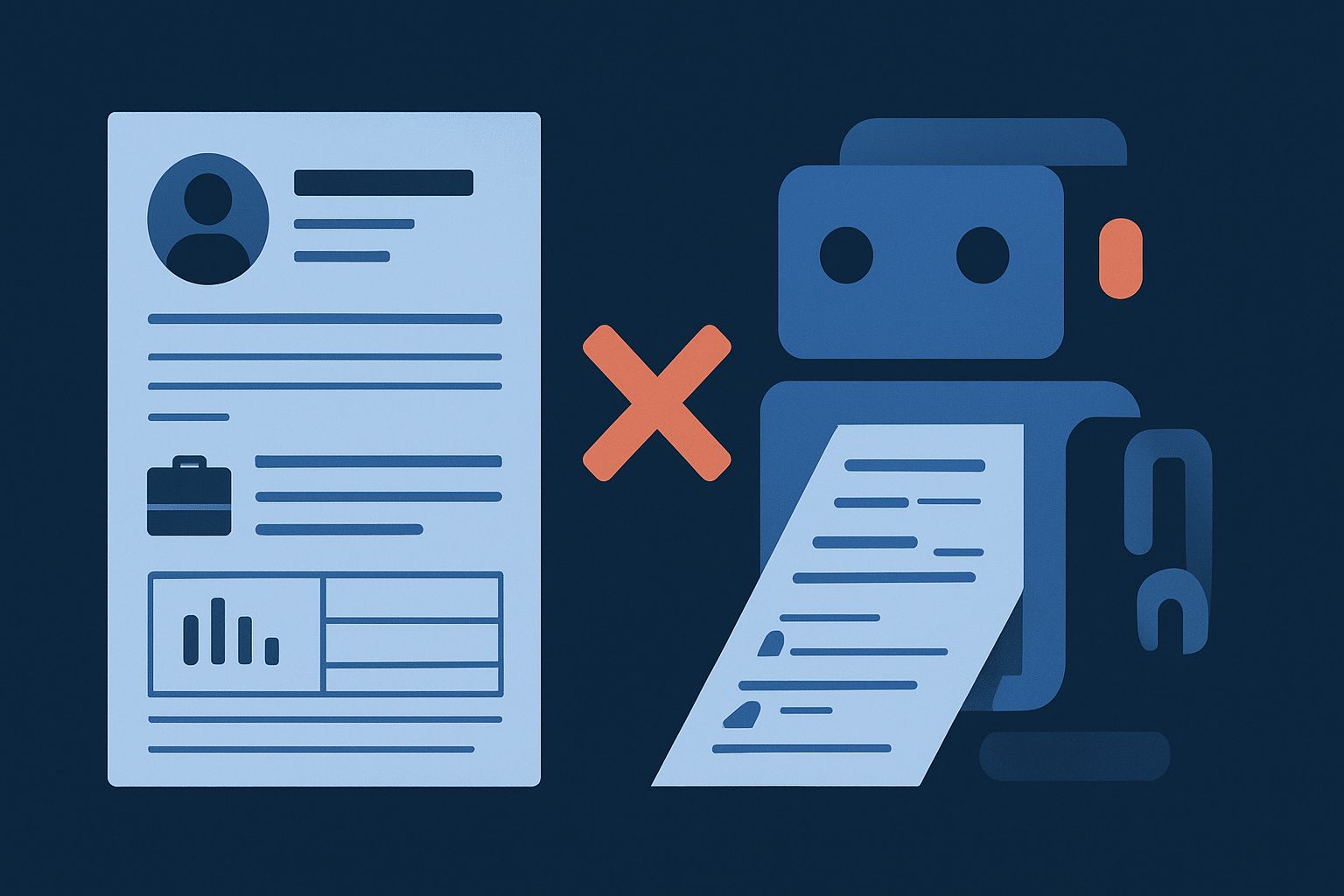 A layout that looks polished to you can still create incomplete or misread data downstream.
An ATS-friendly resume is not plain because plain is fashionable. It is plain because parsing errors can make a qualified engineer look less qualified than they are.
If your current resume leans heavily on layout, read The Hidden Cost of Pretty Resume Templates next. It goes deeper on the formatting trap.
Failure mode 2: the role-match signal is too weak
Even when the parser works, the next pre-human screen is often relevance. Strong resume guidance consistently tells candidates to use the position description to decide what to foreground and to make fit obvious fast.[1][2][4] In technical hiring, that matters because "worked on platform improvements" and "built backend services in Go for a multi-tenant billing system" do not carry the same signal.
A lot of software engineers assume a system or recruiter will infer fit from a generally solid background. In many workflows, that inference never happens. If the role is looking for Python, distributed systems, AWS, and incident response, but your resume mostly says software development, cloud work, and platform support, you may be qualified and still look like a weak match on the first pass.[5]
A tiny before-and-after makes the problem clear.
Before
Improved platform reliability and supported cloud services.
After
Built Python services on AWS for a customer billing pipeline, added on-call runbooks, and cut Sev-2 incidents by 35%.
The stronger version is not keyword stuffing. It is a better translation of real work into role-relevant evidence. That is exactly where bullet-writing guidance helps: action, context, and outcome beat vague responsibility language.[3]
 The gap is often not your experience. It is how directly the resume maps that experience to the role.
If you want a faster way to tighten the resume side of that problem, try CoreCV's resume builder. It helps you keep a structured base resume, then tune a role-facing version against a job description or job URL. It will not change employer knockout rules, but it can make the resume itself easier to parse and easier to match.
If you are still treating every application like one master-resume blast, read Do You Need to Tailor Your Resume for Every Job?.
Failure mode 3: the application closes before the resume matters
The third failure mode sits outside the resume file itself. Some hiring workflows include screening questions that can automatically route or reject candidates when baseline requirements are not met.[6] Work authorization, location, clearance, shift availability, and required certifications are common examples.
That does not mean every "no" answer triggers an instant rejection in every system. It does mean these fields can matter before a person reviews your resume, so they deserve the same level of care as the document you upload.
 Some applications narrow the pool before resume review even starts.
This is also where candidates over-attribute everything to the ATS. Sometimes the issue is formatting. Sometimes it is weak role language. Sometimes the resume is fine, but the application answers or requirements shut the door earlier in the process.
What ATS-friendly actually means for software engineers
For software engineers, an ATS-friendly resume usually has five practical traits.
- It uses standard section names like Experience, Projects, Skills, and Education so content is easier to map.[5]
- It stays readable when pasted into plain text, which is a simple proxy for parser resilience.
- It names real technologies, environments, and scope directly, such as Python, TypeScript, Kubernetes, AWS, CI/CD, or distributed systems, when those terms genuinely reflect your work.[1][3]
- It proves those terms with bullets that show what you built, changed, improved, or owned in production.[2][3]
- It stays consistent with the rest of the application, including location, title logic, and work authorization answers.
That is a more useful standard than asking whether the ATS will "like" your resume. The better question is whether your application survives all three pre-human gates: readable structure, visible role match, and consistent screening answers.
A practical pre-submit check
Before you apply, run this quick check:
- Can a system find my current title, employers, dates, skills, and projects without guessing?
- Do my bullets use the same language the target role uses for work I actually did?
- Are my application answers, location story, and work authorization details consistent with the resume?
- Does the resume still make sense when pasted into plain text?
- If someone read only the top half of page one, would the intended role feel obvious?
That is what an ATS resume for software engineers looks like in practice. Not magic. Not tricks. Just a resume and application package that make relevance easier to recognize before a human steps in.
For a repeat-touch next step, save this three-gate check and keep an eye on the CoreCV blog for more software-engineer resume breakdowns. If you want two deeper follow-ups right now, read Beating the Bots: How to Make Your Resume ATS-Friendly for broader ATS mechanics and The Hidden Cost of Pretty Resume Templates for the formatting side of the problem.
Sources
1. MIT Career Advising & Professional Development, Resumes: https://capd.mit.edu/resources/resumes/
2. Harvard FAS Mignone Center for Career Success, Create a Strong Resume: https://careerservices.fas.harvard.edu/resources/create-a-strong-resume/
3. Columbia Center for Career Education, Resumes with Impact: Creating Strong Bullet Points: https://www.careereducation.columbia.edu/resources/resumes-impact-creating-strong-bullet-points
4. UC Berkeley Career Engagement, Resumes: https://career.berkeley.edu/prepare-for-success/resumes/
5. Indeed Career Guide, How To Write an ATS Resume (With Template and Tips): https://www.indeed.com/career-advice/resumes-cover-letters/ats-resume-template
6. Lever, Knockout Questions: A Time-Saver for Hiring Teams: https://www.lever.co/blog/knockout-questions