Ghost Jobs Are Wasting Your Tailoring Time: How to Verify a Role Before You Rewrite Your Resume

A lot of ghost-job advice gets stuck at outrage. The more useful point is simpler: a weak listing can waste more resume effort than a weak bullet ever will. Good resume guidance still says to tailor for the role, make relevant evidence easy to see, and write for fast human and system scanning.[1][2][3] But that only helps if the job posting is real enough, current enough, and specific enough to deserve a serious rewrite in the first place.
Stop treating every listing like a tailoring-worthy signal
Candidates often act as if the moment a posting looks vaguely relevant, the tailoring clock starts. That is backwards. Tailoring takes real effort - you are choosing bullets, reordering proof, trimming projects, and deciding what part of your background to foreground. Tools like CoreCV can make that work clearer and less repetitive, but they do not change the threshold question of whether a role is current, serious, and specific enough to deserve that effort in the first place. If the target is stale, low-intent, or fake, that hour is gone.
What people call a ghost job is usually one of four things: a stale listing nobody took down, a pipeline role that is gathering candidates before real urgency exists, a vague repost that never gives you a clean target, or a scam wearing normal hiring language. Those are different problems, but they deserve the same response: verify first, then decide how much effort the role has earned.
If you need the broader red-flag version of this topic, How to Spot a Bad Job Posting Before You Apply is the companion read. This piece is narrower: how to protect your tailoring time.
Use a simple reality check before you rewrite anything
The fastest useful screen has three parts.
First, check whether the role looks current. If the listing is old, repeatedly reposted, or no longer matches the company careers page, slow down. Posting age alone is not proof that a role is dead, but it does change how much confidence you should place in it.
Second, check whether the role is specific enough to tailor against. You can only tailor well when the posting gives you something real to aim at: a recognizable scope, a clear level, and enough detail to decide which evidence belongs on the page.[1][2] If you cannot explain the role in one sentence, the document is probably too fuzzy to justify a deep rewrite.
Third, check whether the process feels grounded. The FTC warns that scammers advertise jobs through the same channels legitimate employers use and often want money or sensitive information, not your skills.[4] If someone rushes you around the normal process, asks for payment, or pushes for sensitive information before there is a legitimate reason, the problem is bigger than wasted tailoring time.
If you want a cleaner way to keep one accurate base resume while deciding which roles deserve the full treatment, CoreCV's resume builder is useful for storing the structured master version first, then tailoring against a pasted job description or job URL only after the opportunity clears that screen.
 A simple reality check helps you see whether a role is current, specific, and legitimate before you spend real tailoring time.
Match your effort to the quality of the signal
This is the part most candidates skip. Tailoring should not be binary.
A no-tailor role gets almost nothing from you. If the company page is inconsistent, the scope is incoherent, or the recruiter behavior feels scammy, move on.
A light-tailor role gets a small pass. Maybe you swap in a better headline, move one relevant project higher, and clean up the top third of the page, but you do not burn a full rewrite on a listing you still do not trust.
A full-tailor role earns the deep work. Deep tailoring makes sense when the posting is clear enough to map your accomplishments to actual employer needs and make the right outcomes easy to see.[3] That level of effort makes sense when title, scope, seniority, location, and process all broadly line up.
This tiered approach matters because ghost jobs do not only waste applications. They distort your decision-making. You start optimizing for a target that may never produce a serious review.
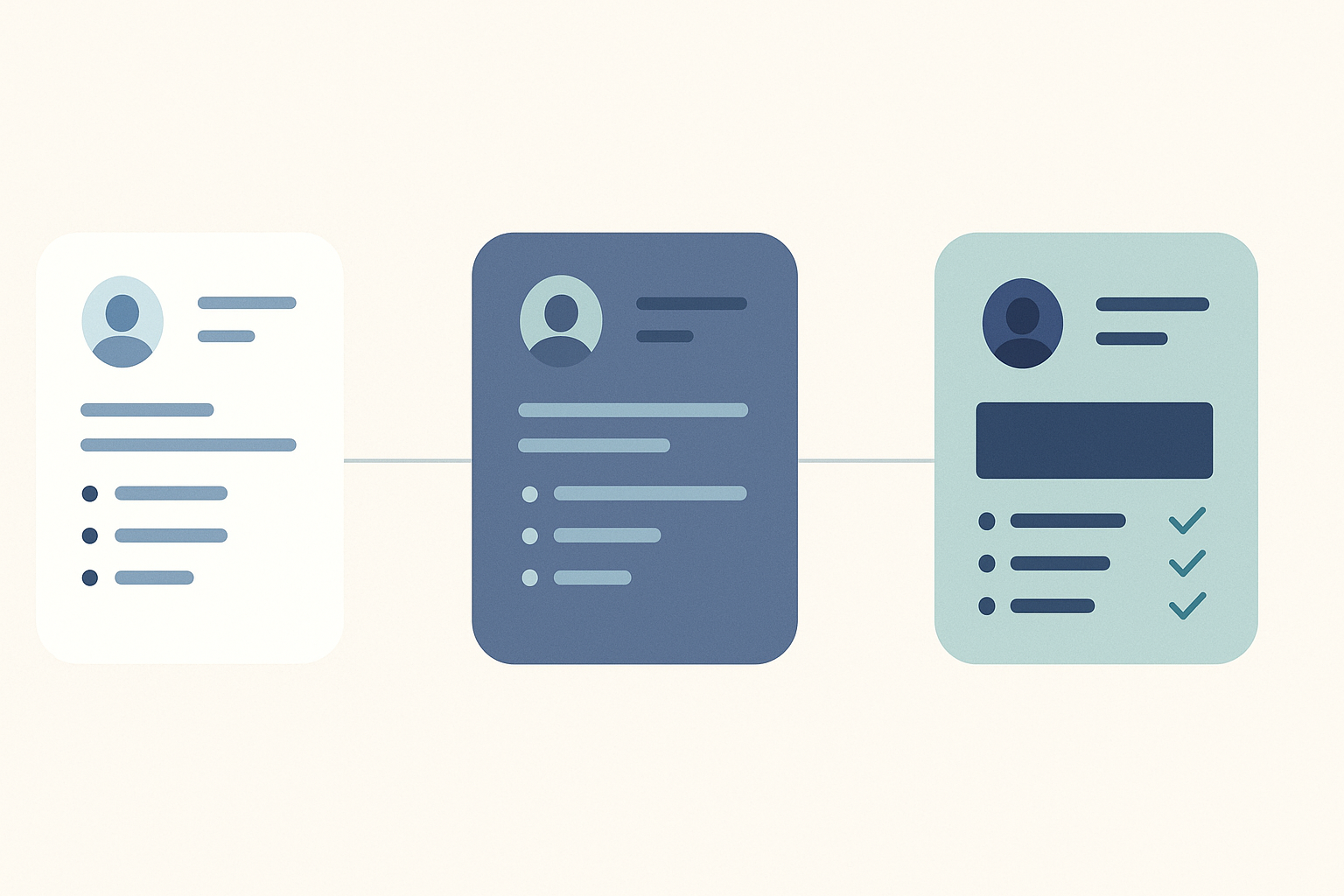 Matching your effort to the signal keeps weak listings from consuming the same energy as credible opportunities.
Watch for the signals that actually justify a rewrite
The strongest green flags are usually boring. The company careers page matches the aggregator version. The posting tells you what kind of problems the team needs solved. The level feels coherent. The tooling is detailed enough to suggest a real environment, but not so bloated that it reads like three jobs in one. A recruiter can answer basic questions without sounding evasive.
The strongest yellow flags are also predictable. The posting has been live a long time. The same role keeps reappearing with tiny wording changes. The title says one thing while the scope or pay hints at another. None of those automatically mean ghost job, but each one should lower the amount of tailoring effort you spend before you learn more.
There is also a simple question worth using before every serious rewrite: if this role disappeared tomorrow, would I still be glad I spent this hour tailoring for it? If the answer is no, you probably moved too early.
 Stronger signals tend to look calm and coherent. Weaker ones usually show up as ambiguity, mismatch, or repetition.
For a related cleanup pass, Do You Need to Tailor Your Resume for Every Job? and ATS Resume for Software Engineers: 3 Ways You Can Be Rejected Before a Human Reads It help once the role is credible enough to target.
Verify the role before you verify the wording
A lot of candidates obsess over whether one bullet should say built, led, or improved while ignoring the bigger decision upstream. Is this job posting actually worth aiming at hard?
That is the better ghost-jobs habit to build. Verify that the role is current. Verify that it is specific enough to tailor against. Verify that the recruiter behavior matches a real hiring process. Then decide whether the opportunity deserves no tailoring, a light pass, or a full rewrite.
The goal is not to become cynical. It is to get more selective with where your effort goes. A job posting should earn your tailoring time.
For a repeat-touch next step, follow the resume advice archive, then continue with How to Spot a Bad Job Posting Before You Apply and Stop Faking Resume Metrics: What to Do When You Can't Prove the Number.
Sources
1. Harvard FAS Mignone Center for Career Success, Create a Strong Resume: https://careerservices.fas.harvard.edu/resources/create-a-strong-resume/
2. MIT Career Advising & Professional Development, Resumes: https://capd.mit.edu/resources/resumes/
3. UC Berkeley Career Engagement, Resumes: https://career.berkeley.edu/prepare-for-success/resumes/
4. Federal Trade Commission, Job Scams: https://consumer.ftc.gov/articles/job-scams