Stop Faking Resume Metrics: What to Do When You Can't Prove the Number
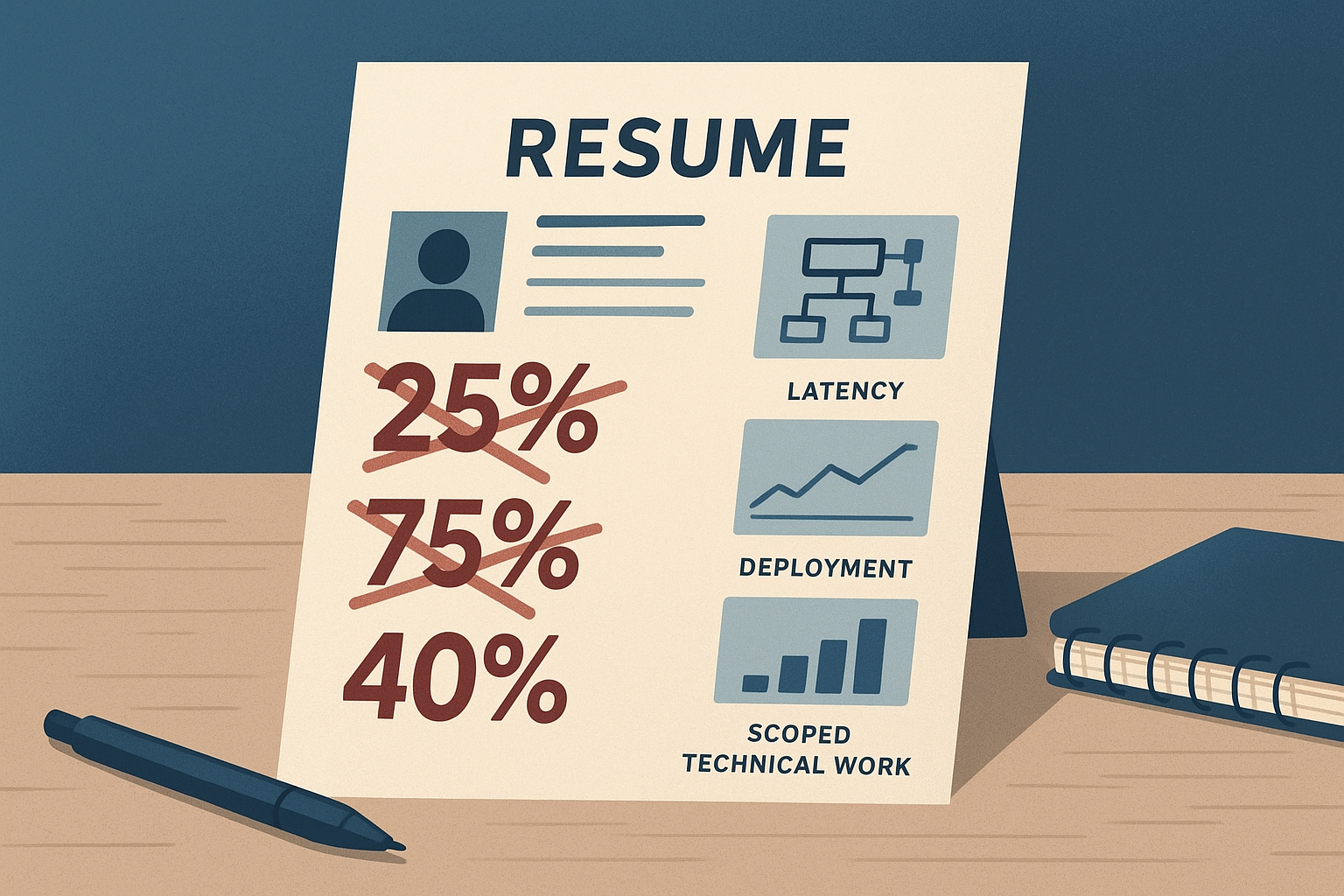
A lot of resume advice gets repeated long after the useful part has worn off. "Add more metrics" started as a good correction to vague, responsibility-heavy bullets. Now it often gets applied so mechanically that candidates feel pushed to invent percentages they cannot really defend.
Strong resume guidance is narrower than that: be specific, focus on accomplishments, and quantify impact where possible.[1][2][3][4]
Numbers help when they clarify something real
Metrics are useful when they make scope, speed, scale, or change easier to understand. If you reduced incident volume by 30%, cut build time from 20 minutes to 8, or supported a migration that moved 4 million records without downtime, the number helps the reader grasp what happened.
That is the real point of quantification: clarity. A good number makes your work easier to picture.
For software engineers, the strongest metrics usually show scale, efficiency, quality, or a business-adjacent outcome you can honestly support.
Reduced CI build time from 18 minutes to 7 by parallelizing test stages and pruning redundant integration jobs.
Those bullets work because the numbers explain the work instead of trying to sell it.
Fake-looking metrics create a trust problem
The common failure mode is not using numbers. It is forcing numbers into bullets that do not naturally have them.
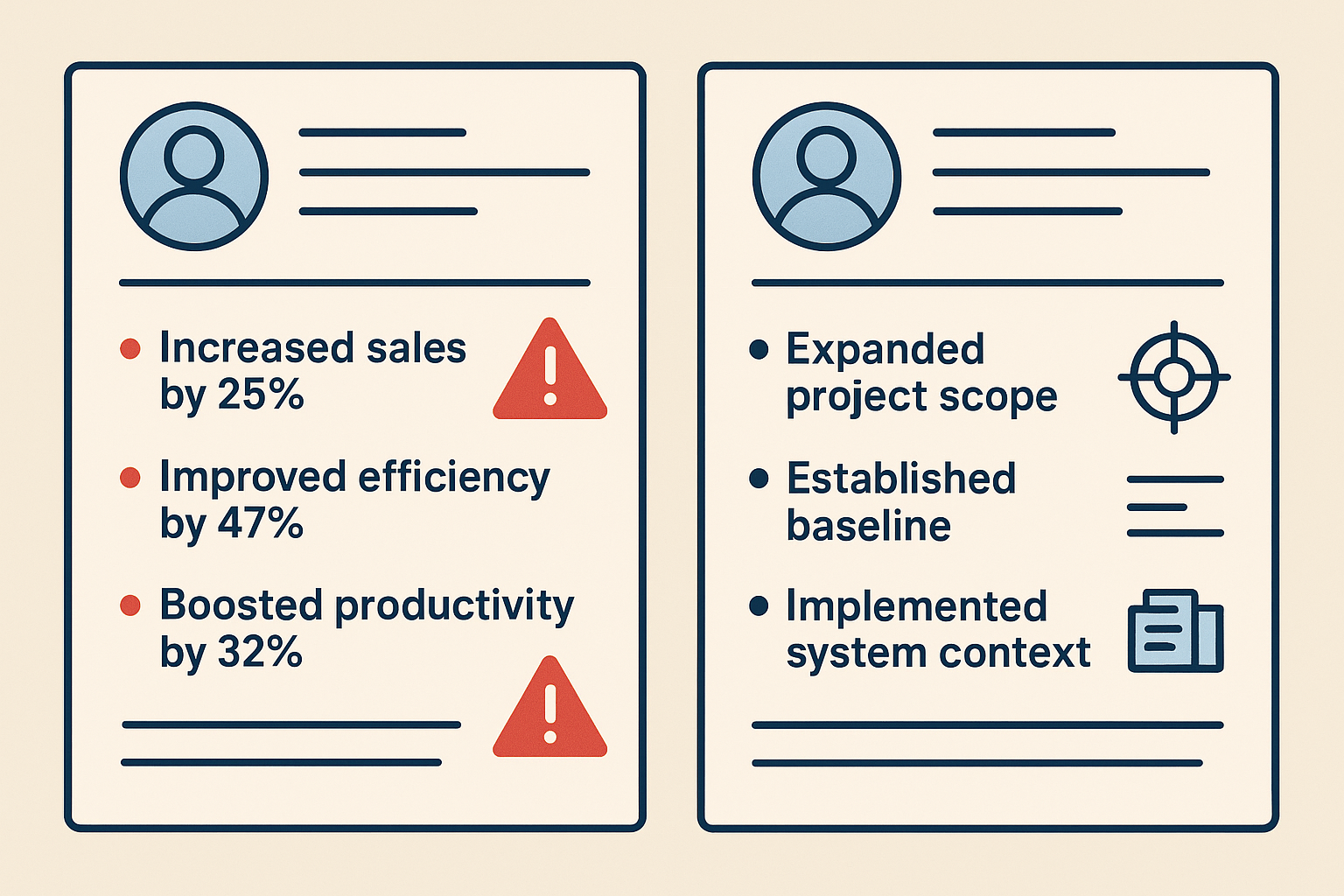
Hiring teams have read enough resumes to recognize suspicious precision. A bullet that claims you "improved platform efficiency by 47%" without saying what efficiency means does not sound impressive. It sounds reverse-engineered.
This gets worse in collaborative environments. Many engineers work on systems where impact is real but distributed: platform work, tooling, migrations, reliability, developer experience, security hardening. Trying to turn every one of those contributions into a solo percentage often makes the bullet less believable.
Patterns worth cutting:
- percentages with no baseline, scope, or explanation
- revenue claims you cannot directly support
- team outcomes written as if they were individual outcomes
- vague nouns like efficiency, productivity, or performance with no concrete referent
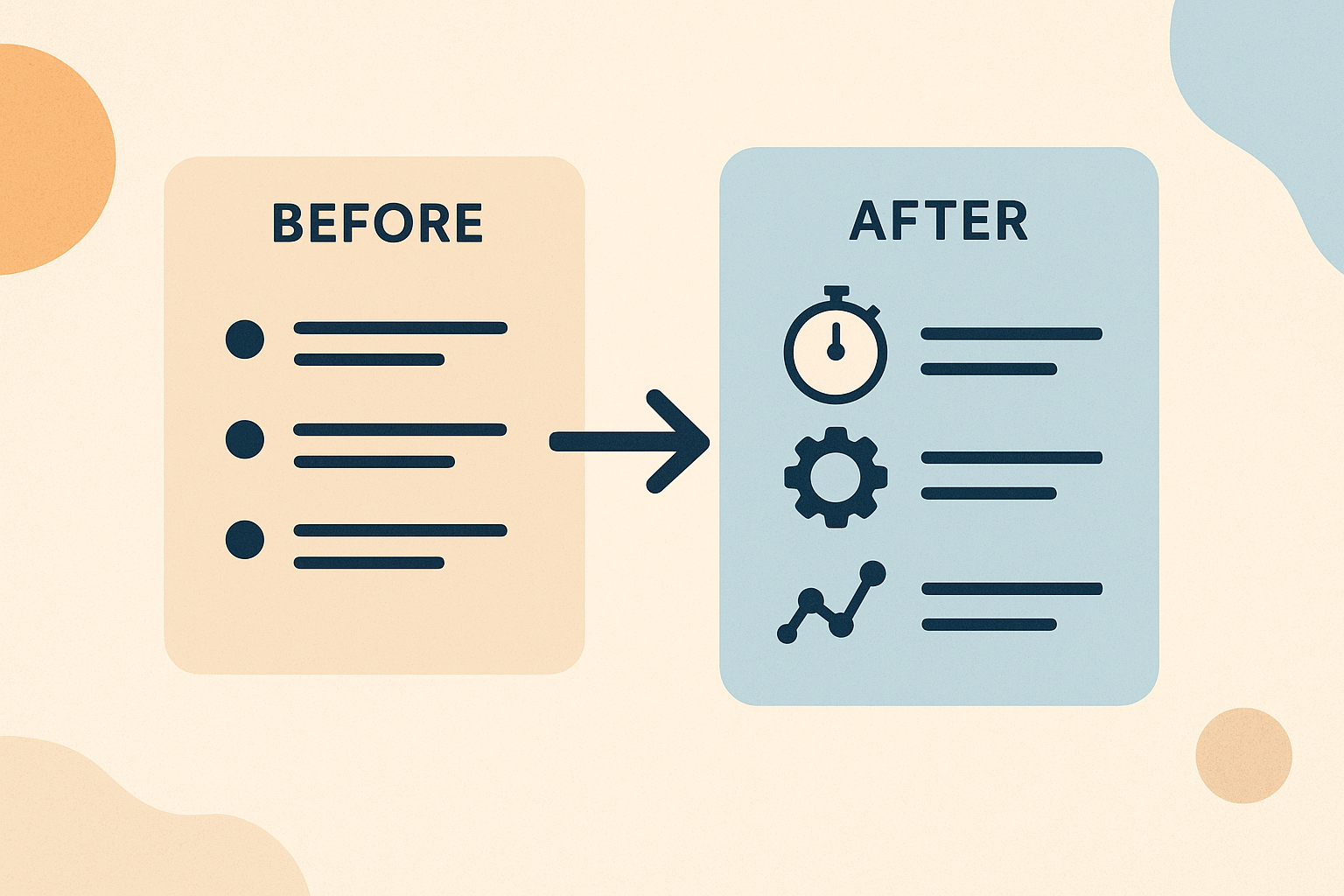
A weaker bullet looks like this:
Improved engineering productivity by 40% through platform enhancements.
A stronger rewrite does not need fake precision:
Built internal deployment tooling that removed several manual release steps, shortened handoff time for engineers, and made weekly releases more predictable.
The stronger version is more believable because it names the action and the result instead of hiding behind a percentage.[3]
What to use when the number is hard to isolate
If you cannot prove a metric cleanly, do not panic and do not invent one. You still have several credible ways to show value.
Start with scope. A lot of technical work becomes legible when you name the system, constraint, or environment clearly.
Owned alerting and incident-response improvements for a shared payments platform used across three product lines.
Then describe the problem you changed.
Reworked flaky end-to-end test coverage that had been blocking reliable release signoff.
Then describe the operational effect without pretending you own the entire outcome.
Added rollback safeguards and deployment checks that reduced bad releases reaching production.

This style matters for collaborative or long-tail work. Infrastructure, platform, DevEx, security, data, and architecture work often changes the conditions under which other teams succeed. That does not always map to one clean percentage.
If you need help deciding which evidence actually supports a target role, CoreCV's resume builder is useful for keeping a structured base resume, then tuning the role-facing version against a job description or job URL without rewriting from scratch.
Better resume metrics examples for collaborative work
When numbers are available, use them. When they are not, use evidence the reader can still evaluate.
Try these swaps:
Instead of
Increased system performance by 35%.
Use
Reduced P95 API latency by caching repeated lookups and removing a slow downstream dependency.
Instead of
Improved developer productivity by 50%.
Use
Built a self-serve environment setup script that replaced a multi-step onboarding process engineers had been doing manually.
Instead of
Drove major revenue impact through checkout improvements.
Use
Implemented checkout reliability fixes and instrumentation for a high-traffic purchase flow, helping the team diagnose failure points faster.
The pattern is simple: use the most defensible form of evidence you have. Sometimes that is a hard metric. Sometimes it is scale. Sometimes it is a before-and-after change in workflow, reliability, or complexity.
The standard to aim for
The goal of a bullet is to make the work legible: what changed, how close you were to it, and why the result sounds real.[1][2][4] The mistake is acting as if every good bullet must end in a percentage.
Use numbers when they clarify. Use plain evidence when they do not. Protect credibility first.
For a repeat-touch next step, save one question from this article: "Can I defend this number if someone asks where it came from?" Run that test across your current resume before your next application cycle. Then keep going with Do You Need to Tailor Your Resume for Every Job?, How to Show Promotions on a Resume Without Losing the Story, and ATS Resume for Software Engineers: 3 Ways You Can Be Rejected Before a Human Reads It.
You can also keep an eye on the CoreCV blog for more evidence-first resume breakdowns.
Sources
1. Harvard FAS Mignone Center for Career Success, Create a Strong Resume: https://careerservices.fas.harvard.edu/resources/create-a-strong-resume/
2. MIT Career Advising & Professional Development, Resumes: https://capd.mit.edu/resources/resumes/
3. Columbia Center for Career Education, Resumes with Impact: Creating Strong Bullet Points: https://www.careereducation.columbia.edu/resources/resumes-impact-creating-strong-bullet-points
4. UC Berkeley Career Engagement, Resumes: https://career.berkeley.edu/prepare-for-success/resumes/