How to Write a Resume When Your Best Work Was Infrastructure No One Noticed

Infrastructure engineers often get punished by the same logic that proves they did the job well. If your best month was the month nothing broke, the resume can end up looking empty unless you translate prevention into evidence. Strong resume guidance still applies here - tailor for the role, keep the format easy to scan, and show concrete accomplishments rather than a generic tool list.[3][4][6] But infrastructure, platform, and reliability work usually needs one extra move: make the hidden leverage visible by naming the system, the risk or drag, and what changed because your work existed.
A quiet system is still evidence
A lot of infrastructure resumes read like inventories: Kubernetes, Terraform, AWS, CI/CD, monitoring. That tells a hiring team what you touched, but not why you mattered.
The better framing is to show what became more stable, faster, safer, or easier to operate because of your work. In reliability engineering, reducing toil, making releases safer, and improving service stability all count as meaningful engineering outcomes.[1][2] Your resume should too.
A weak bullet looks like this:
Managed cloud infrastructure and improved system reliability.
A stronger version gives the reader something to infer from:
Reworked deployment safeguards for a multi-service billing platform, adding pre-release checks and rollback controls that cut failed production pushes and reduced after-hours incident cleanup.
That bullet works because it names the system, the intervention, and the consequence.
 A stronger infrastructure bullet gives the reader a system, an intervention, and a consequence they can infer from.
If your current resume has plenty of real work but no clean way to tailor it, CoreCV's resume builder is useful for keeping a structured master version, then creating role-facing infrastructure, platform, or backend variants against a job description or job URL.
Prevention has to be translated, not announced
Candidates often write bullets like prevented incidents or improved reliability and stop there. Prevention stays invisible unless you explain what failure was likely and what you changed.
A stronger version usually names the system or workflow, the failure mode or operational drag, the mechanism you changed, and what became more reliable, faster, safer, or easier afterward. That is still normal bullet-writing discipline: context, action, and result.[5] The result may be fewer pages, cleaner handoffs, lower rollback risk, or less operator toil instead of a shiny feature launch.
For example:
Automated certificate rotation for internal services, removing a recurring manual renewal path that had been creating avoidable outage risk across production and staging environments.
Consolidated environment configuration into reusable deployment templates, which reduced drift between services and made new-service setup faster for product teams.
These are stronger than generic claims because they make the hidden work legible.
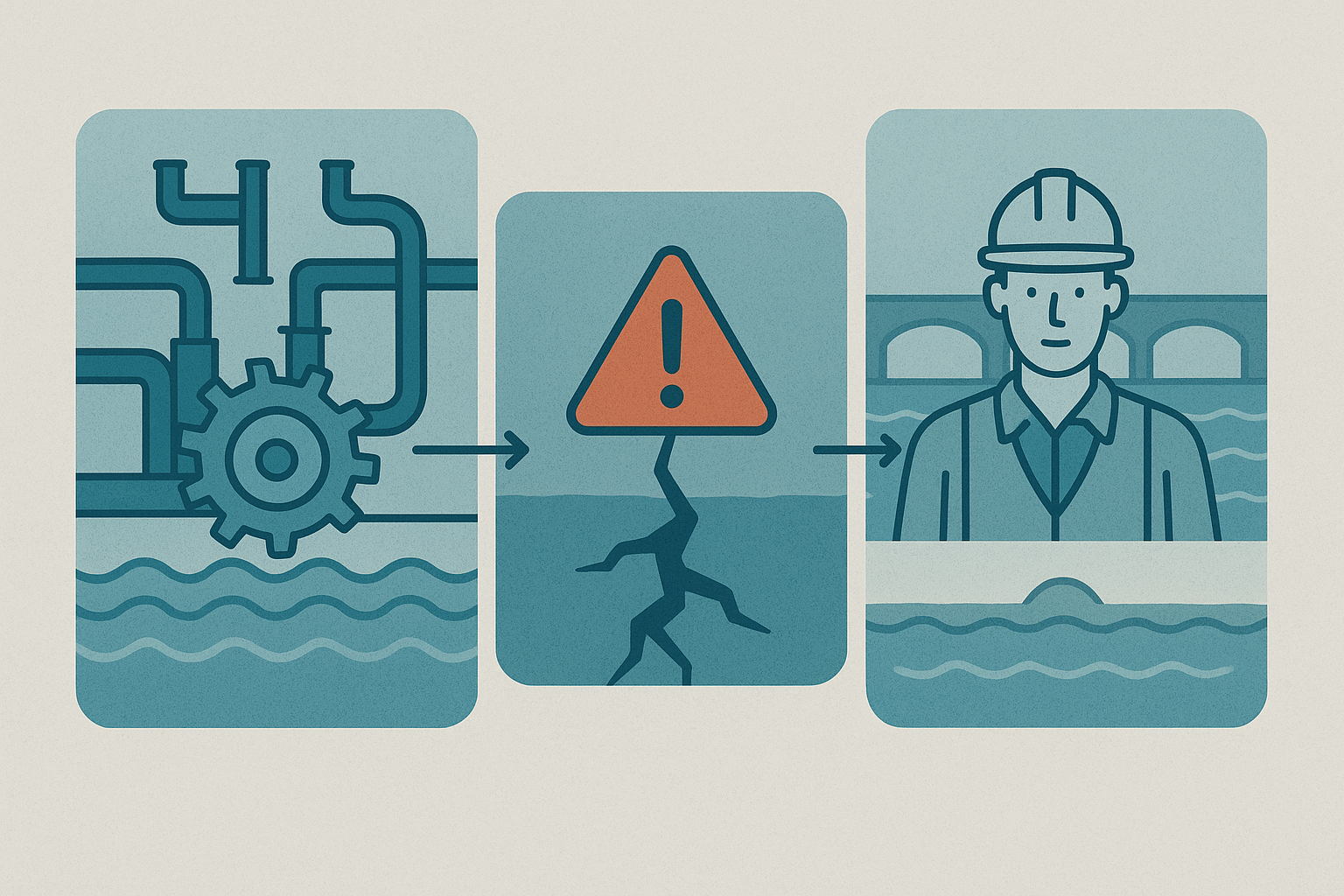 Translate invisible work by showing the system, the risk, and what became calmer or safer afterward.
Show internal leverage, not just uptime slogans
A lot of infrastructure work matters because other engineers get to move faster with less risk. That leverage belongs on the page.
Instead of writing improved developer productivity, show the actual system or workflow you changed.
Weak:
Built internal platform tools used across the company.
Stronger:
Built self-serve service templates and deployment checks for backend teams, shortening setup time for new services and reducing configuration-related release mistakes.
That kind of bullet shows two levels of impact at once: direct technical work and the operational relief it created for other teams. If fake-sounding percentages are another problem, Stop Faking Resume Metrics: What to Do When You Can't Prove the Number is the right companion read.
The same rule applies to incident response. Do not just say you participated in on-call. Show what changed because you learned from incidents.
Turned recurring database failover incidents into runbook and alerting changes that improved escalation clarity and reduced noisy pages during peak traffic windows.
That is more credible than calling yourself an on-call hero.
Operational scale needs specifics, not drama
Infrastructure candidates sometimes overcorrect and try to make quiet work sound epic. That usually backfires. A better approach is to name the scale or constraint that made the work hard.
Useful specifics include shared services used by multiple product teams, high-volume traffic or strict latency expectations, regulated or high-availability environments, migration sequencing, rollback constraints, and repeated failure modes reduced.
That is often enough. You do not need a miniature postmortem, and you do not need to inflate everything into platform mythology.
This is also why tool lists should stay in their place. Tools confirm the environment. They do not replace evidence. If the strongest part of your resume is still a long skills block, the resume is probably hiding the real story. The Best Resume Format for Senior Engineers Who Haven't Coded Full-Time in Years covers a similar problem from the senior-scope side.
A simple rewrite test for invisible work
Before you keep an infrastructure bullet, make sure a reader can quickly tell what system or operational surface was involved, what risk or drag existed, what you changed in the workflow or architecture, and what became safer, more stable, faster, or easier afterward.
If the bullet cannot answer at least two or three of those clearly, it probably is not saying enough yet. Hiring teams still need the resume to become legible fast.[3] Tailoring also matters because an infrastructure engineer resume for a platform team should emphasize different signals than one aimed at a backend product role.[4] If you are still sending one generic version everywhere, Do You Need to Tailor Your Resume for Every Job? is worth reading next.
 This rewrite test helps quiet infrastructure work read like evidence instead of a tool list.
The goal is simple: make invisible work interpretable. A good infrastructure engineer resume does not beg the reader to appreciate quiet systems work. It shows enough evidence that they can.
Until CoreCV ships a true subscribe-style repeat-touch path, the strongest fallback is to follow the resume-advice archive for more evidence-first resume breakdowns. If your current draft is also fighting ATS readability, pair this with ATS Resume for Software Engineers: 3 Ways You Can Be Rejected Before a Human Reads It.
Sources
1. Google, Site Reliability Engineering, Chapter 5, "Eliminating Toil": https://sre.google/sre-book/eliminating-toil/
2. Google, Site Reliability Engineering, Chapter 8, "Release Engineering": https://sre.google/sre-book/release-engineering/
3. MIT Career Advising & Professional Development, Resumes: https://capd.mit.edu/resources/resumes/
4. Harvard FAS Mignone Center for Career Success, Create a Strong Resume: https://careerservices.fas.harvard.edu/resources/create-a-strong-resume/
5. Columbia Center for Career Education, Resumes with Impact: Creating Strong Bullet Points: https://www.careereducation.columbia.edu/resources/resumes-impact-creating-strong-bullet-points
6. UC Berkeley Career Engagement, Resumes: https://career.berkeley.edu/prepare-for-success/resumes/