The Best Resume Format for Senior Engineers Who Haven't Coded Full-Time in Years
A lot of senior-engineer resumes fail for the same reason: they pick the wrong mirror. Some read like executive bios with no technical proof. Others try to look current by pretending the candidate still spends eight hours a day shipping tickets. Good resume guidance keeps returning to the same basics - tailor to the role, use a readable structure, and make evidence easy to scan.[1][2][4] Senior candidates have a second problem: the format also has to show where their technical value lives now. If their leverage comes from architecture, prioritization, migration judgment, and cross-team technical decisions, the page should make that obvious.[5]
Use the top third to explain what kind of senior you are
If your recent work has been staff-plus, architecture-heavy, or cross-team, title alone is rarely enough. A short summary is useful here, but only if it names real scope: domain, kinds of systems, decision range, and the way you create leverage. The principle is simple: make the resume fact-based, easy to skim, and selective about what earns space.[1][2][4]
A stronger summary sounds like this:
Staff-level backend engineer focused on platform architecture, migration planning, and reliability for high-scale financial systems. Known for turning ambiguous cross-team problems into executable plans and coaching teams through delivery.
If you are rebuilding a resume for different kinds of senior roles, CoreCV is useful for keeping a fuller base resume, then tailoring role-facing versions against a specific staff IC, architect, or technical-lead target, including a pasted job description or job URL.
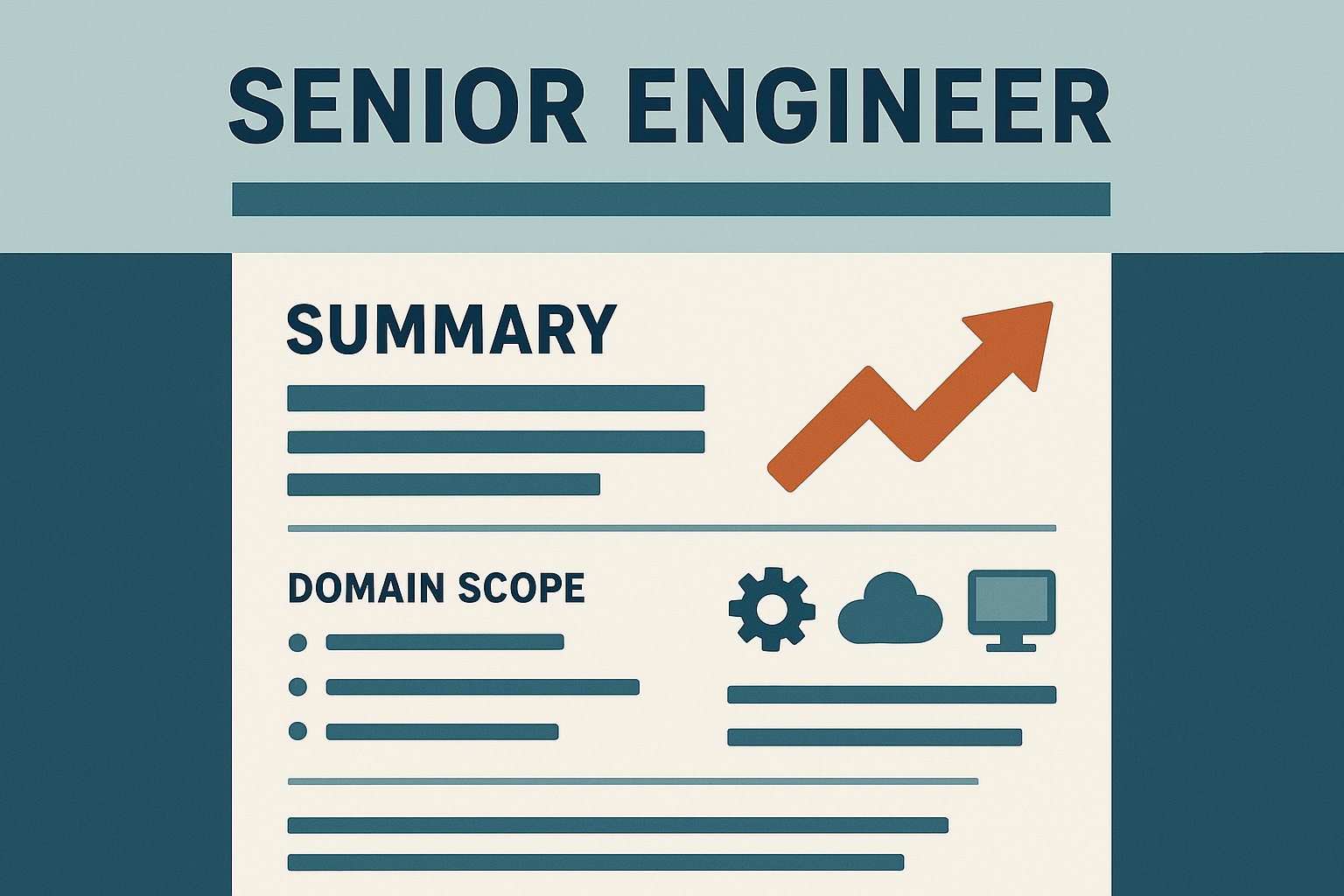 Use the top third to tell a hiring team what kind of senior engineer you are.
Your experience section should show decision weight, not task volume
Senior resumes get weaker when every bullet sounds like project management and stronger when they show what your judgment changed.
Staff-plus work often shifts toward scoping, architectural direction, and unblocking complex work across teams.[5] That does not make the work less technical. It changes what the proof should look like on the page.
That means weak bullets often sound like this:
Led modernization efforts across engineering.
A stronger senior bullet sounds like this:
Set service-boundary decisions for a staged payments-platform rewrite across four teams, reviewed migration risk with partner leads, and reduced Sev-1 incident frequency after rollout.
Columbia's bullet guidance is the right mental model here: context, action, and result.[3] The point is to show consequences: what decision you owned and what got easier, safer, faster, or more reliable because of it.
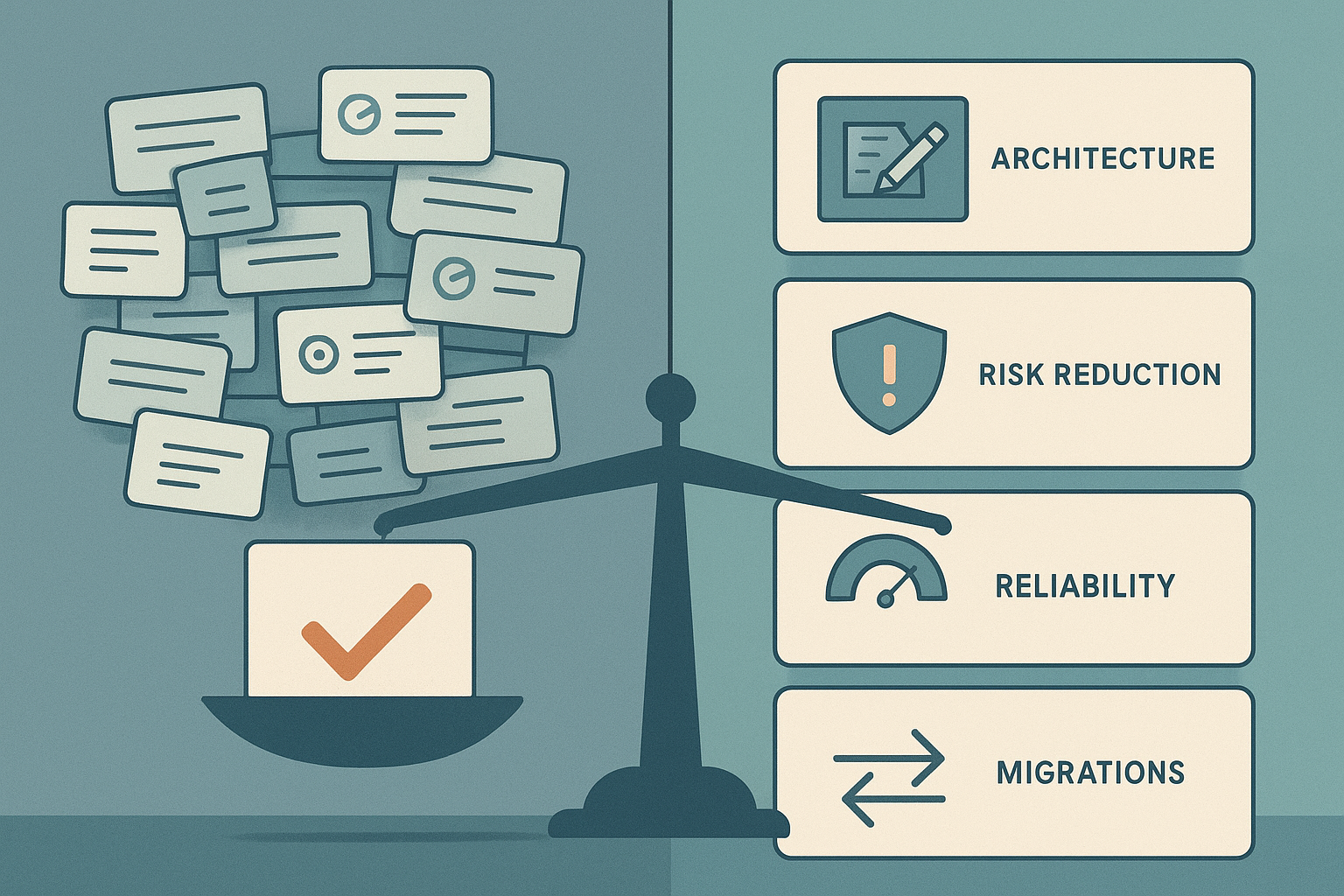 Show fewer bullets, but make each one prove decision weight.
If you also need help showing scope growth cleanly, How to Show Promotions on a Resume Without Losing the Story pairs well with this format.
Keep proof that you are still technical
The biggest fear for many senior candidates is sounding detached from the work. That fear is valid. A resume full of strategy and roadmap language can make you look managerial even when you are applying for a senior IC role.
The fix is to keep technical proof visible in three places at once: in the systems and constraints you name, in one or two bullets where your judgment changed architecture, reliability, migration risk, performance, or developer velocity, and in a compact skills section that confirms you still operate in current tools or domains. Specificity matters even more at this level, and so does choosing evidence that matches the role.[1][4] The resume should make a hiring team think, "This person may code less than before, but they are still close enough to the technical reality to make expensive decisions well."
If your resume currently reads too broad, Are You Overqualified or Just Misframed? is the next useful cleanup pass.
Do not let the format drift into autobiography
A good senior resume is not a career museum. Trim old tools, shorten early-career roles, and remove soft-leadership filler like "excellent communicator" unless the communication shows up through actual decisions and outcomes. Reverse chronology, readable formatting, and selective detail still matter.[2] For many senior candidates, two pages are clearer than a cramped one-pager full of vague bullets. When a One-Page Resume Hurts You in Tech covers that tradeoff directly.
A simple filter helps:
- Would this bullet still matter if my title disappeared?
- Does it prove technical judgment or just coordination?
- Does it make the target role feel plausible?
If not, cut or rewrite it.
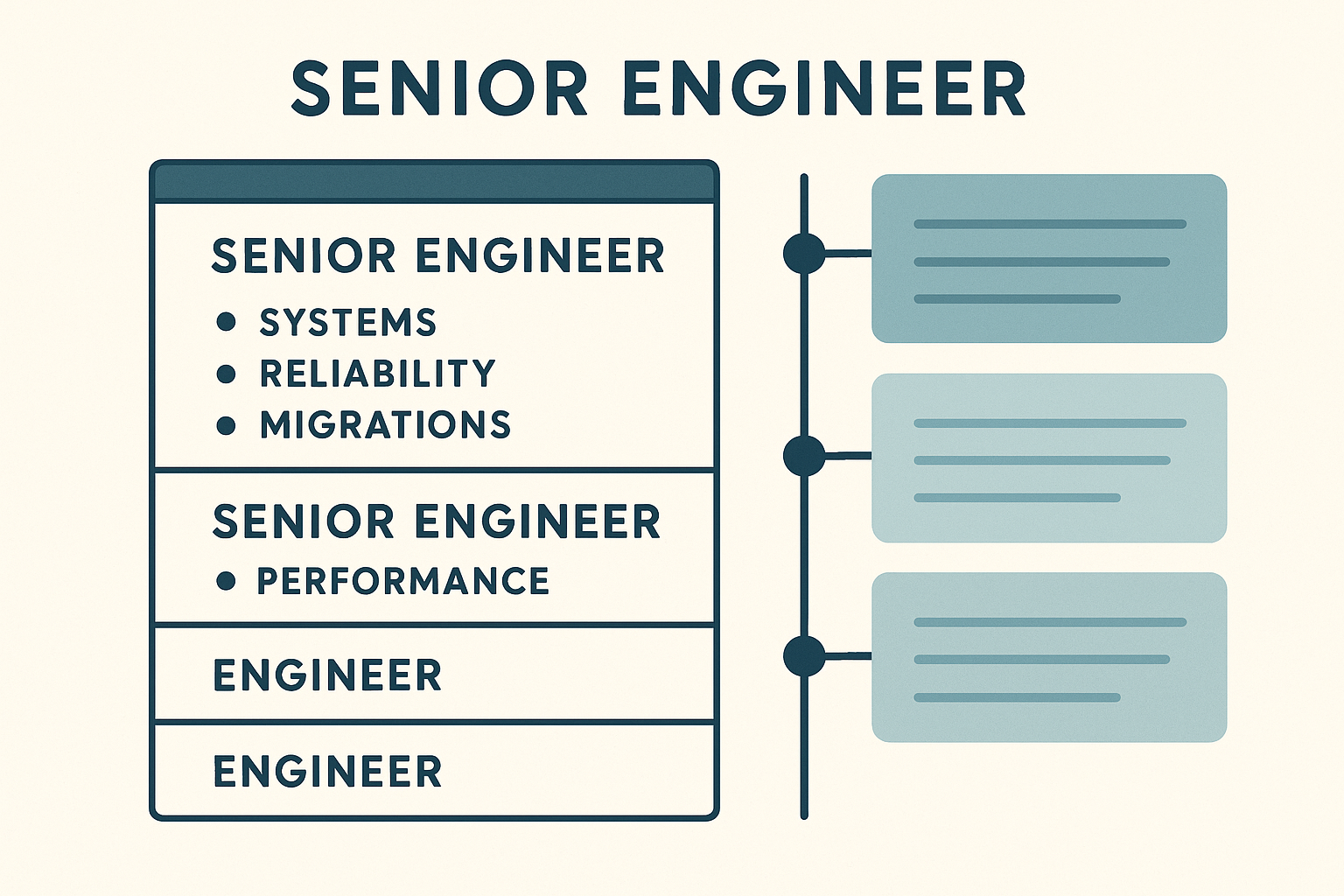 Keep recent technical proof visible, then compress older history so the story stays sharp.
The standard to aim for
The best resume format for senior engineers who have not coded full-time in years is still a technical resume. It just proves technical value differently: how you shaped systems, reduced risk, set direction, and created leverage without losing contact with the work itself.
A strong version leaves no mystery about the level of technical judgment you can own. It makes a hiring team trust that you can still go deep where it counts.
For a repeat-touch next step, bookmark the resume advice archive and use it when you retarget this resume for the next role. If you want two immediate follow-ups, start with Do You Need to Tailor Your Resume for Every Job? and When a One-Page Resume Hurts You in Tech.
Sources
1. MIT Career Advising & Professional Development, Resumes: https://capd.mit.edu/resources/resumes/
2. Harvard FAS Mignone Center for Career Success, Create a Strong Resume: https://careerservices.fas.harvard.edu/resources/create-a-strong-resume/
3. Columbia Center for Career Education, Resumes with Impact: Creating Strong Bullet Points: https://www.careereducation.columbia.edu/resources/resumes-impact-creating-strong-bullet-points
4. UC Berkeley Career Engagement, Resumes: https://career.berkeley.edu/prepare-for-success/resumes/
5. StaffEng, Staff Engineer: Leadership beyond the management track: https://staffeng.com/guides/staff-archetypes/