Most Certifications Are Weak Signals. Here's When They Still Help.
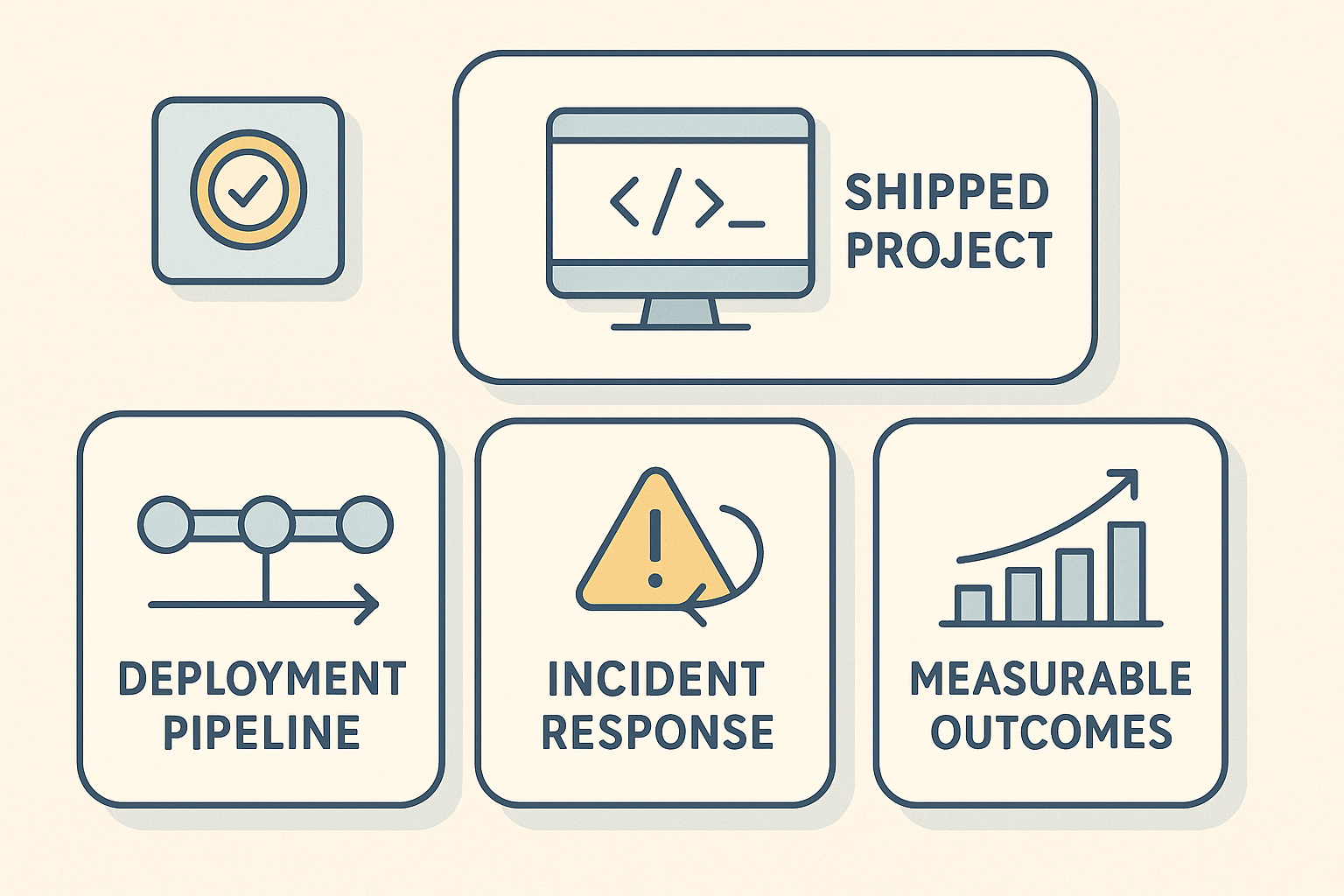
A lot of certification advice quietly assumes the badge will do more hiring work than it actually does. Usually it will not. Strong resume guidance still points to the same priorities: tailor for the role, make relevant evidence easy to scan, and show specific accomplishments instead of hoping the reader infers competence from labels alone.[1][2][3] In technical hiring, most certifications are weak signals because they often show effort or baseline familiarity, while the hiring team still needs proof that you can operate, decide, troubleshoot, and ship.
The real problem is signal inflation
Candidates love certifications for one obvious reason: they are neat, legible, and easy to list. A cloud badge takes one line. Real capability is messier. It lives in migrations, release decisions, incident cleanup, internal tooling, debugging judgment, and the tradeoffs you made under real constraints.
That difference matters more in a market that keeps talking about skills-first hiring while still evaluating candidates through mixed signals in practice.[4][5] A certification can help a recruiter place you in the right bucket faster. It usually cannot carry the argument by itself.
If your current resume has cloud, platform, or backend experience scattered across different roles and projects, CoreCV is useful for keeping one structured base version, then tailoring which certifications, projects, and operating evidence show up for each target role.
A certification usually signals one of three things
First, it can signal effort. You invested time, learned a framework, and cared enough to finish the process.
Second, it can signal familiarity. You probably know the vocabulary, common services, and basic patterns around a platform or domain.
Third, in a narrower set of cases, it can signal reduced hiring risk. If the role is heavily aligned to a vendor ecosystem or the team wants some baseline confidence quickly, a relevant certification can make your candidacy easier to sort.
What it usually does not signal is strong independent capability. Even the vendors themselves separate broad certifications from more hands-on validation. AWS explicitly says its microcredentials complement certifications by demonstrating practical implementation abilities in live AWS environments.[6] Microsoft similarly frames its credentials around showcasing real-world expertise rather than badge collection alone.[7] That is the right mental model: the credential may support the story, but it is still not the whole story.
 A credential is usually a support signal. The stronger signals are still the work, decisions, and outcomes around it.
When to lead with a certification
Lead with it when the certification resolves a real question the hiring team is likely to have.
That usually means one of three situations. You are pivoting toward a platform where your direct work history is still light. You are targeting a role where a specific vendor environment matters enough that the badge helps you clear an early screen. Or you are early-career and the credential is one of the few role-relevant signals you have so far.
In those cases, the certification belongs near the top only if the surrounding resume also gives the reader something stronger to trust. A good example is a candidate moving into cloud or platform work who pairs an AWS or Azure certification with migration projects, deployment automation, cost controls, or incident-response examples. The badge helps explain the direction. The work keeps it credible.
When to bury it lower on the page
This is the more common case. If you already have real operating evidence, the certification should usually sit in a smaller Certifications section under Experience, Projects, or Skills.
A senior backend engineer with years of AWS production work does not become more convincing by leading with a certification block. In that case the top of the page should emphasize the work itself: what systems you owned, what risks you reduced, what delivery or reliability leverage you created, and what changed because of your decisions. If that sounds close to your background, How to Write a Resume When Your Best Work Was Infrastructure No One Noticed and How to Position Internal Tools, Automations, and Dev Productivity Work as Career-Making Impact are better models for the top half of the page.
A certification here is still fine. It just should not outrank stronger evidence.
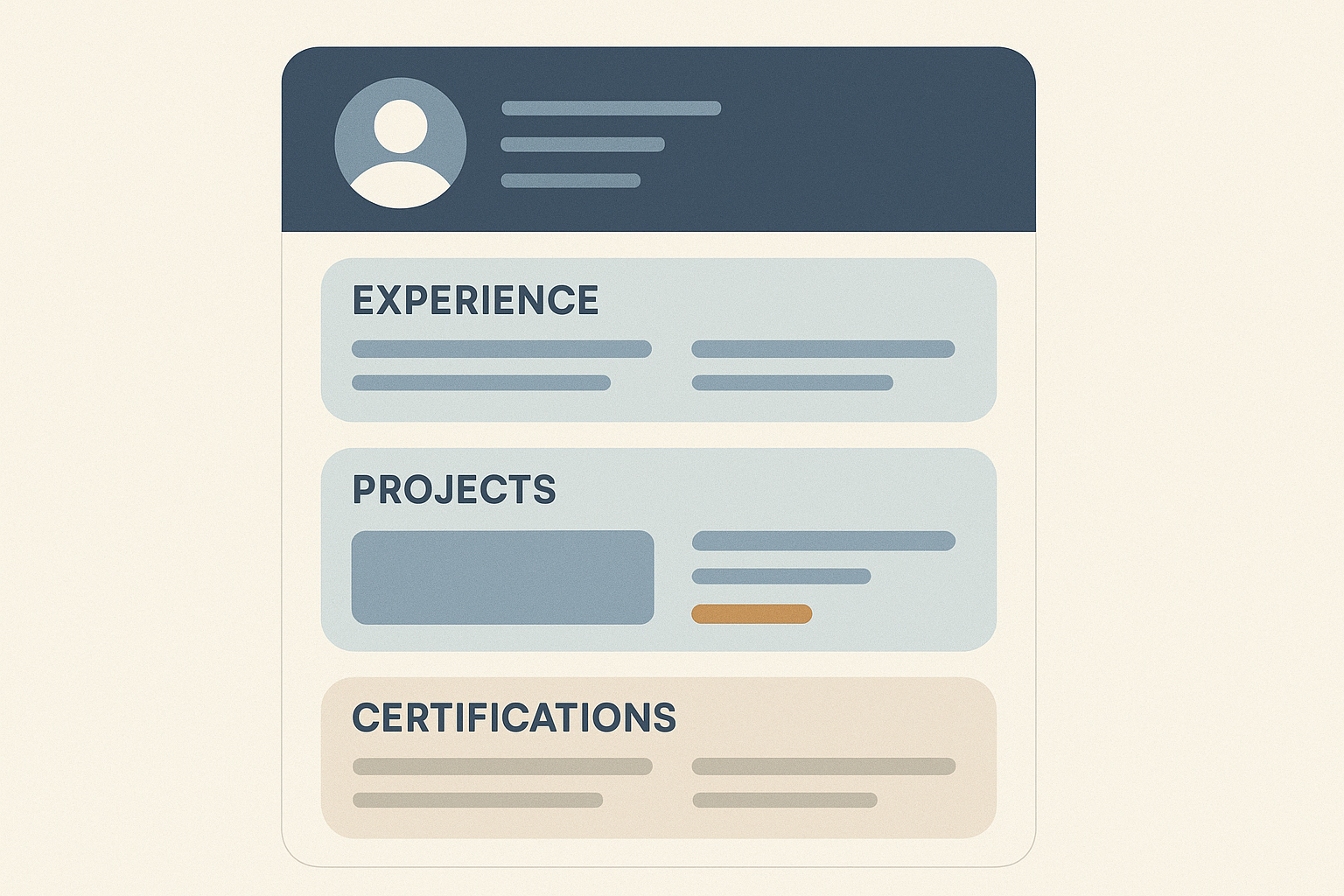 If the work is already strong, the certification usually belongs lower than the evidence it supports.
When to stop leaning on it altogether
Some certifications are basically resume padding. Old badges from tools you no longer use. Generic vendor certificates that do not map to the target role. Long certification lists that try to compensate for thin experience. These do not create confidence. They usually create clutter.
This is especially true when the certification is doing all the talking because the rest of the resume is vague. "AWS Certified" does not tell a hiring team whether you built safer deployment paths, handled failure well, or made a system easier to operate. "Certified Scrum" does not prove strong execution in a software role. A certification-heavy top section can start to look like the candidate is offering symbols instead of evidence.
If you are relying on a certification to cover for weak proof-of-work, the better fix is not better placement. It is better evidence. Rewrite the project. Clarify the scope. Show the migration, the automation, the adoption, or the troubleshooting path. No CS Degree? Build a Resume That Highlights What Matters is useful here because the same rule applies: supporting credentials help, but capability becomes legible through evidence.
Use the lead, bury, or stop test
Before you give a certification valuable space, ask four questions.
- Does this credential directly match the role I am targeting?
- Does it reduce a real doubt about my fit, or is it just decorative?
- Do I have stronger work evidence that should appear first?
- Can I connect this certification to real implementation, delivery, or operating judgment?
If the answers are weak, bury it or drop it. If the answers are strong, keep it and make the connection explicit.
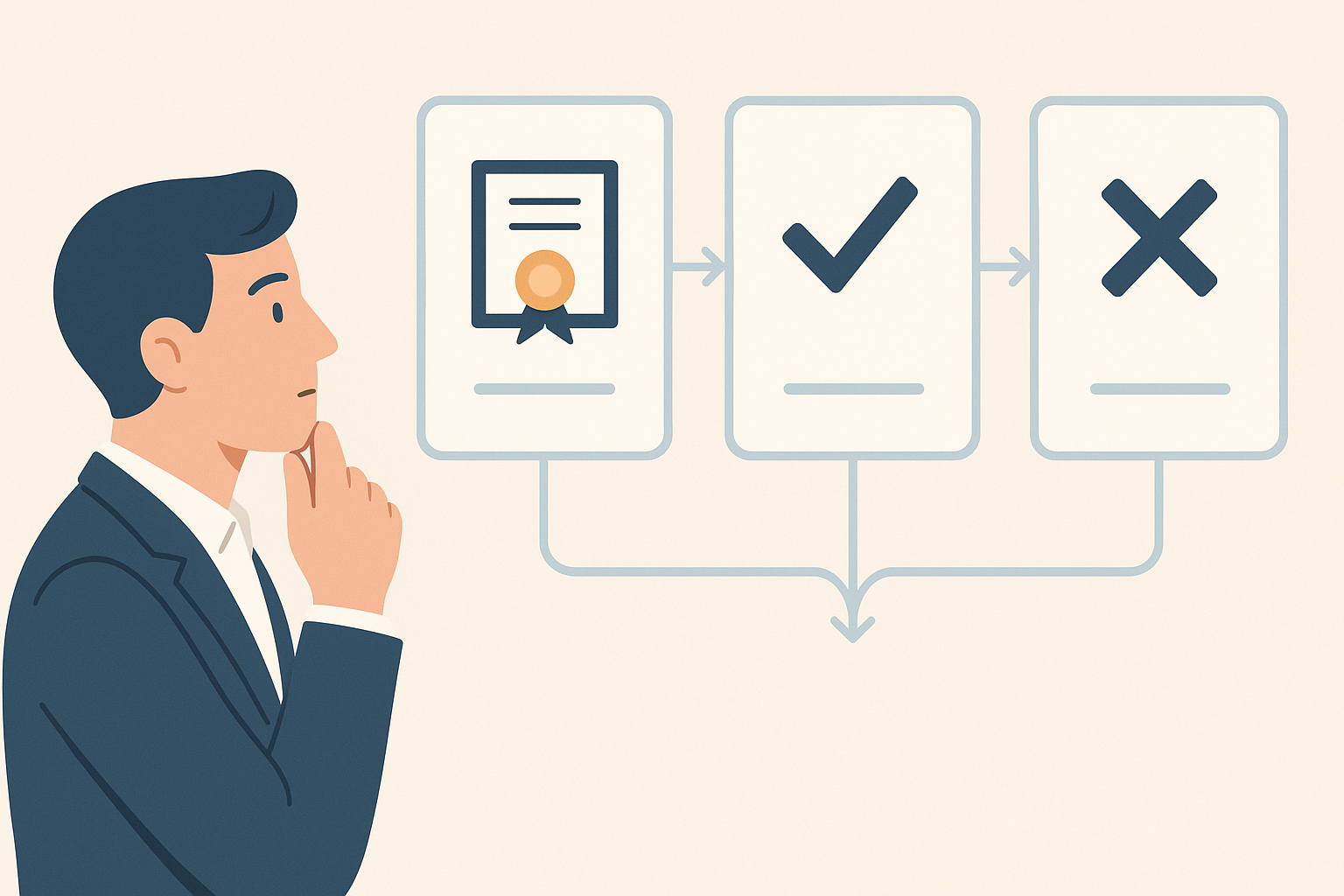 The right question is not whether the certification is impressive. It is whether it changes the hiring inference.
A certification can open the conversation. It rarely closes the case. Use it when it clarifies role fit, supports a transition, or lowers uncertainty around a relevant platform. Otherwise let the work speak first.
For a repeat-touch next step, follow the resume advice archive, then continue with Stop Faking Resume Metrics: What to Do When You Can't Prove the Number if your next problem is proving impact without inflated claims.
Sources
1. Harvard FAS Mignone Center for Career Success, Create a Strong Resume: https://careerservices.fas.harvard.edu/resources/create-a-strong-resume/
2. MIT Career Advising & Professional Development, Resumes: https://capd.mit.edu/resources/resumes/
3. UC Berkeley Career Engagement, Resumes: https://career.berkeley.edu/prepare-for-success/resumes/
4. LinkedIn Economic Graph, Skills-First: Reimagining the Labor Market and Breaking Down Barriers: https://economicgraph.linkedin.com/research/skills-first-report
5. Burning Glass Institute, Skills-Based Hiring: The Long Road from Pronouncements to Practice: https://www.burningglassinstitute.org/research/skills-based-hiring-2024
6. AWS Certification, Validate your hands-on cloud skills: https://aws.amazon.com/certification/
7. Microsoft Learn, Professional and Technical Credentials and Certifications: https://learn.microsoft.com/en-us/credentials/