How to Position Internal Tools, Automations, and Dev Productivity Work as Career-Making Impact

A lot of high-leverage engineering work gets mislabeled as support work the moment it serves internal teams instead of external users. That is a mistake. If your tool, automation, or platform change helped other engineers ship faster, make fewer mistakes, or spend less time fighting setup and release friction, that is not side work. That is engineering leverage. Good resume guidance still points to the same standard: tailor for the role, be specific, and show contributions rather than vague responsibilities.[1][2][3]
Stop writing internal tools like they were background maintenance
The weak version usually sounds like this:
Built internal tools to improve developer productivity.
That line tells a hiring team almost nothing. A stronger version gives the reader a customer, a workflow, and a consequence:
Built self-serve deployment templates and release guardrails for backend teams, reducing repeated setup work, cutting configuration mistakes, and making new-service rollouts easier to ship safely.
That works because it turns an abstract productivity claim into a visible workflow change. Strong bullet writing still depends on context, action, and result, even when the result is internal leverage rather than a flashy product launch.[3]
If you are trying to keep one accurate base version of platform and enablement work while tailoring for platform, infrastructure, or backend roles, CoreCV's resume builder is useful for preserving the full story, then shifting emphasis against a job description or job URL without rewriting from scratch.
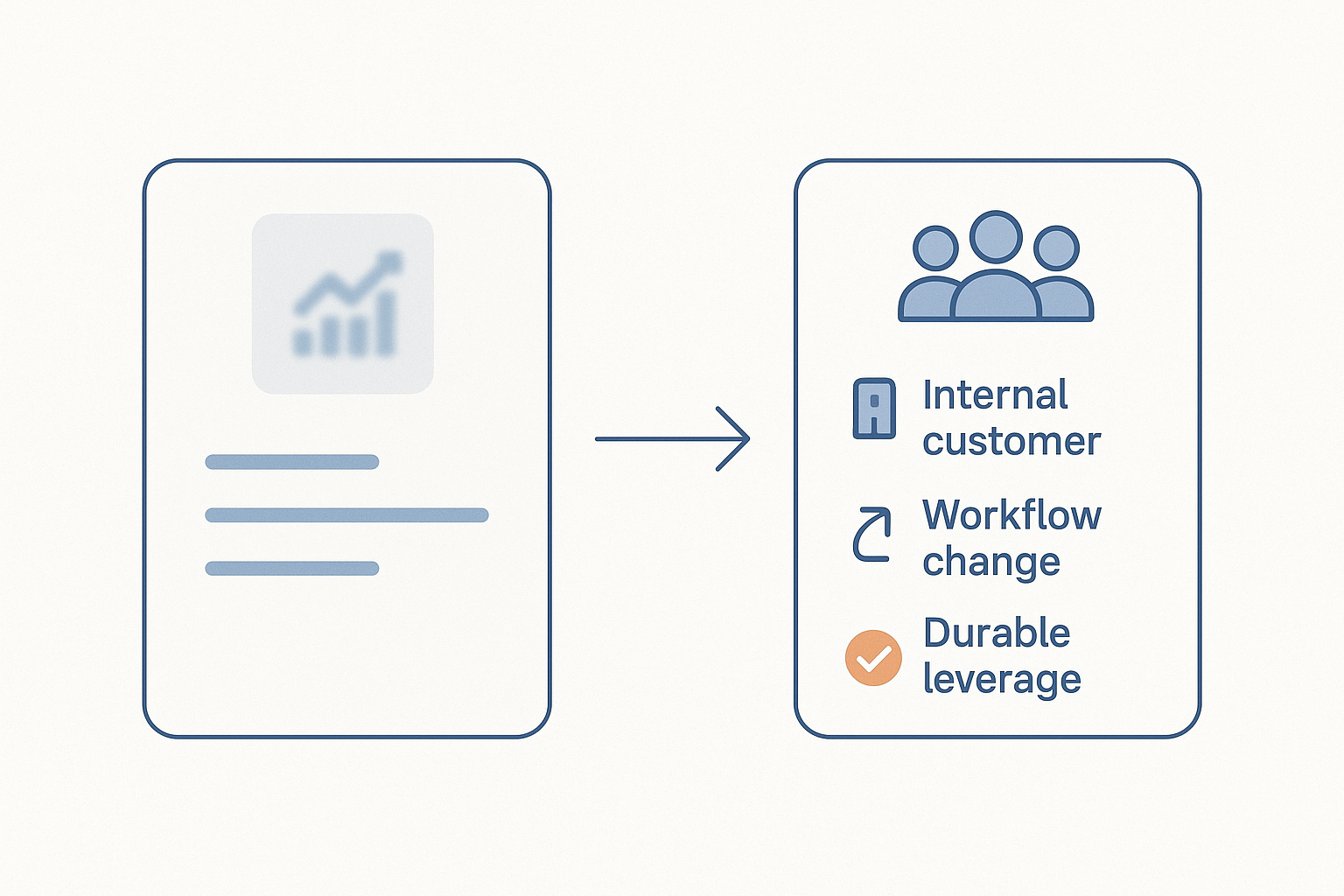 A strong internal-tools bullet shows who the work served, what changed, and why that change mattered.
Adoption is part of the impact
Internal tooling only matters if other teams actually use it. Platform work is different from solo utility scripting because the value is tied to adoption, migration, and sustained use across other teams.[6] Good internal-tools bullets should name the audience directly: onboarding flows for new engineers, deployment templates for product teams, observability defaults for shared services, or CI checks used across multiple repos.
One common goal of internal developer platforms and self-serve tooling is to hide avoidable complexity so teams can deliver with less overhead.[7] So if your work reduced hand-holding, repeated setup, or tribal knowledge, that belongs in the bullet. A useful test is simple: can the reader tell why another engineer would adopt the thing you built?
Throughput claims need evidence, not fake math
Developer productivity work absolutely affects speed, quality, and cost. The problem is that candidates often reach for numbers they cannot really defend.
You do not need fake percentages if you can show a credible before-and-after story a hiring team can actually believe.
Good evidence can sound like this: removing repeated environment setup for new services, replacing ad hoc release steps with a self-serve path, reducing support interrupts from product teams, or shortening onboarding by turning tribal knowledge into a repeatable workflow.
That is still real impact. Google describes toil as manual, repetitive, automatable work that lacks enduring value, and frames engineering work as the work that creates permanent improvement instead.[4][5] If your automation removed recurring manual rescue work or made the system easier for other teams to operate, you created enduring value.
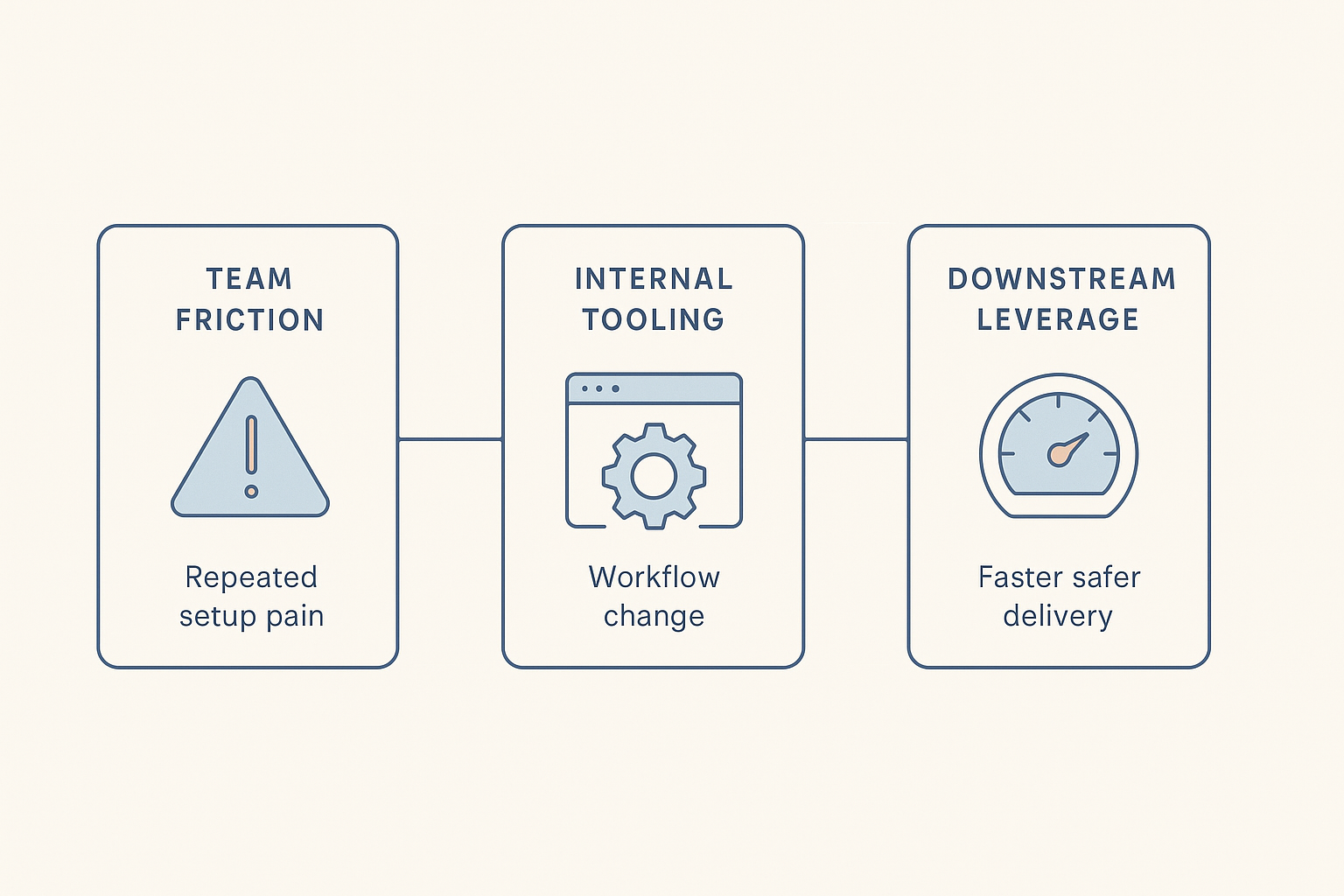 Internal tooling reads stronger when it shows the friction, the workflow change, and the downstream leverage.
Portfolio language should surface judgment, not just tooling
Internal tools are often hard to explain because the product was not a public app. Your portfolio or case-study language can still show strong engineering judgment.
Instead of saying you "built an internal platform," explain the bottleneck, the constraints, and the tradeoff you handled. Focus on what was relevant to the role, describe the work with specificity, and emphasize accomplishments rather than a list of responsibilities.[1][2]
A stronger portfolio description might say:
Designed an internal release workflow for three backend teams that replaced wiki-driven setup and manual approvals with reusable templates, safety checks, and clearer rollback paths. I owned the rollout plan, migration support, and failure-case cleanup so teams could adopt the workflow without extra release risk.
That version shows both the system change and the adoption work. Martin Fowler makes a similar point from the platform side: internal platform success depends on helping other teams migrate, consume, and keep using the platform effectively.[6] So if your work included migration support, documentation, onboarding, or adoption strategy, do not strip that out. In internal tooling, that is often part of the real impact.
The rewrite filter to use before you keep the bullet
Before you keep an internal-tools bullet, make sure a hiring team can quickly see the internal customer, the friction, the workflow change, and what became faster, safer, easier, or more consistent afterward.
If the bullet cannot answer at least two or three of those clearly, it probably still sounds like maintenance instead of leverage. For a closely related angle, read How to Write a Resume When Your Best Work Was Infrastructure No One Noticed, How to Show Systems Thinking on a Resume Without Writing a Wall of Text, and Stop Faking Resume Metrics: What to Do When You Can't Prove the Number.
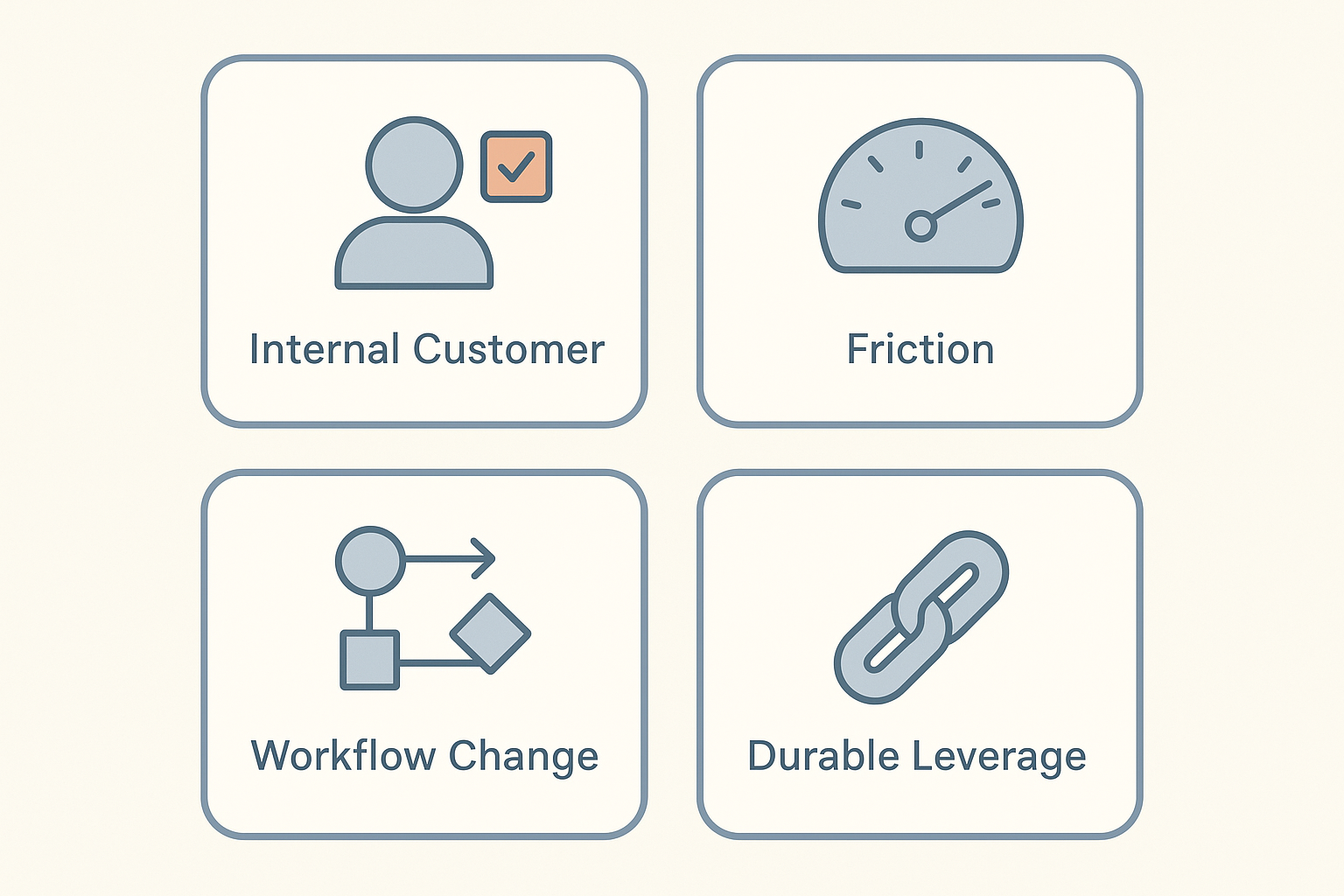 This filter helps internal-tools work read like leverage instead of background support.
The goal is not to make internal work sound glamorous. It is to make it legible. If your automations and platform work changed how other engineers delivered software, that is career-making evidence. Write it like evidence.
If you want more evidence-first resume breakdowns, follow the resume advice archive.
If this topic overlaps with broader scope and seniority questions, continue with The Best Resume Format for Senior Engineers Who Haven't Coded Full-Time in Years.
Sources
1. MIT Career Advising & Professional Development, Resumes: https://capd.mit.edu/resources/resumes/
2. Harvard FAS Mignone Center for Career Success, Create a Strong Resume: https://careerservices.fas.harvard.edu/resources/create-a-strong-resume/
3. Columbia Center for Career Education, Resumes with Impact: Creating Strong Bullet Points: https://www.careereducation.columbia.edu/resources/resumes-impact-creating-strong-bullet-points
4. Google, Site Reliability Engineering, Chapter 5, "Eliminating Toil": https://sre.google/sre-book/eliminating-toil/
5. Google, The Site Reliability Workbook, "Eliminating Toil": https://sre.google/workbook/eliminating-toil/
6. Martin Fowler, How platform teams get stuff done: https://martinfowler.com/articles/platform-teams-stuff-done.html
7. Atlassian, Internal Developer Platform [Benefits + Best Practices]: https://www.atlassian.com/developer-experience/internal-developer-platform