Resume Advice for Bootcamp Grads in 2026: What Actually Still Works

A lot of bootcamp-resume advice is now stale. The old formula was simple: put the program near the top, list every framework you touched, add three class-style projects, and hope a hiring team infers you are job-ready. Strong resume guidance still points somewhere else - tailor for the role, keep the page easy to scan, and make accomplishments specific enough to evaluate quickly.[1][2][4] In 2026, that matters even more for bootcamp grads because the credential alone is usually context, not proof.
Lead with proof, not the program
If your resume opens with Education and the strongest thing in that section is the bootcamp name, you are making the reader work too hard. Use the job description to decide what earns top placement, and treat relevant projects, competitions, and personal work as real evidence when the connection to the role is obvious.[2] The reader should see outcomes and role fit fast, not a credential and a hope that they infer the rest.[4]
For most bootcamp grads, that means the top third should help a recruiter see role fit fast: a short summary, a strict skills section, and one or two projects or experiences that actually match the target job. If you still need help with the broader no-degree version of this problem, No CS Degree? Build a Resume That Highlights What Matters is the right companion piece.
If your raw material is real but scattered across projects, freelance work, and experiments, CoreCV's resume builder is useful for keeping one structured base resume, then tailoring a junior frontend, backend, or full-stack version against a pasted job description or job URL.
Your projects have to read like work, not coursework
This is where a lot of bootcamp resumes collapse. The project exists, but the description sounds like a syllabus.
Weak:
Built a full-stack task manager app using React, Node.js, and MongoDB.
That tells the reader the stack, but not whether you solved a real problem, made a meaningful decision, or finished anything worth inspecting.
The right mental model is still simple: give context, show the action, and make the result legible.[3] A stronger version sounds more like this:
Built a task-triage app for support teams, added role-based queue views and retry-safe status updates, and documented setup, tradeoffs, and known gaps so reviewers could test the workflow quickly.
That entry is not magically senior. It is just easier to trust. It shows a use case, a technical choice, and a little professional behavior.
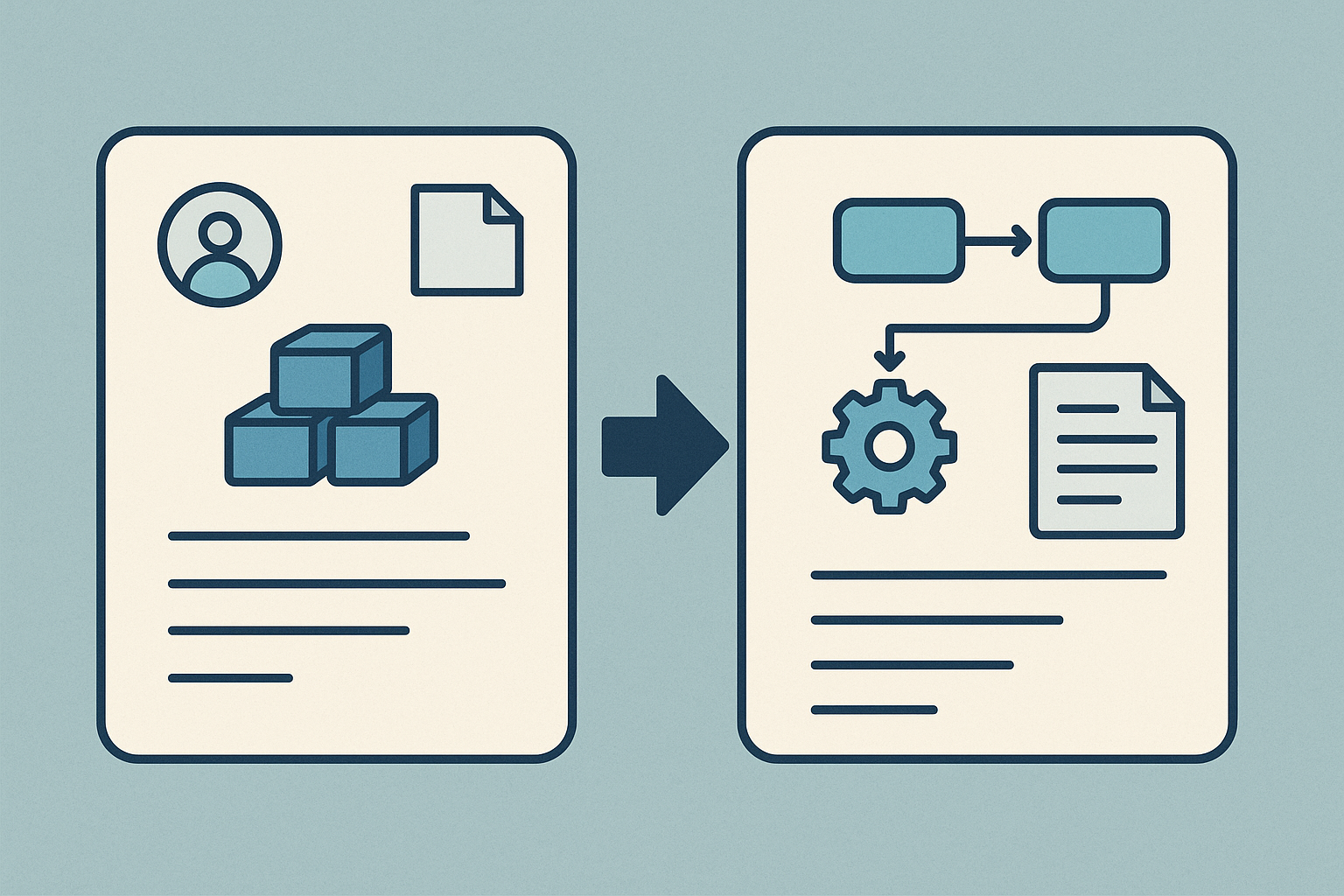 A stronger bootcamp project entry gives the reader a use case, a decision, and evidence they can inspect.
Fewer projects, better proof
Bootcamp grads often overstuff the page with five or six similar projects because they think quantity looks safer. Usually it does the opposite. If three entries all read like variations of authentication, CRUD, and deployment, the resume starts to feel repetitive.
What still works is selecting two or three projects that each prove something different: maybe one shows backend logic, one shows frontend polish, and one shows collaboration, debugging, or integration work. Tailor the project mix to the actual job so the page reflects the skills that role would reward.[1] That is a better filter than asking whether every project was technically impressive.
If you are unsure which projects survive that filter, How to List Personal Projects on a Resume for Tech Roles and Do You Need to Tailor Your Resume for Every Job? will help you make cleaner choices.
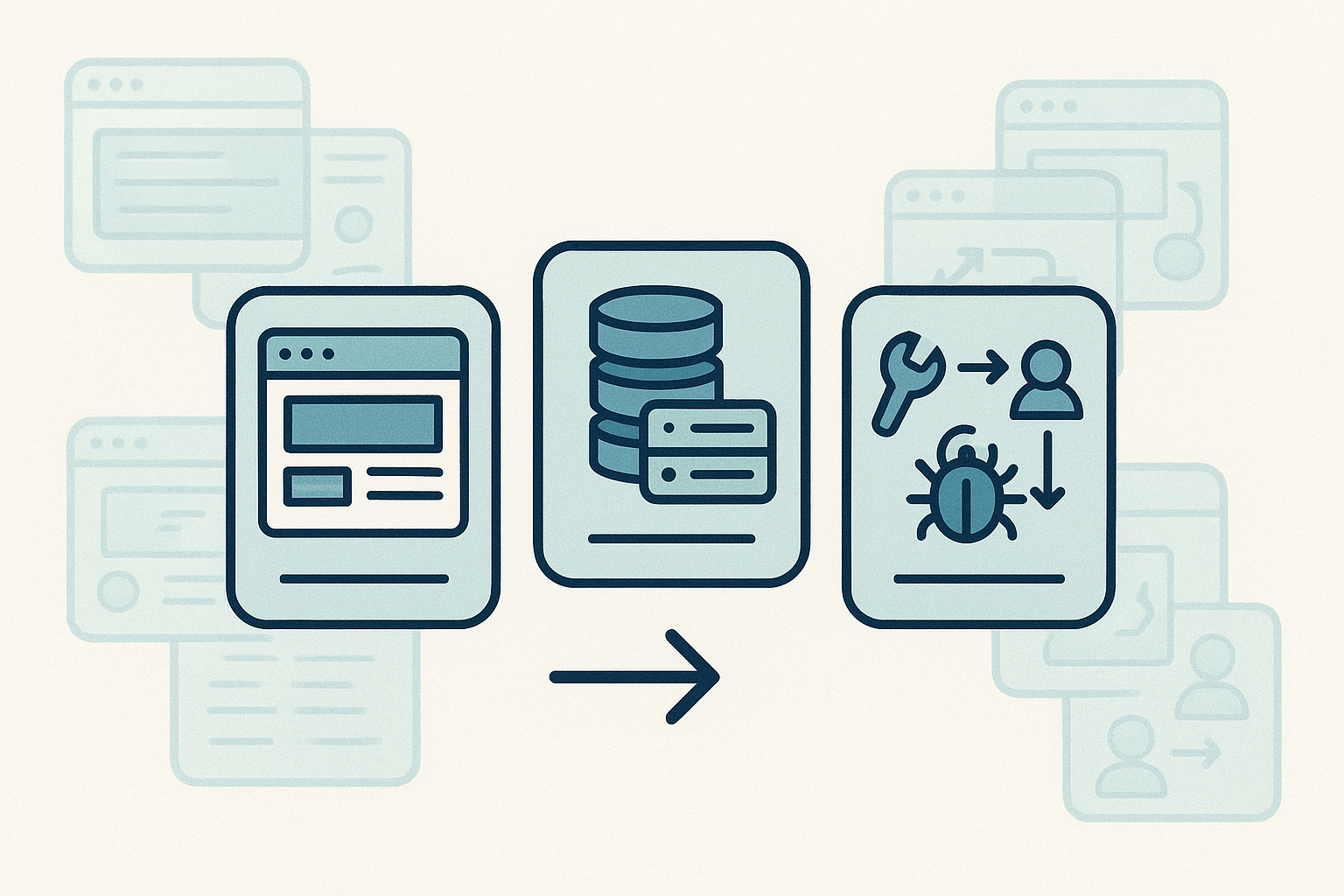 The goal is not more projects. It is fewer, more distinct proofs of readiness.
Add a verification path
Bootcamp grads do not just need claims. They need inspectable evidence. If you give someone a repo link, they should be able to tell what the project does, why it matters, and how to get oriented within a minute.[5] That maps cleanly to hiring reality. A clean README, a short demo, a live link, or even a concise project write-up makes your resume stronger because it lowers the effort required to trust you.
This is also where career readiness becomes visible. Employers are looking for demonstrated communication, critical thinking, teamwork, professionalism, and technical fluency, not just course completion.[6] A repo with setup notes, decisions, known limitations, and clear ownership signals shows more of that than a naked GitHub link ever will.
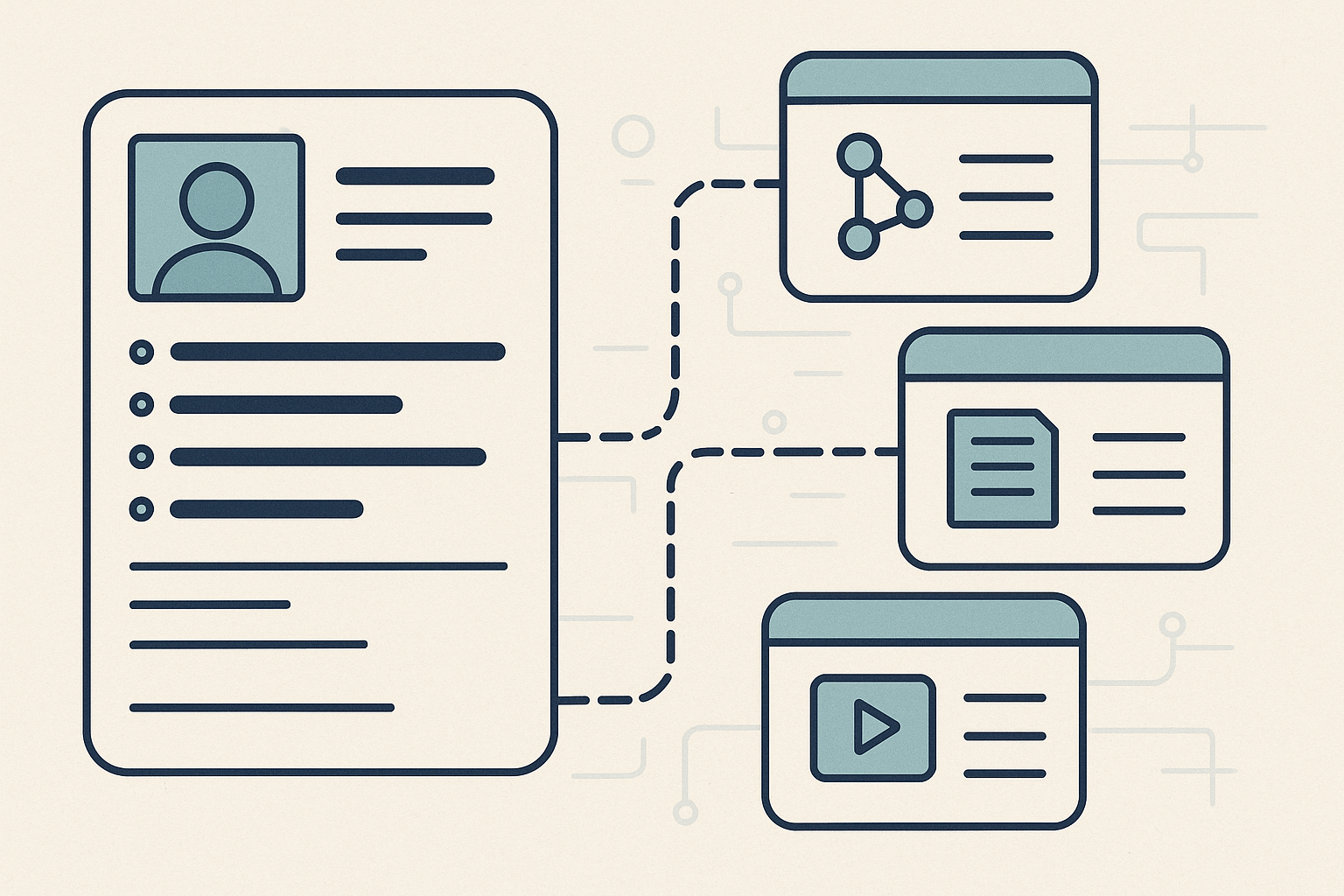 A verification path makes a bootcamp project easier to trust because the evidence is easier to inspect.
If your current draft also has ATS problems, fix those before you worry about clever phrasing. ATS Resume for Software Engineers: 3 Ways You Can Be Rejected Before a Human Reads It is the next cleanup pass.
Keep the bootcamp in its place
The bootcamp should still appear. It just should not carry the whole argument. Put the program in Education, keep the line clean, and let it support the story instead of becoming the story.
Before you keep a project on the page, run one last test: if a recruiter saw only that entry and clicked one proof link, would they understand what you built, why it mattered, and what makes it credible? If the answer is no, the project probably needs a rewrite or does not deserve the space yet.
What actually still works for bootcamp grads in 2026 is not mystery advice. It is the same evidence-first standard applied more strictly: lead with role-fit proof, write projects like real work, keep only the entries that change the hiring inference, and make verification easy.
For a repeat-touch next step, follow the resume advice archive and then continue with No CS Degree? Build a Resume That Highlights What Matters and How to List Personal Projects on a Resume for Tech Roles.
Sources
1. Harvard FAS, Create a Strong Resume: https://careerservices.fas.harvard.edu/resources/create-a-strong-resume/
2. MIT Career Advising & Professional Development, Resumes: https://capd.mit.edu/resources/resumes/
3. Columbia Center for Career Education, Resumes with Impact: Creating Strong Bullet Points: https://www.careereducation.columbia.edu/resources/resumes-impact-creating-strong-bullet-points
4. UC Berkeley Career Engagement, Resumes: https://career.berkeley.edu/prepare-for-success/resumes/
5. GitHub Docs, About the repository README file: https://docs.github.com/en/repositories/managing-your-repositorys-settings-and-features/customizing-your-repository/about-readmes
6. NACE, What is Career Readiness?: https://www.naceweb.org/career-readiness/competencies/career-readiness-defined