Short Tenure Resume? How Software Engineers Can Explain 6-Month Stints Without Sounding Defensive
A short tenure resume does not usually lose people because the dates are visible. It loses them because the pattern feels chaotic, unexplained, or suspiciously generic. In a labor market where median employee tenure fell to 3.9 years in 2024, and workers ages 25 to 34 had median tenure of 2.7 years, shorter stays are part of the backdrop even if those numbers do not predict how any one hiring team will react.[1] The real question is whether your resume helps a hiring team understand what kind of work those stints represent and why you are still a credible fit now.[2][3][5]
Treat the pattern first, not each job in isolation
Most weak short-tenure resumes make the same mistake: every role gets the same formatting, the same vague bullets, and no framing. That forces the reader to invent a story, and invented stories are rarely generous.
Before you rewrite anything, sort your short stints into the real pattern underneath them. Usually it is some mix of four buckets: layoffs, startup churn, contract work, or genuine mismatch. Those are not the same thing, so they should not all read the same way on paper.
If two roles ended because the company cut staff, say so briefly where useful. If three roles were actually contract or consulting work, group them accordingly instead of making them look like three failed full-time jobs. If one role was simply a bad fit, do not over-explain it on the resume. Just keep the entry lean and let stronger evidence carry more weight.[2][3]
 A clearer category story helps a messy timeline read like reality instead of instability.
Group contract-heavy work when that is the truth
This is the highest-leverage fix for many engineers. If you spent two years moving through client work, fractional roles, agency placements, or back-to-back contracts, do not present it like you repeatedly washed out of permanent jobs. Present it as one contract chapter with named engagements underneath.
That might look like Independent Software Engineer, Contract with sub-bullets for selected clients or projects. Or it might be one employer entry if you were placed through the same consultancy. The point is to make the employment model legible fast, not to hide the dates. Keep the chronology clear enough that the grouping still matches LinkedIn, background checks, and employer-of-record details.
Lead with a structure a recruiter can skim in seconds: clear dates, clear employment type, and only the details that help the target role make sense.[2][3][5][6] If your timeline includes contract-heavy work, also read How to Put Freelance or Contract Work on a Tech Resume.
Short stints need denser proof, not more explanation
A six-month role has less time to earn trust. That means the bullets need to do more work.
Columbia's resume guidance is useful here because it emphasizes context, action, and result instead of thin responsibility statements.[4] On a short-tenure resume, that matters even more. A bullet like this does almost nothing:
Worked on backend services for internal platform improvements.
A stronger version gives the reader something to believe:
Shipped two Python services for internal developer tooling, cut deployment friction for 40+ engineers, and removed a recurring release bottleneck within the first quarter.
The second version does not pretend the stint was long. It proves the stint was real.
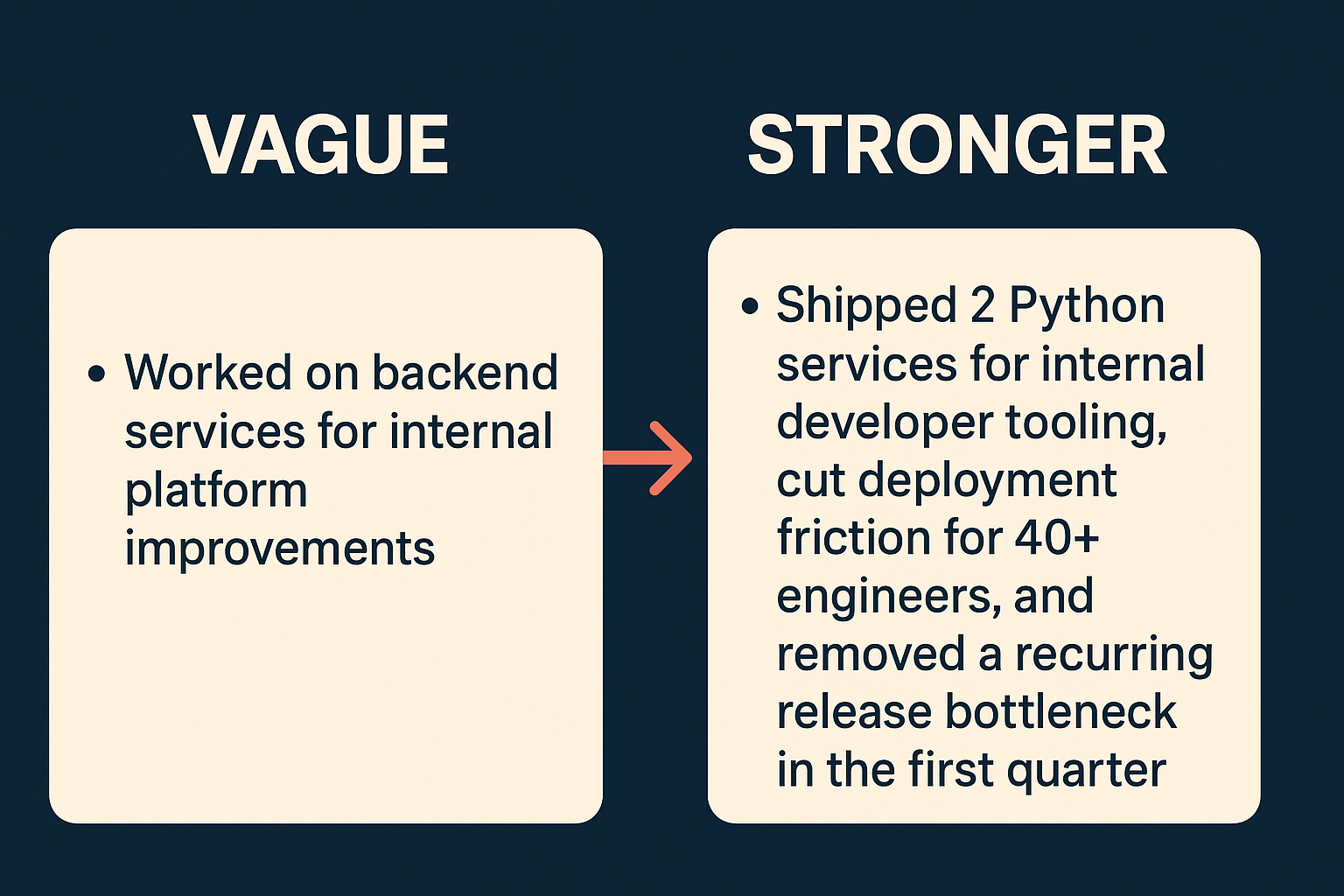 Short timelines are easier to trust when the bullets prove value quickly.
If your bullets still sound broad after this pass, use Do You Need to Tailor Your Resume for Every Job? as the next cleanup step.
Keep resume framing brief. Save the full story for interviews.
Many candidates overcorrect and turn the resume into a defense memo. That usually backfires.
Your resume can lightly label facts that reduce confusion: role eliminated, company closed, contract, fixed-term, or acquired and reorganized. That is often enough. The detailed story belongs in the interview, where nuance actually has room to work.
The resume's job is simpler: readable structure, relevant evidence, and no obvious mystery gaps.[2][3][5] If one of your short stints ended messily, How to Explain Being Fired Without Tanking Your Job Search covers what belongs on the page and what should wait.
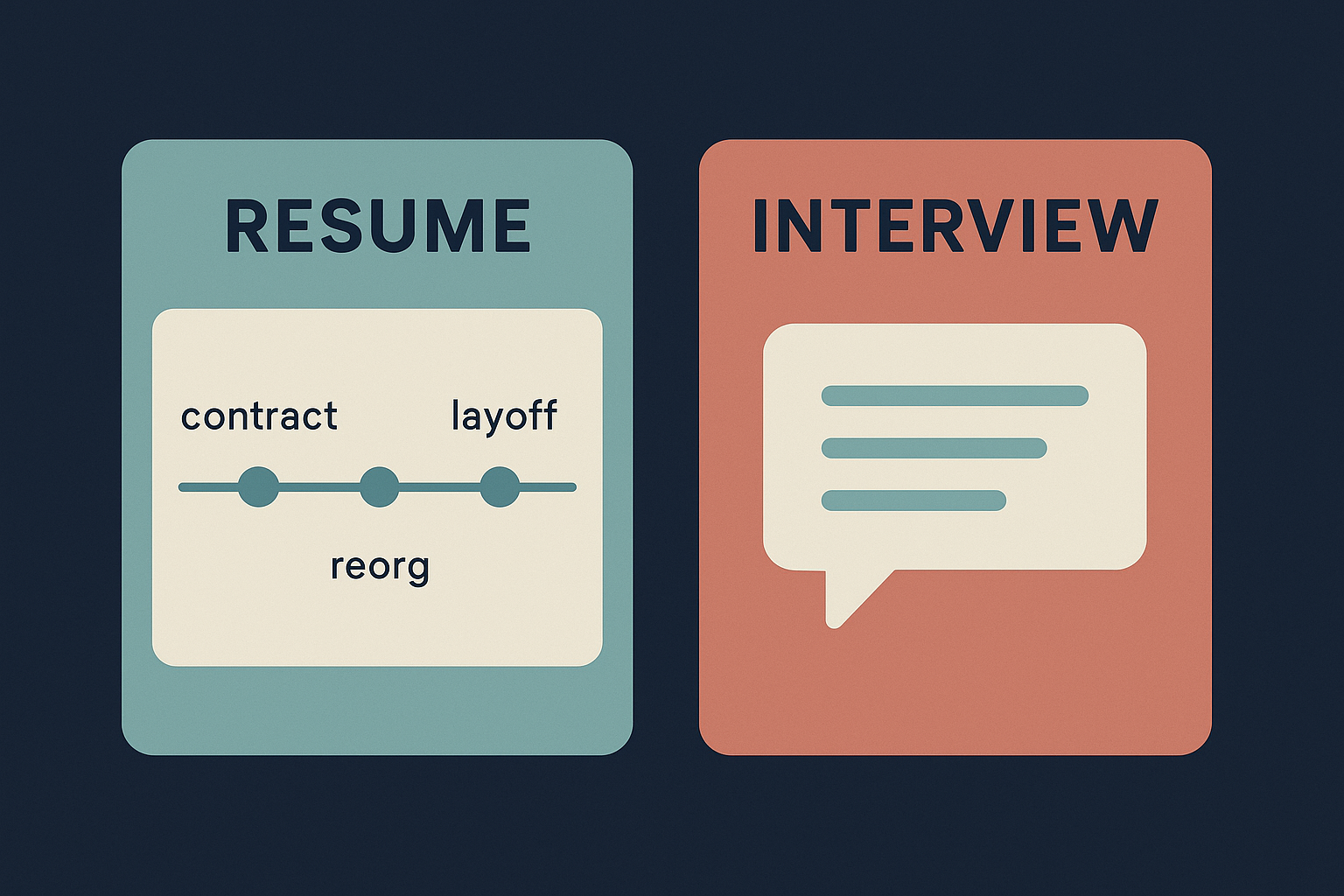 The resume should reduce confusion, not carry every detail of the story.
The standard to aim for
A strong short tenure resume does not beg for forgiveness. It makes the pattern legible, groups work honestly, and proves useful output fast. That is a much better signal than pretending every six-month stop was identical or hoping a recruiter will infer the market context on their own.
If you want a cleaner way to build a role-facing version from a fuller resume history, try CoreCV's resume builder. It is useful when you need multiple resume versions and want to fine-tune one against a specific job description or job URL.
For a repeat-touch next step, follow the CoreCV blog for more signal-first breakdowns on resumes, role fit, and technical hiring.
Then keep going with Addressing Employment Gaps: Turning Time Off Into a Narrative of Growth and Are You Overqualified or Just Misframed? Fixing Resume Signals That Price You Out.
Sources
1. U.S. Bureau of Labor Statistics, Employee Tenure in 2024: https://www.bls.gov/news.release/tenure.nr0.htm
2. MIT Career Advising & Professional Development, Resumes: https://capd.mit.edu/resources/resumes/
3. Harvard FAS Mignone Center for Career Success, Create a Strong Resume: https://careerservices.fas.harvard.edu/resources/create-a-strong-resume/
4. Columbia Center for Career Education, Resumes with Impact: Creating Strong Bullet Points: https://www.careereducation.columbia.edu/resources/resumes-impact-creating-strong-bullet-points
5. UC Berkeley Career Engagement, Resumes: https://career.berkeley.edu/prepare-for-success/resumes/
6. University of Washington Career & Internship Center, Resumes: https://careers.uw.edu/channels/resumes/