Stop Showing Prompts. Package an AI Workflow Someone Else Can Run

Prompt screenshots are becoming the new certificate badges: easy to collect, easy to display, and hard for an employer to interpret. A polished exchange can prove that you found useful wording once. It rarely proves that you can turn an ambiguous task into reliable work for somebody else. As AI tools move toward reusable skills and portable plugin packages, candidates have a better artifact available. Package one real workflow so another person can inspect it, run it, find its limits, and maintain it after you leave.
This shift became more concrete in August when Google announced Agent Plugins 1.0, a vendor-neutral package format backed by maintainers from several major agent ecosystems. A plugin can place reusable Agent Skills and Model Context Protocol server configuration in predictable locations, giving compatible clients a shared way to discover the pieces.[1] GitHub, OpenAI, and Anthropic have also described skills as portable folders that combine instructions, scripts, references, and other resources around a repeatable task.[2][3][4]
The format news matters, but the career lesson is larger than any standard. Organizations are trying to convert successful individual AI use into shared, repeatable operating practices. OpenAI's enterprise research describes deeper adoption in firms that connect agents to organizational context and tools while establishing permissions, governance, and human review.[5] That is a different capability from prompting well in a private session.
The practical question for your portfolio is now sharper: can you encode enough of your judgment that useful work survives outside your chat history?
A prompt shows an interaction. A workflow exposes a system.
A prompt can be part of strong work. The weakness appears when the prompt is the whole artifact. A reviewer cannot tell which source material was required, what happened when inputs were incomplete, which operations had to be deterministic, what the agent was allowed to change, how output quality was checked, or who owned the final decision.
Consider a candidate who shares a prompt titled "Analyze customer feedback and produce product insights." The result looks polished. But the prompt conceals almost every consequential choice:
- Which feedback belongs in the analysis?
- How are duplicates, spam, and personally identifiable information handled?
- What counts as a theme rather than one loud complaint?
- Can the system query production data or only an approved export?
- Must every claim link back to source records?
- Who reviews the result before it affects a roadmap?
- What should happen when evidence conflicts?
Those questions are where professional competence becomes visible. A packaged workflow can surface the answers through an input contract, instructions, reference material, scripts, test cases, permissions, and known limitations. It lets a reviewer examine the work behind the output.
Portability also creates a useful constraint. If the workflow only succeeds in your account, with your memory, while you supervise every step, much of the real process remains trapped in your head. Moving it to another environment or handing it to another operator reveals the missing context quickly.
This does not mean every candidate needs to publish an Agent Plugin. The format is new, client support varies, and many valuable workflows contain confidential material. The durable career move is to treat your procedure as a versioned product with an explicit contract. You can implement that idea as an open skill, a private repository, a sanitized case study, or a documented internal automation.
Portability is evidence, not the outcome
The Agent Plugins specification deliberately standardizes a small package boundary. It defines where a manifest, skills, and MCP server configuration belong. It does not promise that every client supports every component, that an installed package is safe, or that the workflow produces useful results.[6]
That separation is important for career claims. "Built an Agent Plugin" is similar to "built a web app." It identifies the container, not the quality of the decisions inside it. A valid package can still have vague instructions, brittle assumptions, excessive permissions, missing tests, stale references, or no real user.
The public ecosystem is already large enough to make quality a live concern. One August preprint assembled millions of public SKILL.md files for studying adoption and maintenance.[7] Another analysis of more than 138,000 skill files found widespread obstacles to reuse in its sample.[8] These early studies are not a final ecosystem audit, but they reinforce a familiar lesson: a shared format lowers coordination cost; it does not manufacture quality.
Your portfolio should therefore make two claims separately:
- The artifact is portable enough to inspect and run. Its components, dependencies, configuration, and expected outputs are explicit.
- The workflow deserves reuse. It solves a real repeated problem, behaves acceptably on representative cases, contains appropriate boundaries, and improved through use.
The second claim carries most of the career value.
This distinction also helps when tailoring your resume. CoreCV's role-targeted resume workflow can fine-tune a structured base resume against a pasted job description or job URL, so you can emphasize the relevant parts of one truthful workflow without turning package format into an inflated capability claim.
Use the PACKAGE framework to build the artifact
A useful portable workflow needs eight parts: Problem, Agreement, Context, Actions, Guardrails, Audit, Keep-current plan, and Evidence of use. Together they form the PACKAGE framework.
Problem: begin with repeated work that has a consequence
Do not start by asking what an agent can do. Start with work someone already repeats and a consequence they care about. Monthly security-triage summaries, release-note preparation, support escalation intake, analytics-quality checks, recruiting intake normalization, and incident-review setup all create better starting points than "build an agent."
Write the problem without mentioning AI:
Every Thursday, a platform lead combines deployment records, incident notes, and unresolved follow-ups into a release-risk brief for Friday planning. Missing links and inconsistent service names create rework.
That statement identifies a cadence, operator, inputs, output, consumer, failure cost, and baseline. Prefer work where correctness can be examined through source links, schemas, calculations, approvals, or expert review.
Agreement: define the workflow contract
The contract explains what the workflow accepts, returns, and considers complete. For the release-risk brief, inputs are an approved deployment export, incident summaries, and prior open actions. The output follows a fixed schema, cites supplied records, marks unknown ownership as unresolved, and remains a draft until schema validation and platform-lead approval. The workflow cannot publish the brief or close actions.
This agreement prevents the demo from quietly changing the task to whatever the model handles best. It also gives a reviewer a fair way to judge the result.
Context: package what the work needs, not everything you know
A reusable workflow needs enough context to make local terms and decisions legible. Include the smallest stable set that changes behavior: a glossary, output template, decision policy, schema, examples, or approved source map.
Separate durable context from run-specific inputs. Service-name conventions may belong in a versioned reference. This week's deployment records belong in the run. Keeping them distinct reduces staleness and prevents private data from leaking into a public artifact.
Document exclusions too. If customer records, secrets, or production credentials are never valid inputs, say so. Selective context is part of the design, not a token-saving trick.
Actions: separate interpretation from deterministic operations
Some steps benefit from model judgment: classifying an unusual incident, drafting a concise explanation, or identifying ambiguous ownership. Other steps should be ordinary code: parsing dates, validating a schema, joining identifiers, checking required citations, or computing a count.
A strong package shows the boundary. Instructions explain how to reason about the task. Scripts handle operations where repeatability matters more than flexibility. Tool configuration exposes only the capabilities the workflow actually needs.
The boundary creates useful interview material: why a model handled semantic grouping, why code enforced the contract, and why the agent could read a ticket system without modifying it.
Guardrails: constrain data, authority, and escalation
Guardrails should cover more than a warning in a prompt. Name the data boundary, tool permissions, prohibited actions, approval points, and escalation behavior.
GitHub warns that downloaded skills can include prompt injections, hidden instructions, or malicious scripts, and recommends inspecting them before installation.[2] Make your package reviewable with that threat in mind: pin dependencies where practical, exclude secrets, document network access, prefer read-only analysis tools, and fail safely when context is missing.
Audit: test cases should represent decisions, not just syntax
A successful run proves possibility. A useful audit explores variation. Build a compact set containing ordinary cases, ambiguous cases, missing inputs, conflicting evidence, adversarial text, and a case that must stop for review.
For each case, state what acceptable behavior means. Source coverage, schema validity, correct escalation, or expert rating may matter more than exact wording.
Record the baseline and the failure that changed your design. Perhaps the first version treated rollback notes as current deployment risk because the timestamps used different time zones. Perhaps a malicious instruction inside a feedback record tried to override the workflow. Perhaps an unknown service name was confidently assigned to the wrong team. Those failures demonstrate contact with reality.
Keep-current: design for maintenance before calling it reusable
Reusable workflows decay. APIs change, schemas move, policies evolve, examples become stale, and model behavior shifts. Name an owner, version the package, record tested environments, and define update triggers.
A lightweight maintenance note names who approves changes, which policy or dependency changes require a retest, the smallest regression set, tested versions, and retirement conditions.
Version history is career evidence because it shows that you treated the artifact as an operating capability rather than a launch-day demo.
Evidence: let somebody else use it
The final step is external contact. Ask a relevant person to install or inspect the package, provide a representative input, and complete the task without you driving. Observe where they hesitate. Capture what failed and what you changed.
Evidence can remain modest and truthful:
Two platform engineers ran the workflow against three archived release windows. Their review exposed an undocumented service alias and a missing escalation path, both added in version 0.3.
The statement names the users, sample, discoveries, and revision without pretending that a small evaluation proves production readiness.
Three workflow packages worth building
The framework works across technical and operational roles. The package should reflect the candidate's existing judgment, not force everyone into the same chatbot project.
Software engineer: dependency-upgrade risk brief
A backend engineer repeatedly reviews dependency updates before sprint planning. A screenshot of a model declaring the packages safe reveals little about the review process.
The package accepts a lockfile diff, release notes, compatibility rules, and critical execution paths. Code extracts versions and validates links. The agent maps breaking changes to known usage and marks unsupported inferences. Read-only access prevents repository changes, and the output includes evidence, test recommendations, and unresolved questions.
The audit covers a renamed option, a transitive change, missing notes, and malicious instructions in an untrusted changelog. A peer finds that internal wrappers hide direct usages, so the candidate adds repository search and documents its false-positive limits.
The resulting evidence covers the review process, source discipline, deterministic parsing, untrusted-content boundary, and revision based on peer use.
Recruiting operations specialist: role-intake consistency check
A recruiting operations specialist sees intake documents arrive with inconsistent titles, locations, requirements, and interview plans. Asking a model to draft the posting can smooth over ambiguity before the hiring team resolves it.
The workflow turns an approved intake document into a structured gap report. It preserves conflicts and generates questions for the recruiter and hiring manager. It cannot infer protected characteristics, rank candidates, or publish a posting. Code validates required fields against approved terminology.
The evaluation covers contradictory location requirements, implied seniority, and candidate information that should be rejected as the wrong input. Recruiter testing adds a needed distinction between knockout constraints and preferences.
This package demonstrates workflow analysis, sensitive-data judgment, schema design, stakeholder alignment, and safe scope. It can support an AI operations story without claiming software-engineering depth the candidate has not shown.
Data analyst: recurring metric-anomaly investigation
A data analyst investigates material movements in a weekly dashboard export. Sending the table to a model for "insights" can hide calculation errors, period mismatches, and unsupported causes.
The package validates the schema, computes changes with code, applies materiality rules, and asks the agent to draft investigation questions rather than causes. Statements link to computed cells or approved metadata, and missing periods or changed definitions stop the run.
The tests cover a denominator change, incomplete data, a definition update, and movements that invite a false causal story. A finance reviewer identifies a calendar issue, leading to an explicit fiscal-period check.
The resulting evidence combines analytical foundations with AI-assisted workflow design. The candidate can defend which tasks were deterministic, where language reasoning helped, and why the system did not publish conclusions automatically.
Run the three-part portability test
Before treating the artifact as portfolio-ready, move it across three boundaries.
Person boundary
Can another operator understand the purpose, inputs, permissions, and completion criteria without a live tutorial? Ask them to narrate what they think the workflow will do before running it. Misunderstandings at this stage usually expose a weak contract or missing documentation.
Environment boundary
Can it run in a clean environment with declared dependencies and no accidental reliance on your machine? Remove cached credentials and hidden local files. Use sample inputs. Record setup time and every undocumented prerequisite.
If the workflow depends on private systems, provide a fixture or mocked interface that preserves the important behavior. Portability does not require publishing secrets.
Host boundary
Only if you claim cross-agent portability, test the package in at least two supported hosts. Compare capability discovery, tool configuration, output, and failure handling. Otherwise, a documented single-host workflow can still be strong career evidence. Record host-specific extensions separately from the portable core.
Do not overstate the result. "Tested on two hosts using five representative cases" is defensible. "Works with every AI agent" is not. The point is to expose assumptions, not win a compatibility slogan.
Each boundary supports a different claim. The person test examines documentation and handoff quality. The environment test examines dependency discipline. The optional host test supports cross-agent portability. A failure gives you a useful revision story.
 A portability claim becomes credible only after the package crosses the boundaries it says it can cross.
This extends the broader principle behind building an AI workflow that survives a handoff. The package makes that transfer inspectable. It also gives you a concrete place to demonstrate security-aware AI tool use through permissions, provenance, and review.
Turn the package into a portfolio case study
Do not make the repository README a directory tour. Lead with the operating problem and the evidence. A hiring manager should be able to understand the artifact in five minutes, then inspect deeper layers if relevant.
Give the reader a direct evidence path: problem and baseline; input, output, permission, and approval contract; architecture choices; representative audit cases; the failure that changed the design; who else used it; and how it will be maintained.
Include a short demo only after this evidence. The demo helps a reviewer see the experience, while the case study helps them assess your decisions.
If the workflow came from confidential employment, create a sanitized twin rather than copying company context. Replace private schemas and examples while preserving the shape of the decisions. State which parts were reconstructed. An honest synthetic case is safer and more credible than a suspiciously detailed public copy of internal work.
The artifact should also acknowledge assistance. Name the models or agents used, but keep them subordinate to the workflow evidence. Explain what you authored, what tools generated, how you reviewed outputs, and which decisions remained yours. The same standard applies when you show AI projects on a resume: expose judgment and verification instead of presenting tool use as authorship.
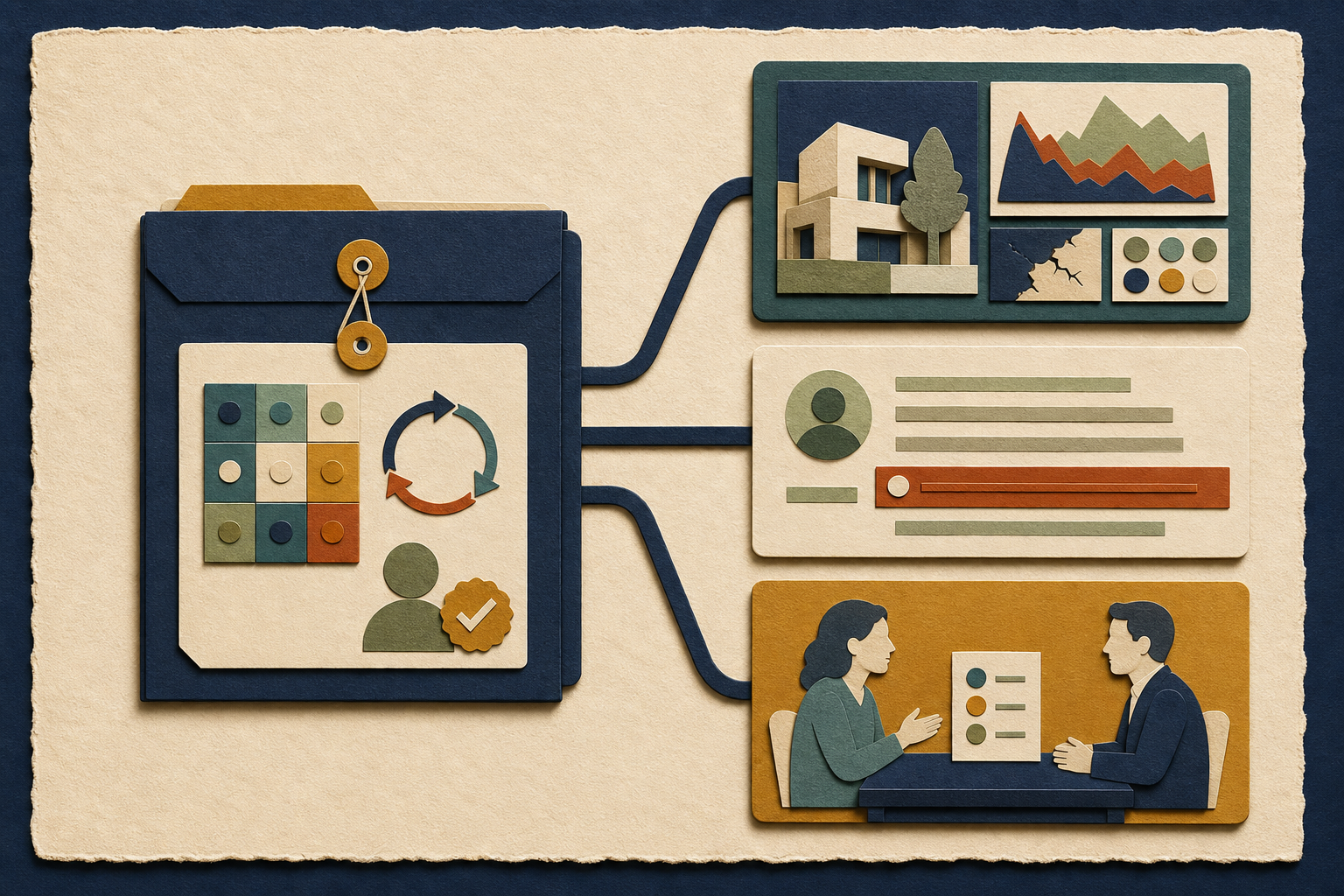 Portfolio, resume, and interview materials should compress the same evidence core rather than invent three different stories.
Translate workflow evidence into resume language
The resume does not need to explain the entire package. It needs to compress the problem, owned decisions, and credible evidence of use.
Tool-first:
Created advanced prompts and AI agents using Claude, ChatGPT, MCP, and Python.
Evidence-led:
Packaged a dependency-risk review workflow with deterministic version parsing, source-linked release analysis, read-only repository access, and a five-case regression set; peer testing exposed hidden wrapper usage and informed a new search step.
Vague:
Automated recruiting intake with AI to improve efficiency.
Specific:
Designed a recruiter-reviewed intake gap workflow that preserved conflicting requirements, rejected candidate-data inputs, and separated knockout constraints from preferences across a tested scenario set.
Format-led:
Built a portable agent skill for weekly analytics.
Decision-led:
Versioned a metric-investigation workflow that validated schemas, computed material movements deterministically, linked draft questions to source cells, and stopped on incomplete periods or changed definitions.
The package format may belong in a skills or project detail line when the target role cares about agent infrastructure. For most roles, lead with the work and decisions. Employers hire for the ability to improve a relevant process, not for possession of a fashionable directory structure.
Tailor the same evidence without changing the facts. An AI platform role may emphasize packaging, host testing, dependency isolation, and tool permissions. An applied AI role may emphasize task design, context selection, evaluation, and failure handling. An operations role may emphasize workflow discovery, policy boundaries, adoption, and maintenance ownership.
Use a representative set of postings to decide which evidence matters rather than guessing from title alone. The skills-gap analysis for jobs helps separate repeated requirements from one-off vocabulary. When tailoring, review every revision for factual ownership, especially when a tool tries to inflate a small test into organizational impact.
Defend the artifact in an interview
A packaged workflow gives an interviewer many productive places to probe. Prepare to discuss the operating choices, not just installation commands.
Start with a compact story:
Our release-risk brief depended on three sources and repeatedly lost service ownership context. I documented the input and approval contract, used code for parsing and link validation, and used an agent to connect release-note language to approved internal mappings. The workflow had read-only access and escalated unknown ownership. When a peer tested it, an alias caused a false match, so I added explicit alias validation and a regression case. I tested the revised package in two supported hosts, but only against archived data, not a live production process.
Expect follow-ups about why the task deserved automation, which context belonged in the package, why a step used code instead of instructions, which permissions you rejected, what counted as acceptable, what broke during testing, and what would be required before live deployment.
Prepare direct answers and show boundaries. Explaining why the package remains read-only demonstrates judgment. If you make a cross-agent claim, describe narrow two-host testing as exactly that rather than universal compatibility.
A ten-day workflow packaging sprint
You can build meaningful evidence without inventing a grand autonomous system. Ten focused days are enough to package and test one narrow process.
Days 1 through 3: observe and specify. Capture inputs, decisions, handoffs, exceptions, and completion. Write the contract, separate stable references from run-specific fixtures, and sanitize private information.
Days 4 through 6: implement and audit. Use instructions for semantic judgment and code for deterministic checks. Grant minimum tool access, then test ordinary, ambiguous, incomplete, conflicting, and stop-for-review cases.
Days 7 and 8: challenge and transfer. Test untrusted content, missing dependencies, stale references, and prohibited actions. Give the package to another person or run it cleanly elsewhere. Test a second client only if cross-host portability matters.
Days 9 and 10: revise and publish evidence. Fix the most consequential failure, rerun the audit, record limitations and tested versions, then prepare the case study, one accurate resume bullet, and a two-minute interview explanation.
The sprint is successful when another person can evaluate the workflow and your decisions. A flashy output is optional.
Know what the artifact does not prove
A portable workflow package does not prove production-scale reliability, broad agent expertise, security review, organizational adoption, or measurable business impact. Each of those claims requires separate evidence.
Keep a boundary ledger in the case study. It might state that testing used sanitized fixtures and read-only access, two peers reviewed eight cases, multilingual inputs remain a gap, and maintenance has lasted four weeks. Add host and version details only when you claim portability across agents.
These statements do not weaken the project. They tell the reviewer exactly where your evidence ends. They also show that you understand the distance between a portable prototype and a governed production capability.
Apply the same care to public packages you install. A readable directory and valid manifest do not make instructions trustworthy. Inspect scripts, tools, network behavior, dependencies, and data access. If you cannot explain what a package can read or change, keep it away from sensitive work.
Package the judgment, then let the format travel
The agent ecosystem will keep changing. Formats may mature or split, hosts will add extensions, and model behavior will shift. A career strategy built around one file name would be fragile.
The durable capability is procedural: observe real work, define its contract, select context, separate judgment from deterministic operations, constrain authority, test failure paths, document maintenance, and learn from another person's use. Portable formats make that capability easier to show because they give the work a reviewable boundary.
Choose one repeated task you understand and package the smallest workflow that deserves reuse. Let a second person run it, preserve the failure that improved it, and carry the same truthful evidence into your portfolio, resume, and interview.
The strongest AI career artifact is not a prompt that worked once. It is a process somebody else can trust for the reasons you can explain.
For a practical research breakdown like this each week, follow the AI Career Signals archive for guidance on AI-shifting resumes, portfolios, interviews, and job searches.
Disclosure: This article is authored by the CoreCV team. While we mention CoreCV.ai, the strategies and advice presented here are intended to be useful whether or not you use our product.
Sources
- Google Developers Blog, Agent Plugins package your skills, tools, and more: https://developers.googleblog.com/agent-plugins-package-your-skills-tools-and-more/
- GitHub Changelog, Manage agent skills with GitHub CLI: https://github.blog/changelog/2026-04-16-manage-agent-skills-with-github-cli/
- OpenAI Academy, Using skills: https://openai.com/academy/skills/
- Anthropic Engineering, Equipping agents for the real world with Agent Skills: https://www.anthropic.com/engineering/equipping-agents-for-the-real-world-with-agent-skills
- OpenAI, From assistance to execution: How enterprises put AI to work: https://openai.com/index/how-enterprises-put-ai-to-work/
- Agent Plugins, Agent Plugins 1.0 specification: https://agent-plugins.org/specification
- Zhou et al., GitSkills: A Dataset of Agent Skills on GitHub: https://arxiv.org/abs/2608.10906
- What Keeps Agent Skills from Being Reusable? Evidence from 138K SKILL.md Files: https://arxiv.org/abs/2608.08453