AI Skills for Your Resume: Read the Job Description Before Listing Tools
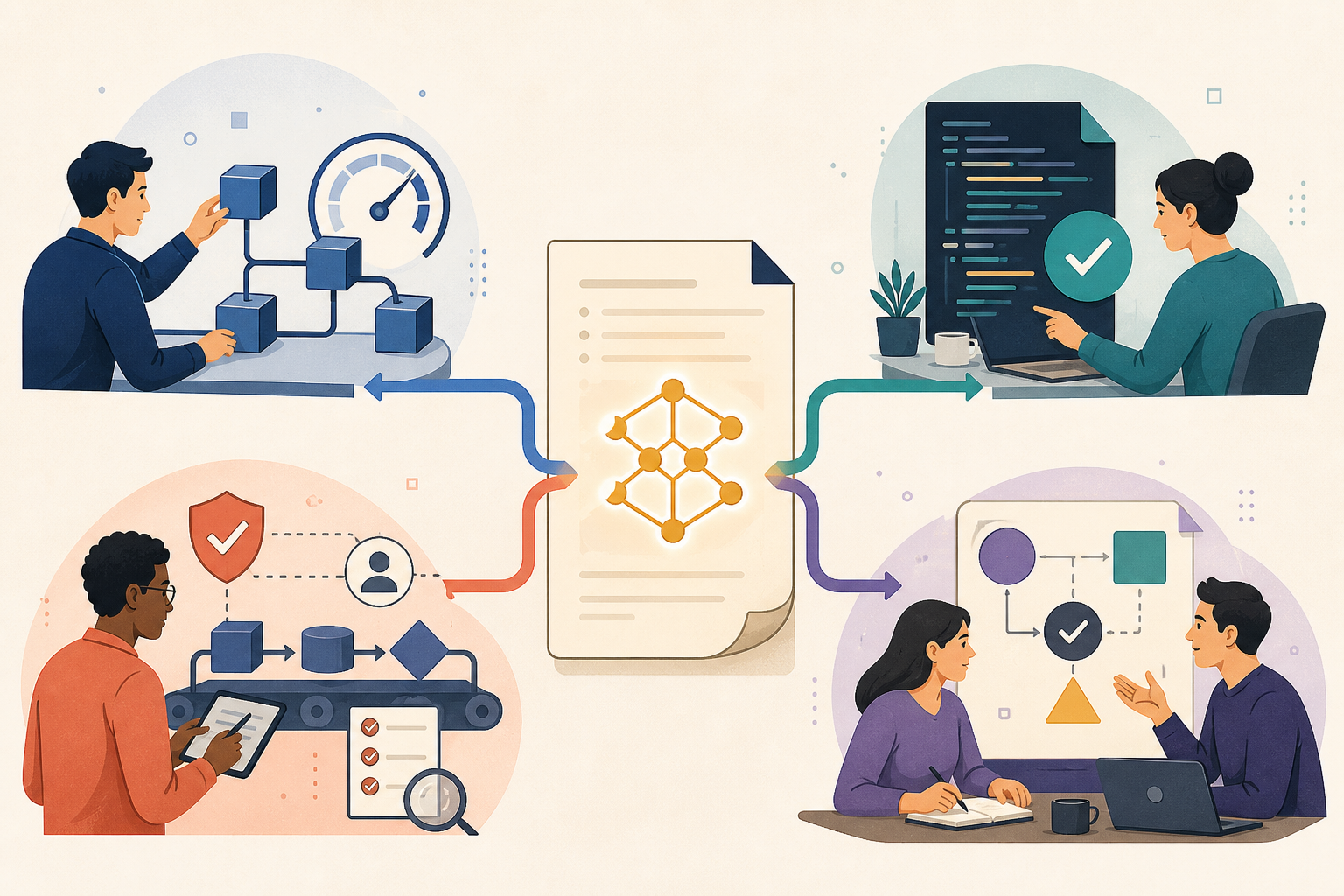
Choosing AI skills for your resume starts with the job description because the phrase itself is too vague to tailor against. In one posting, AI means developing retrieval and evaluation systems. In another, it means using an assistant without shipping unchecked code. Candidates who answer both with a list of model names and chat tools make their experience harder to interpret.
AI literacy is appearing across job families, while employer research still pairs fast-growing AI demand with judgment, collaboration, and other human capabilities.[1][2] Start by asking what kind of work the posting expects you to do with AI.
Read the verbs around the AI requirement
The surrounding verbs usually reveal more than the technology label. "Build," "evaluate," "integrate," "monitor," and "partner" imply different responsibilities. Start by placing the requirement into one of four modes, then look for the evidence you can honestly defend.
The excerpts below are composites based on recurring job-description patterns and serve as classification examples rather than quotations from specific employers.
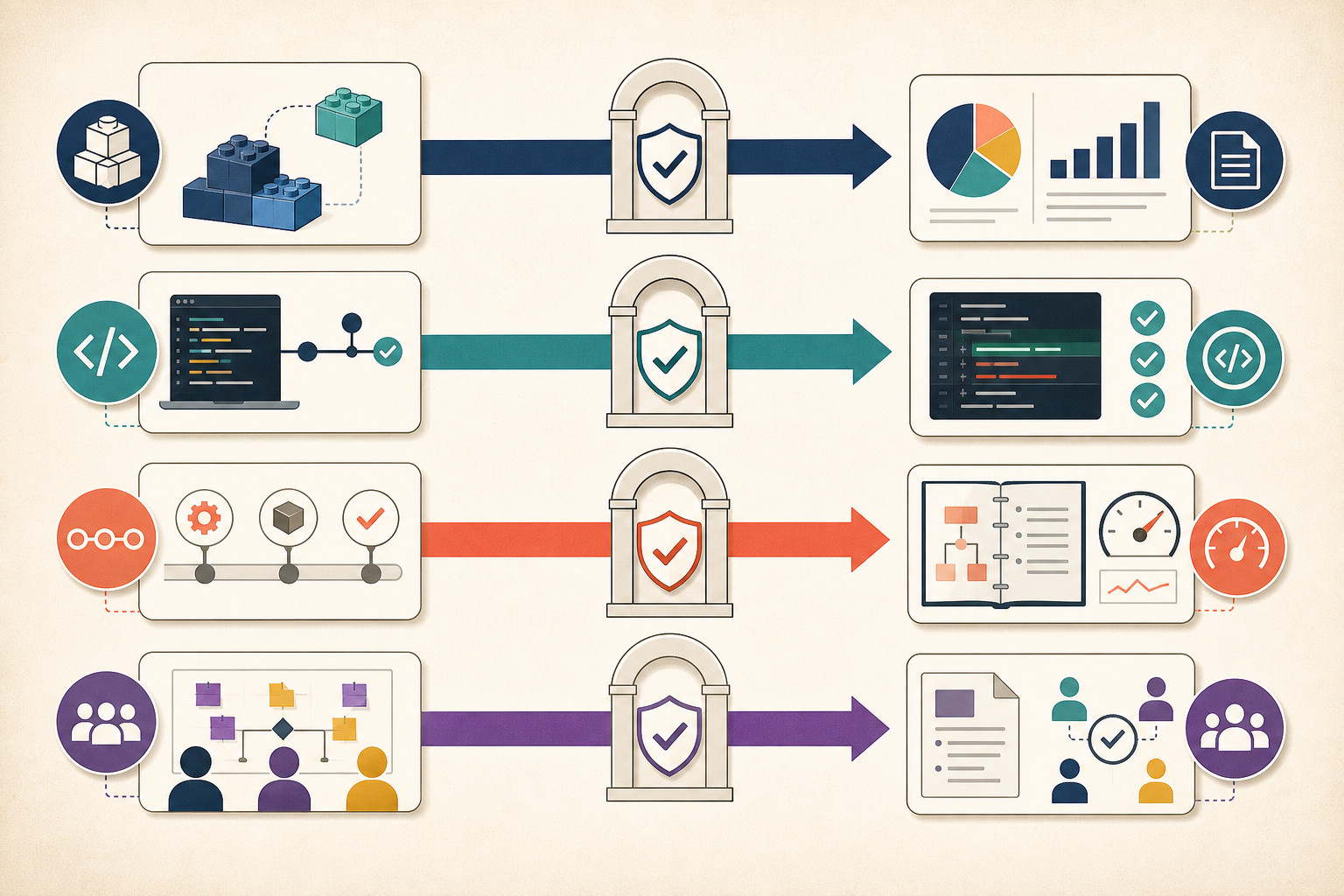
The same AI label can imply different work. Follow the posting's actions through verification to the evidence an employer can assess.
1. AI builder: prove development and evaluation depth
Build retrieval pipelines, evaluate model quality, and improve inference performance for production use cases.
This is an AI builder role. A skills section containing Python, an API provider, and "prompt engineering" fails to establish the required depth. The resume needs evidence about data, architecture, evaluation, failure modes, and production constraints.
Weak: Built an AI chatbot using an LLM API.
Stronger: Built a retrieval service over 40,000 support documents, created a 300-question evaluation set, and reduced unsupported answers by tightening source filters and refusal behavior.
The stronger bullet connects the system to a test method and a failure mode. That matters because current risk guidance treats measurement, evaluation, and ongoing risk management as part of responsible generative-AI work.[3]
2. AI-enabled practitioner: prove the original job plus verification
Use AI-assisted development tools to improve delivery speed while maintaining code quality and security.
The employer is hiring a software engineer whose workflow now includes AI. Lead with the engineering outcome, then show how the assistant was bounded and checked.
Weak: Proficient with Copilot, ChatGPT, and Claude.
Stronger: Piloted AI-assisted test migration across six services, added contract checks for generated changes, and documented review boundaries before the workflow expanded to the team.
This framing reflects a broader finding from DORA's 2025 research: AI tends to amplify the surrounding engineering system.[4] Delivery gains still depend on the system around the tool: tests, review, rollout, rollback, and measurable consequences.
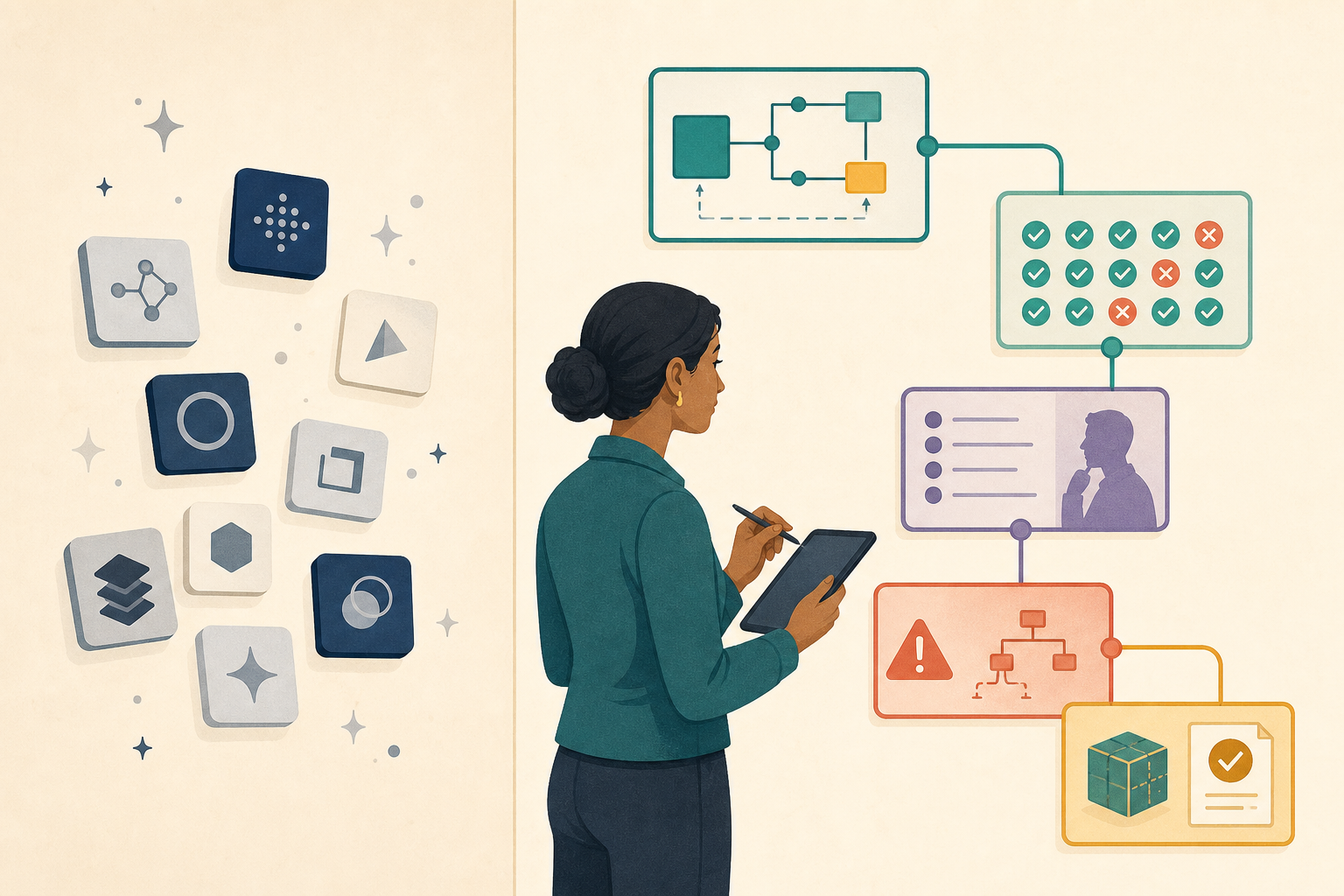
A tool list shows exposure. A traceable project shows how you applied judgment, checks, and ownership.
If you need a repeatable way to compare several postings before choosing evidence, use the job-posting skills-gap worksheet. When you are ready to produce a role-facing version, CoreCV can fine-tune a structured base resume against a pasted job description or job URL. Keep the evidence truthful, then let the target role determine which proof gets priority.
3. Workflow owner: prove operating judgment
Integrate generative AI into support operations, monitor quality, and establish governance for sensitive data.
This role owns the business workflow around the model call. Relevant evidence includes baseline performance, human review, access controls, monitoring, incident handling, and adoption. Security guidance for LLM applications highlights risks such as prompt injection, insecure output handling, and sensitive-information disclosure, which is why a generic "built with AI" bullet leaves important ownership invisible.[5]
Weak: Automated customer support with generative AI.
Stronger: Introduced assisted reply drafting for two support queues, restricted retrieval to approved knowledge sources, routed low-confidence cases to agents, and audited error categories weekly during rollout.
The stronger version works without an invented productivity percentage because the controls and operating cadence already communicate substantial responsibility.
4. AI-aware collaborator: prove decisions and communication
Partner with data science to identify AI opportunities, define product requirements, and communicate limitations to customers.
This may describe a product manager, designer, solutions engineer, or technical lead who is adjacent to model development. Stay within your actual contribution and show how you framed the use case, challenged assumptions, translated constraints, or designed a decision process.
Weak: Experienced in AI strategy and cross-functional leadership.
Stronger: Defined acceptance criteria for an AI-assisted triage feature, aligned product and data teams on escalation cases, and rewrote launch guidance so customers could distinguish suggestions from confirmed classifications.
The strongest AI-aware collaborators make uncertainty legible through decisions and communication, which is often exactly what the posting asks for.
Run a three-question evidence audit
Before adding any AI skill to your resume, ask:
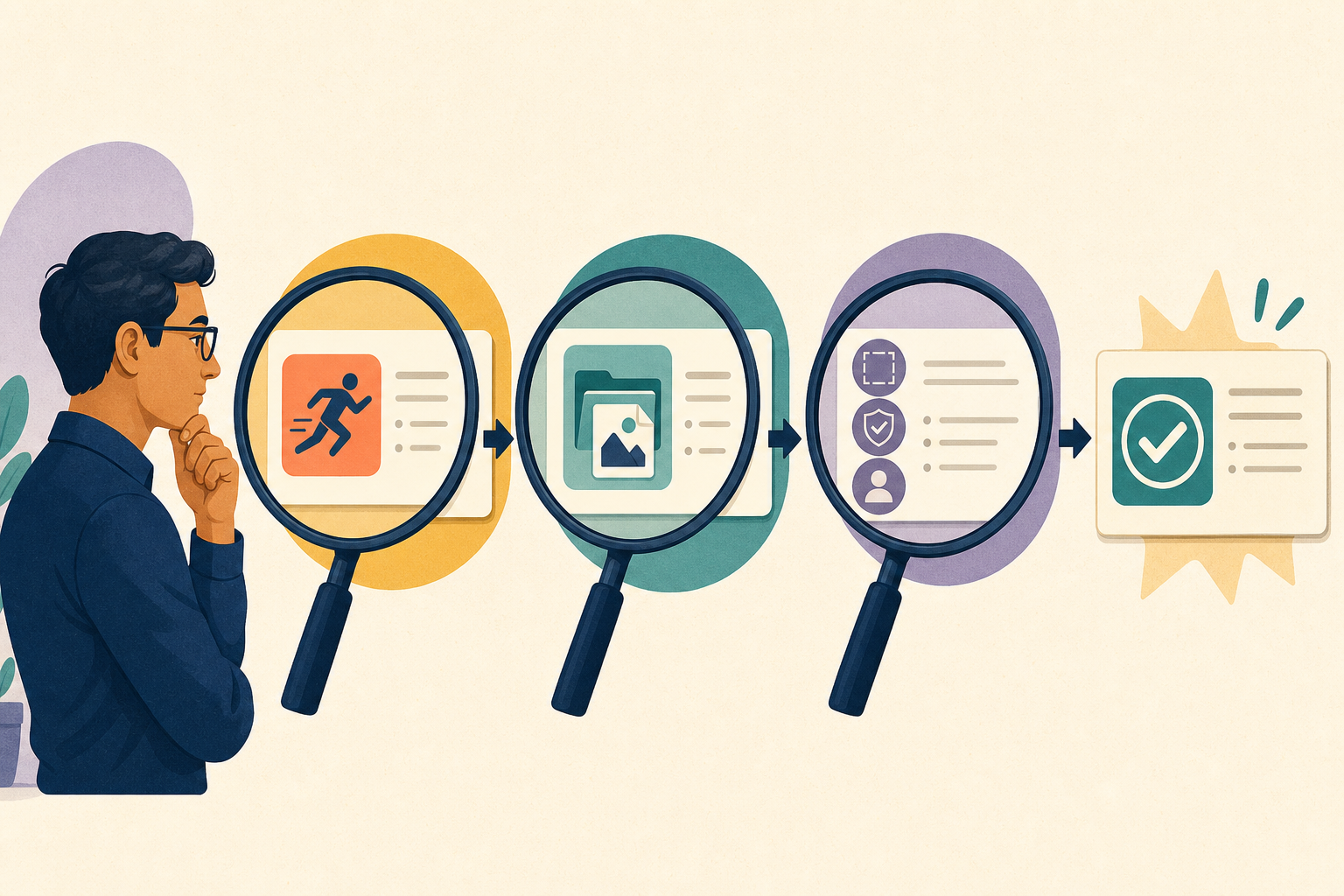
Audit the action, the artifact, and what you can defend before the claim earns space on your resume.
- What is the employer's verb? Building, using, operating, and partnering require different proof.
- Where is the evidence? The important skill should connect to a project, work bullet, portfolio artifact, or interview story.
- What can I defend? Be ready to explain inputs, boundaries, checks, failures, and your personal contribution.
A product name establishes exposure. Evidence connects that tool to work you can explain and defend. The AI-native work guide explains how to surface judgment and verification, while the AI-assisted projects guide helps separate your contribution from the tool's contribution.
AI language in a posting can be important without being a universal hard gate. Read its position in the responsibilities, compare similar roles, and tailor toward the work it actually describes. A precise example of bounded, verified use will usually communicate more than a crowded AI skills section.
For weekly guidance on making technical value legible as the market changes, subscribe to the CoreCV Blog RSS feed. The goal is not to look fluent in every AI tool. It is to make the relevant mode of work easy to recognize and credible under follow-up.
Sources
1. LinkedIn, AI Adoption Starts at the Top: https://news.linkedin.com/en-us/2025/ai-adoption-starts-at-the-top--3x-more-c-suites-on-linkedin-are-
2. World Economic Forum, Future of Jobs Report 2025: https://www.weforum.org/publications/the-future-of-jobs-report-2025/
3. National Institute of Standards and Technology, Artificial Intelligence Risk Management Framework: Generative Artificial Intelligence Profile: https://www.nist.gov/publications/artificial-intelligence-risk-management-framework-generative-artificial-intelligence
4. DORA, State of AI-assisted Software Development 2025: https://dora.dev/research/2025/dora-report/
5. OWASP Foundation, Top 10 for Large Language Model Applications: https://owasp.org/www-project-top-10-for-large-language-model-applications/