Will ATS Detect an AI-Written Resume? No. Here's What Actually Gives You Away.
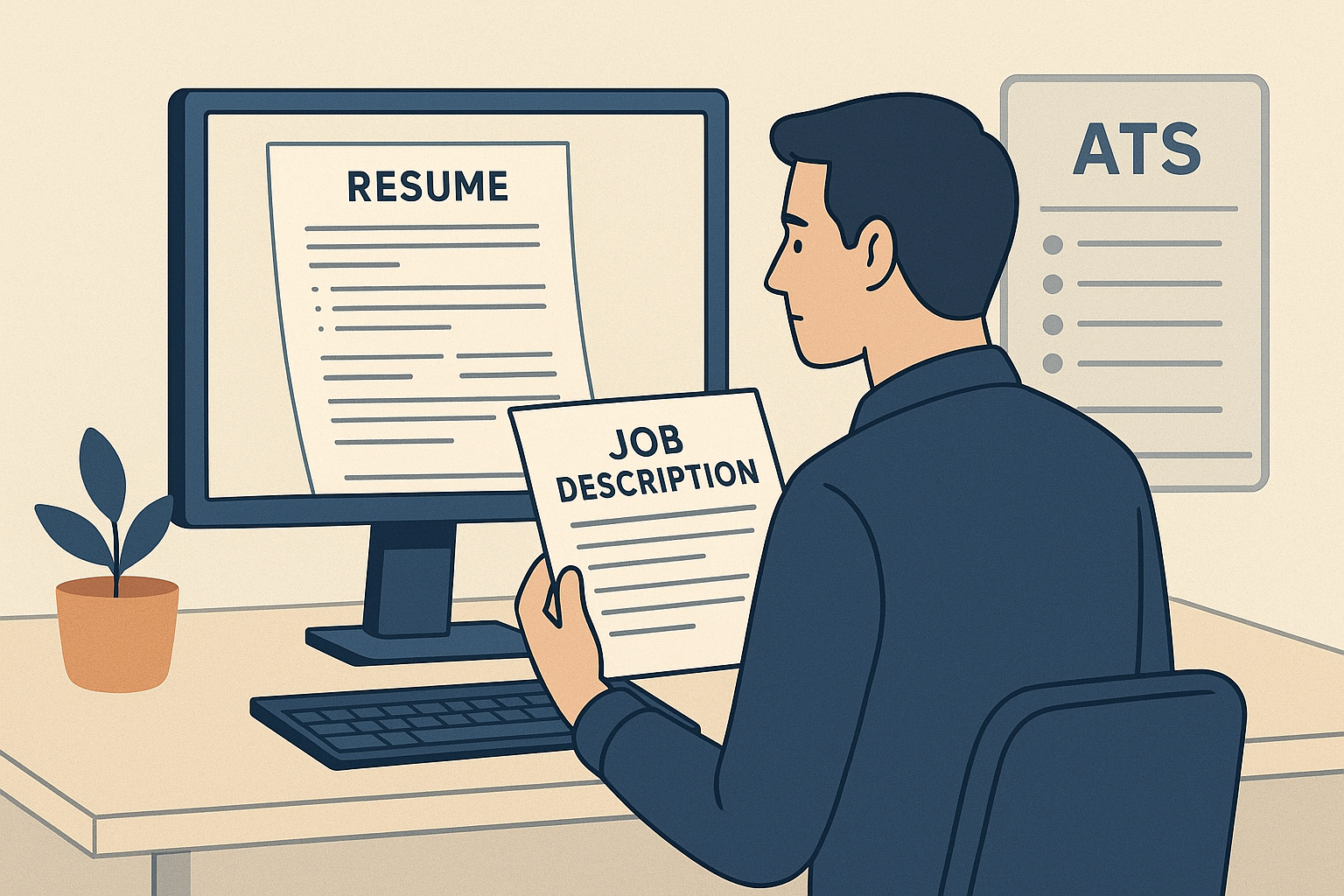
If AI helped draft your resume, the main risk is almost certainly not that an ATS will detect it. ATS software is built to parse resumes, extract details like skills and titles, and help employers filter for fit. The real problem shows up later, when a recruiter reads copy that sounds polished but empty, inflated, or suspiciously interchangeable with a hundred other resumes.[1][2][3][4]
ATS is looking for structure and fit, not secret AI fingerprints
A lot of candidates imagine ATS as a lie detector for tone. That is the wrong mental model. The standard ATS workflow is much more ordinary: scan the resume, extract structured information, look for qualifications tied to the role, and route or filter candidates accordingly.[1] If your resume is readable, uses standard section labels, and reflects the skills and experience the job actually calls for, you have solved the ATS side of the problem more than if you spent that same time worrying about whether one sentence sounds too clean.
That is why AI-detection panic usually sends effort to the wrong place. Even outside hiring, institutions that have tried AI-text detectors have warned about false positives and reliability limits rather than treating them as clean proof of authorship.[5] Hiring software is far more commonly optimized around parsing, search, and qualification workflows than around trying to infer where a sentence originated.
If you are tailoring often and want one structured base resume you can adapt without letting the copy drift into generic mush, CoreCV is useful for keeping the master version organized, then fine-tuning it against a pasted job description or job URL before you send it.
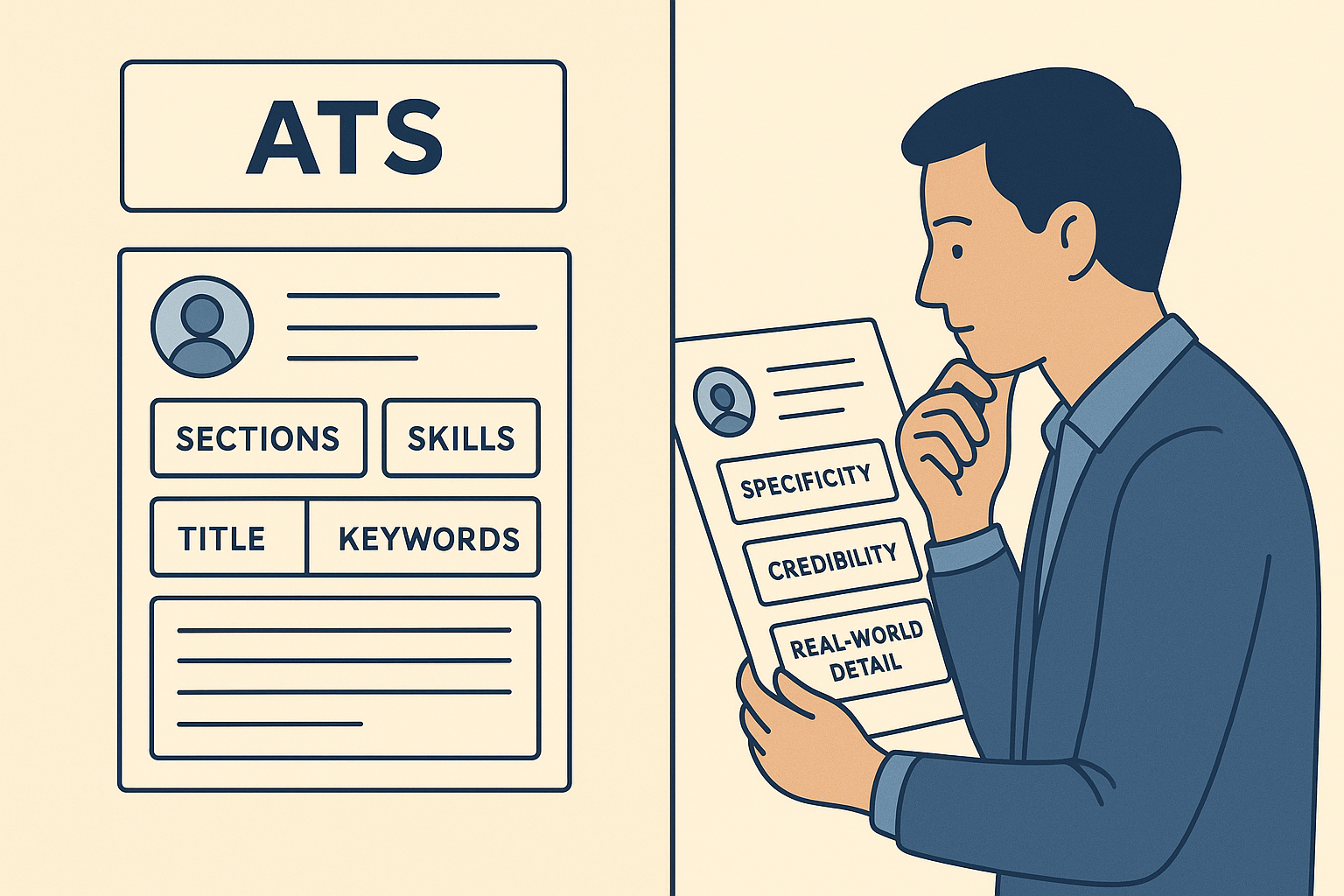 ATS usually handles structure and fit. Human reviewers handle credibility.
What actually makes an AI-assisted resume look weak
Recruiters usually do not need a detector to feel that something is off. They just need to read three lines of vague competence theater.
The biggest giveaway is generic abstraction. Phrases like "results-driven engineer," "proven track record," or "leveraged cutting-edge technologies" do not sound advanced. They sound unowned. Strong resume guidance keeps landing on the same principle: specificity beats summary slogans, and accomplishments beat adjectives.[2][3][6]
The second giveaway is inflated authorship. AI drafts often promote shared team work into solo hero language. "Architected end-to-end platform transformation" might sound impressive until the interviewer asks what you personally decided, implemented, or influenced. If the bullet cannot survive follow-up questions, it is not strong. It is brittle.
The third giveaway is job-description parroting. Matching role language helps when it makes your relevant experience easier to find. Copying the posting too closely does the opposite. It makes the resume feel reverse-generated from the target ad instead of grounded in real work.
The fourth giveaway is suspiciously universal metrics. AI likes clean numbers and neat success arcs. Real work is usually messier. If every bullet suddenly claims double-digit gains without context, the page starts to feel synthetic even when the numbers are technically possible.
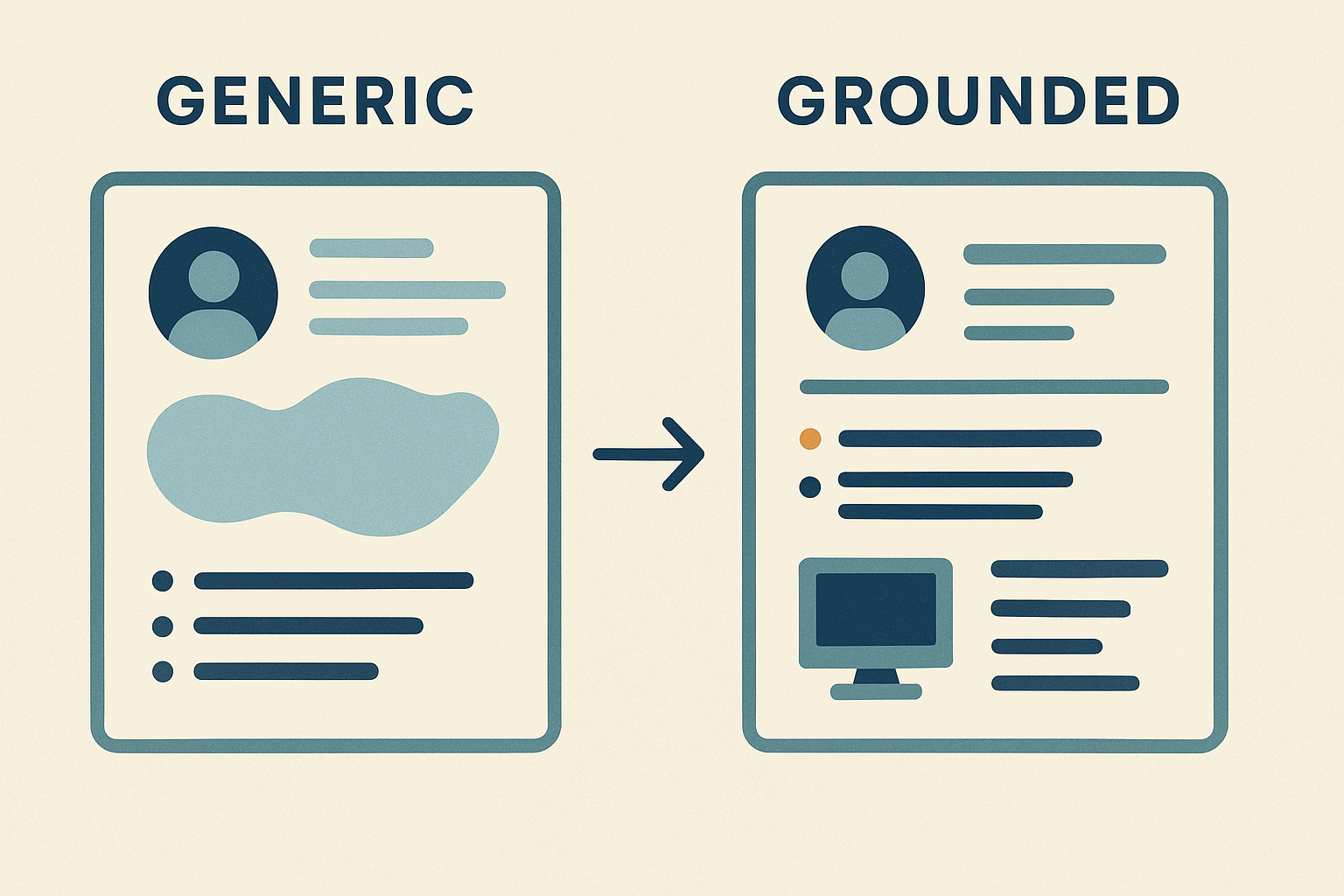 Generic polish is rarely the problem you think it is. Generic emptiness is.
Edit AI-assisted bullets like someone who was actually there
AI can still be useful. It is good at first drafts, compression, alternative phrasing, and helping you spot missing keywords or thin sections. The mistake is treating the first polished output as finished.
A weak AI-assisted bullet might say this:
Results-driven software engineer with a proven track record of leveraging modern backend technologies to deliver scalable, high-impact solutions in fast-paced environments.
That line is smooth, but it proves almost nothing.
A stronger version sounds more like this:
Tightened release checks for three Node services after repeated rollback incidents, cutting noisy deploy failures and giving the on-call rotation clearer failure-path guidance.
The stronger version works because it gives the reader a situation, a scope boundary, and a plausible consequence. It sounds like someone who actually remembers the work.
If you are using CoreCV in this context, the value is not magic ATS evasion. It is a cleaner editing loop: keep a structured source resume, tailor against the role in front of you, and then tighten any AI-assisted wording until it sounds specific enough to defend live.
Stress-test every bullet before you send it
A simple filter catches most bad AI residue. Before you send the resume, ask four questions:
- Can I explain exactly what I did here without improvising?
- Does this line name a real system, constraint, team context, or outcome?
- Am I borrowing the job description's language, or just copying its surface vocabulary?
- Would this still sound believable if the metric disappeared?
If a bullet fails those tests, keep editing. Usually the fix is to get closer to the work itself by naming the service, the handoff, the failure mode, the decision, or the change that followed.
That same discipline helps on the ATS side too, but for a narrower reason. Clean formatting and standard section structure make a resume easier to parse, while specific role-matched wording helps it align to search terms and makes better human sense once someone reads it.[1][2][4] If you want the adjacent playbooks, ATS Resume for Software Engineers: 3 Ways You Can Be Rejected Before a Human Reads It, The Right Way to List AI-Assisted Projects Without Sounding Like You Pressed a Button, and Stop Faking Resume Metrics: What to Do When You Can't Prove the Number all attack the same problem from different angles.
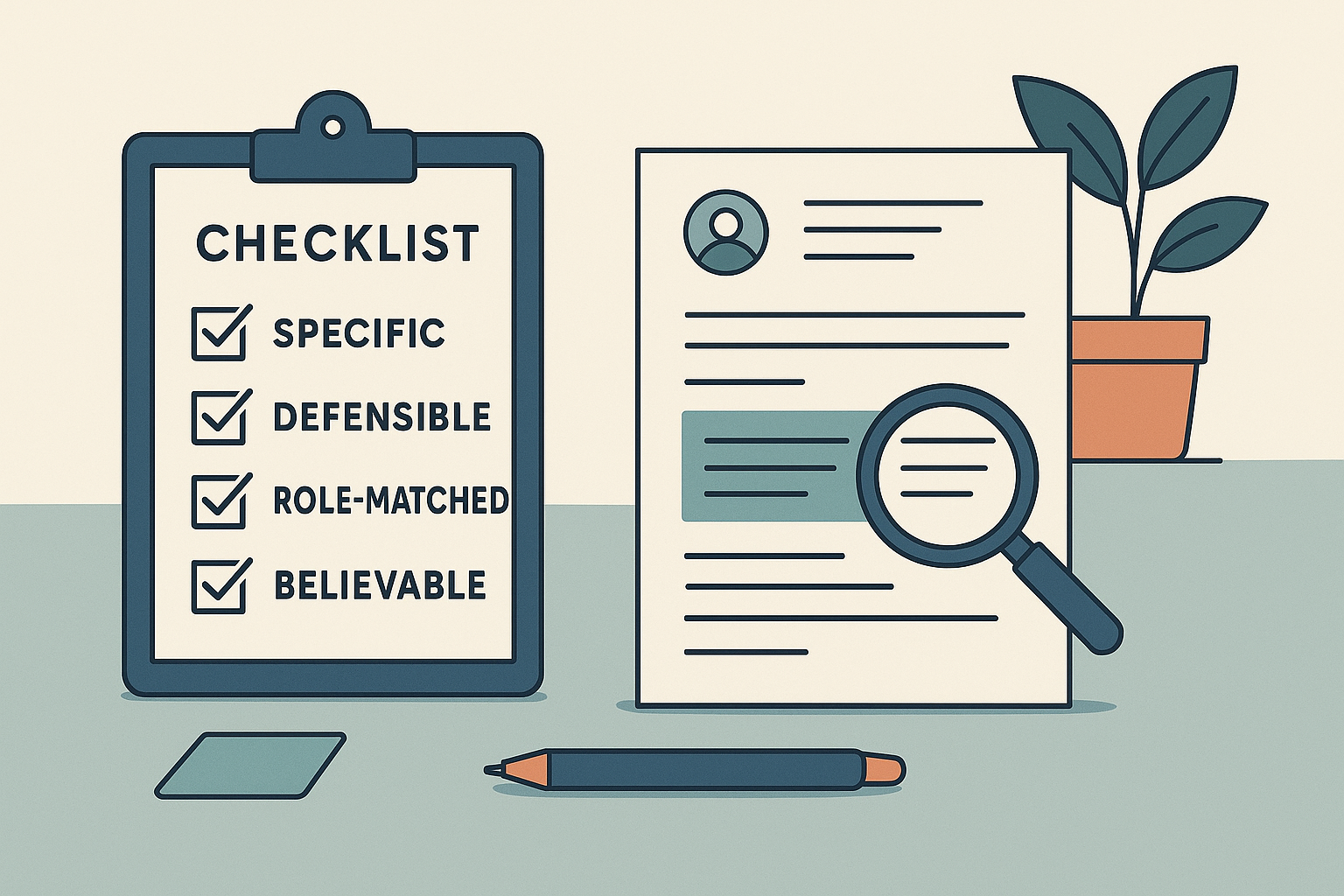 The safest AI-assisted resume is one you can defend line by line.
Worry less about detection and more about legibility
If AI helped you get to a stronger draft faster, fine. The better question is whether the final resume still sounds like real work done by a real person in a specific context. ATS is usually checking whether your resume can be parsed and matched. Humans are checking whether they trust what they are reading.
So do not obsess over hiding AI fingerprints. Obsess over making your value legible. That means cleaner structure, sharper tailoring, believable bullets, and fewer lines that could belong to anyone.
For a repeat-touch next step, follow the resume advice archive, then continue with Do You Need to Tailor Your Resume for Every Job? if the next question is how much customization a role has actually earned.
Sources
1. Indeed Editorial Team, How To Write an ATS Resume (With Template and Tips): https://www.indeed.com/career-advice/resumes-cover-letters/ats-resume-template
2. Harvard FAS Mignone Center for Career Success, Create a Strong Resume: https://careerservices.fas.harvard.edu/resources/create-a-strong-resume/
3. MIT Career Advising & Professional Development, Resumes: https://capd.mit.edu/resources/resumes/
4. UC Berkeley Career Engagement, Resumes: https://career.berkeley.edu/prepare-for-success/resumes/
5. MIT Sloan Teaching & Learning Technologies, AI Detectors Don't Work. Here's What to Do Instead.: https://mitsloanedtech.mit.edu/ai/teach/ai-detectors-dont-work/
6. Columbia Center for Career Education, Resumes with Impact: Creating Strong Bullet Points: https://www.careereducation.columbia.edu/resources/resumes-impact-creating-strong-bullet-points