The New Technical Generalist: Position Breadth Without Looking Unfocused

Technical breadth is easy to acquire and surprisingly hard to explain. A resume that lists frontend, backend, cloud, data, automation, support, and product work may be accurate, yet still leave a hiring manager asking what the candidate should own. Breadth is useful evidence only after the reader can see what holds it together.
Software work often crosses formal boundaries: O*NET's software developer profile spans user-needs analysis, system design, implementation, collaboration, and performance monitoring.[1] That range is not a reason to market every broad candidate as a generalist. It is a reason to give the resume a stronger organizing principle than a tool inventory.
Choose the through-line before choosing the bullets
Start by naming the pattern that has survived changes in stack, team, and title. Most credible generalist stories can be organized around one of three anchors:
- Problem domain: developer productivity, commerce, data reliability, security, or another recurring area.
- Operating strength: turning ambiguous requirements into shipped systems, connecting product and engineering, or stabilizing work across service boundaries.
- Outcome: faster releases, safer operations, clearer customer workflows, or more reliable decisions.
Pick one primary anchor for the target role. The others can support it, but they should not compete for the headline.
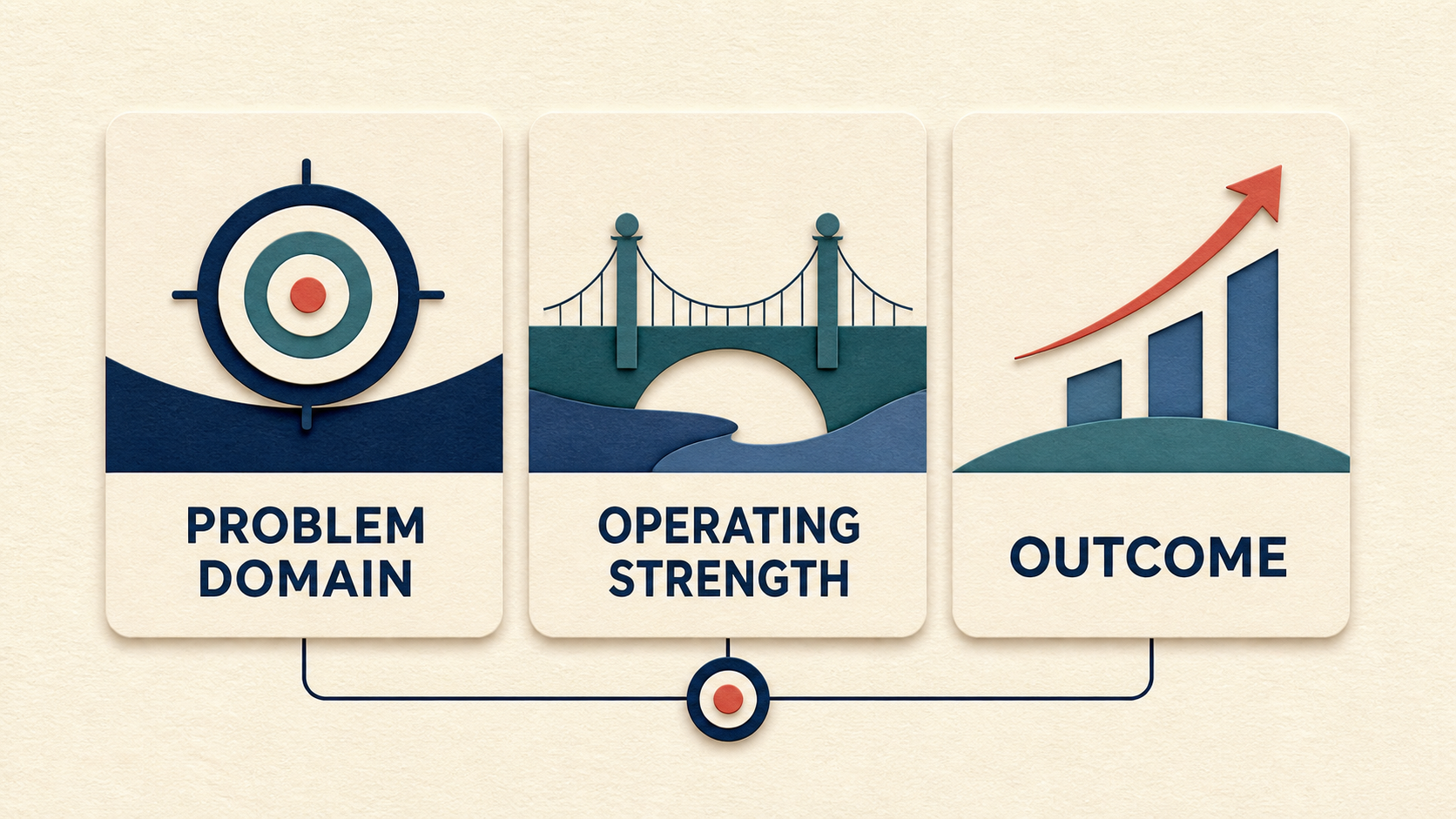
A generalist resume needs one primary anchor, not seven equal identities.
Suppose an engineer has built React interfaces, Node services, deployment automation, and support tooling. "Full-stack engineer with experience across the SDLC" says almost nothing. "Software engineer who turns unreliable internal workflows into maintainable tools, from operator interface to deployment" gives the range a purpose.
If your current summary is scattered, the software engineer summary guide offers a useful principle: lead with the value proposition the reader needs now, not a chronology of everything you have done.
Separate owned depth from useful range
Breadth becomes risky when every technology receives equal weight. A hiring manager cannot tell which work you can lead independently, which work you can contribute to, and which tools you merely encountered.
Use three private labels while editing:
- Owned depth: work you can design, execute, troubleshoot, and defend under detailed questioning.
- Useful range: adjacent work you can perform with context, review, or collaboration.
- Past exposure: tools or domains you recognize but would need to refresh.
Only the first two usually deserve prominent resume space. Past exposure may belong in an older bullet when it explains an outcome, but it rarely belongs in the opening summary. The software engineer skills guide shows how to connect priority skills to evidence instead of presenting them as an undifferentiated list.
The distinction also protects credibility. Stack Overflow's 2025 survey found that 54% of respondents who answered its workplace-tool question regularly used six or more software applications or platforms.[2] Using many tools is ordinary. The stronger signal is knowing what you owned and why the range mattered. The survey recruited heavily through Stack Overflow-owned channels, so treat the result as context about respondents rather than a universal workforce estimate.[3]
Rewrite the evidence around the target role
Compare these summaries for a platform-oriented opening.
Weak
Versatile full-stack engineer skilled in React, TypeScript, Node.js, Python, AWS, Docker, PostgreSQL, CI/CD, analytics, Agile, and technical support.
Stronger
Software engineer focused on developer workflows and service reliability. Builds the internal interfaces, APIs, and deployment checks teams need to ship changes with fewer manual handoffs.
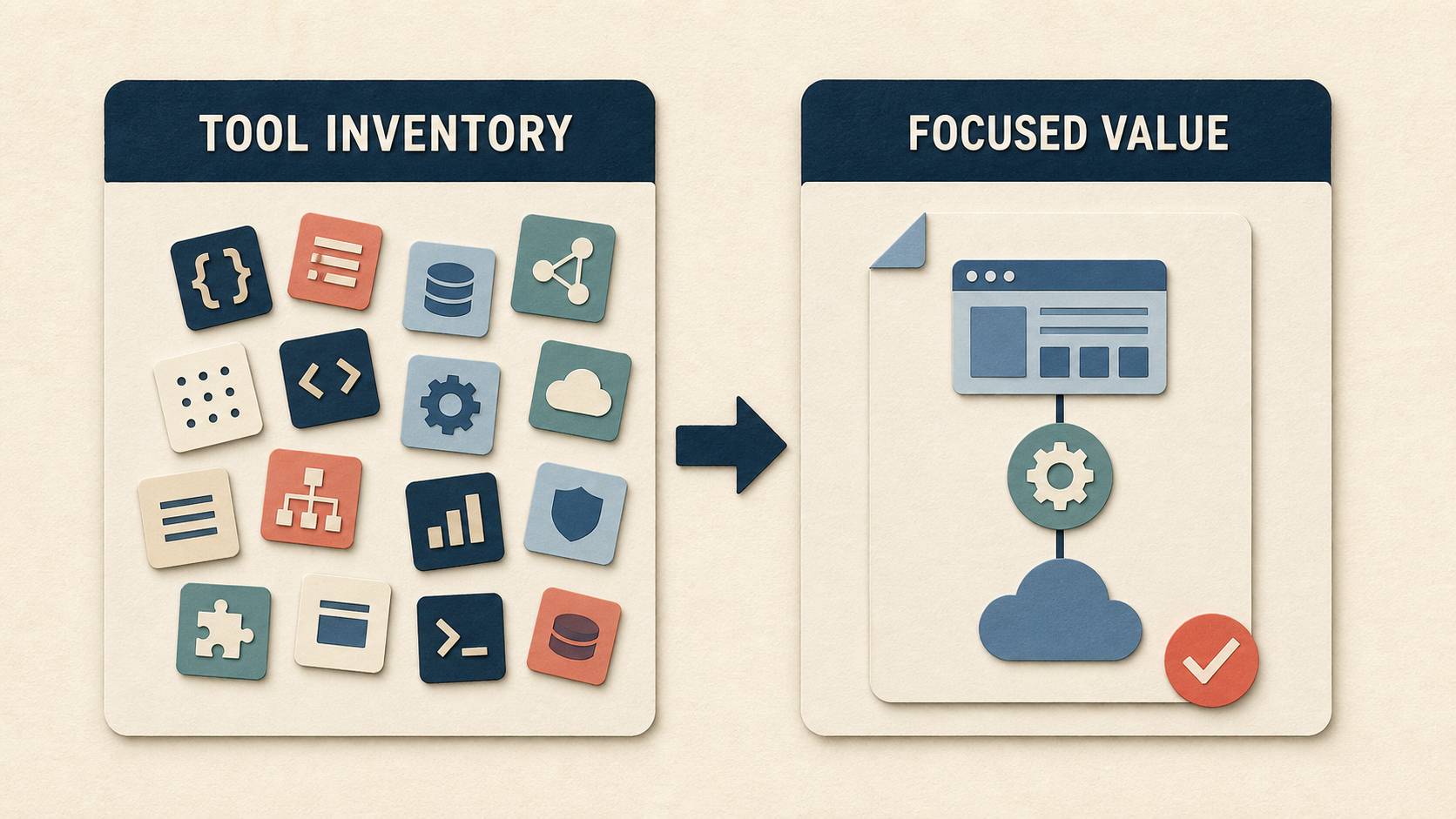
Keep the range, but make the role-facing value proposition lead.
The stronger version does not hide frontend or backend work. It explains why both appear. The experience section should then prove the claim with connected bullets:
Built a release-status interface and service endpoint that replaced three manual handoffs for support and engineering during deployments.
Added pre-release validation and rollback checks for the same workflow, reducing avoidable operator errors across weekly releases.
These bullets show range through one operating problem. They are more coherent than one bullet about React, one about AWS, and one about stakeholder communication with no shared result. The systems-thinking guide can help connect decisions and consequences without turning each bullet into a paragraph.
Keep, compress, or cut
For every project and bullet, ask three questions:
- Does it strengthen the chosen through-line?
- Does it prove a requirement in the target role?
- Does it add evidence that the resume does not already have?
If the answer is yes, keep it. If it shows useful range but distracts from the main fit, compress it. If it answers none of the questions, cut it from this version. Selective omission is not dishonesty. A resume is a role-facing argument built from true facts, not an archive of every task.
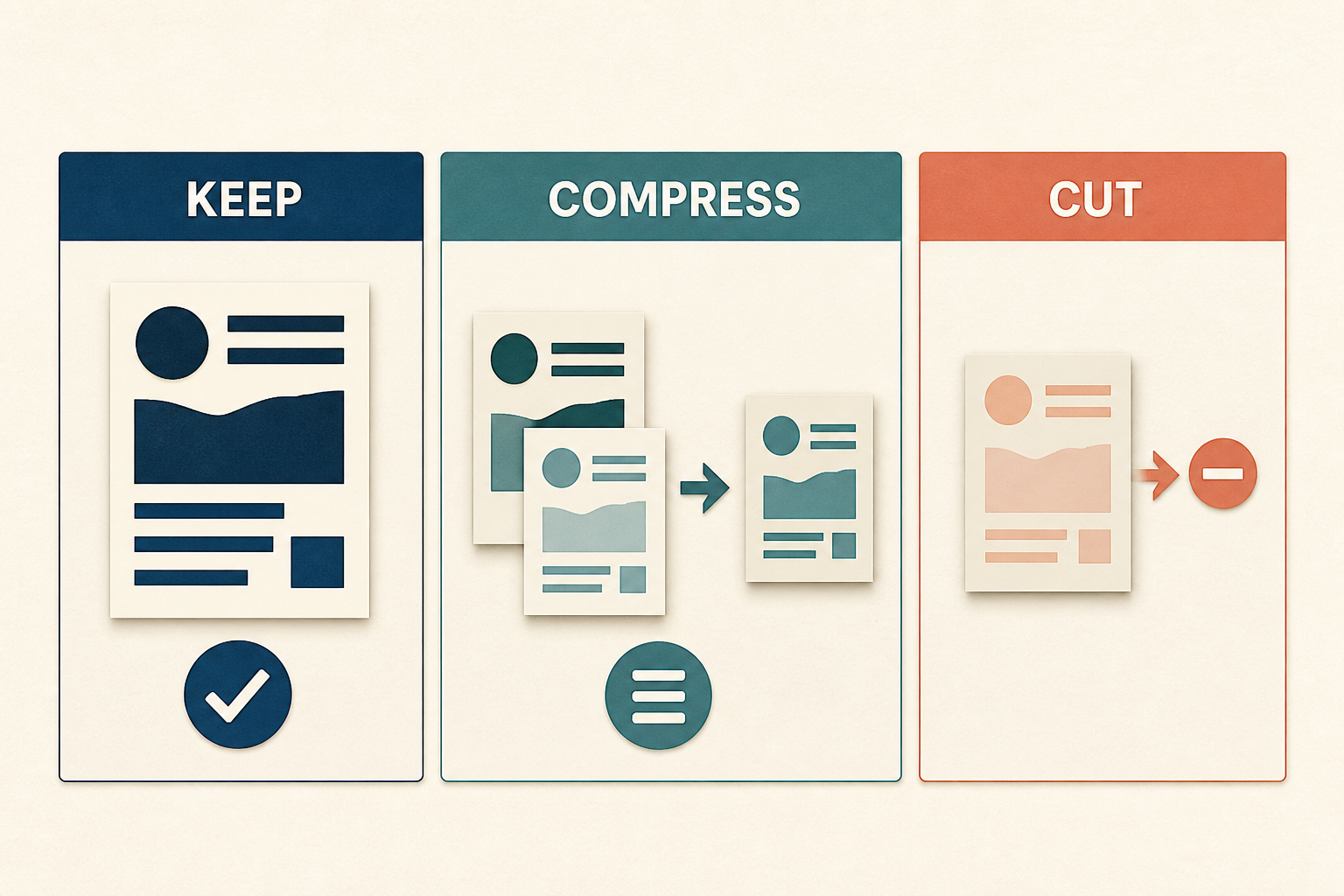
Use breadth selectively so each example earns its place.
Keep the complete record in a structured base resume. Then create a version that emphasizes the right anchor for each coherent role family. CoreCV can fine-tune that base against a pasted job description or job URL. Review the result against your actual experience, and keep only claims you can defend. The role-specific tailoring guide explains how to change emphasis without inventing a new professional identity.
Follow the CoreCV Blog via RSS for weekly practical guidance on making technical value legible in an AI-shifting hiring market.
The best generalist resume does not ask the reader to admire how many things the candidate has touched. It makes a narrower promise: here is the recurring problem I solve, here is the range that helps me solve it, and here is the evidence that I can own the work.
Sources
1. O*NET OnLine, Software Developers: https://www.onetonline.org/link/summary/15-1252.00
2. Stack Overflow, 2025 Developer Survey: Work: https://survey.stackoverflow.co/2025/work
3. Stack Overflow, 2025 Developer Survey: Methodology: https://survey.stackoverflow.co/2025/methodology