How to Read Hybrid and Return-to-Office Job Posts Before You Commit

A lot of hybrid job posts sound more settled than they really are. "Hybrid" can describe a fixed operating cadence, but it can also hide office expectations that shift by manager, team, or quarter. That ambiguity matters because vague schedule language often tightens later as leaders push for more coordination and visibility.[1] Before you tailor a resume or start a long interview loop, treat hybrid wording as something to verify, not something to trust.
Read the location line like an operating detail, not a perk
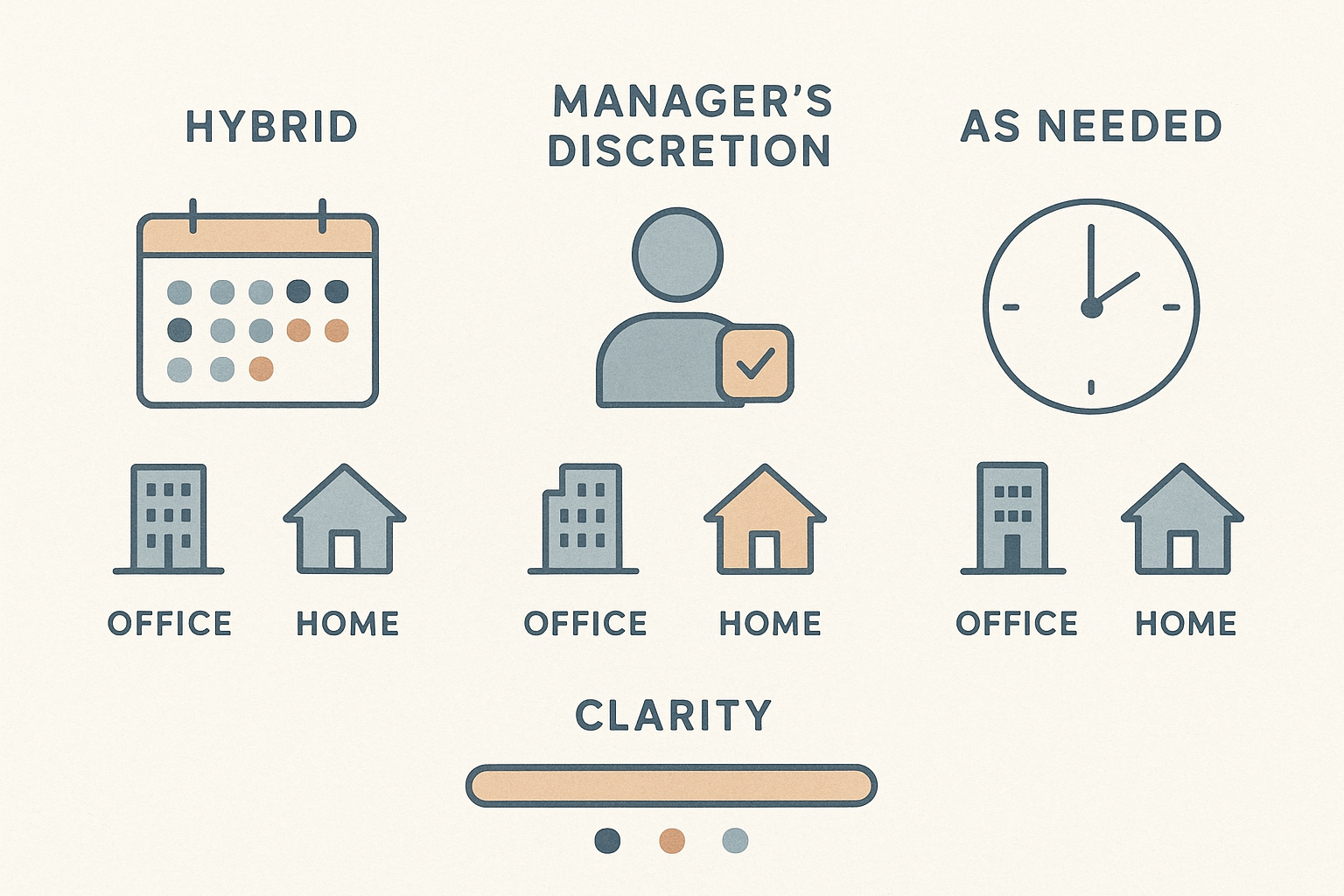
Terms like "hybrid," "flexible hybrid," "local candidates preferred," or "must be able to come in as needed" are not interchangeable. They describe very different lives.
The useful question is whether the posting tells you how work is actually organized. If the language does not tell you the expected office cadence, who sets it, or whether it changes by team, you are still looking at recruiting copy, not a stable work schedule. How to Spot a Bad Job Posting Before You Apply is the companion piece if the entire listing feels fuzzy, not just the location policy.
If the role looks promising but the location details are still soft, CoreCV is most useful after you confirm the role is real and the work pattern is workable. Tailoring only once the target is clear is much smarter than burning time on a job that may not fit your actual life.
Watch for office-day drift
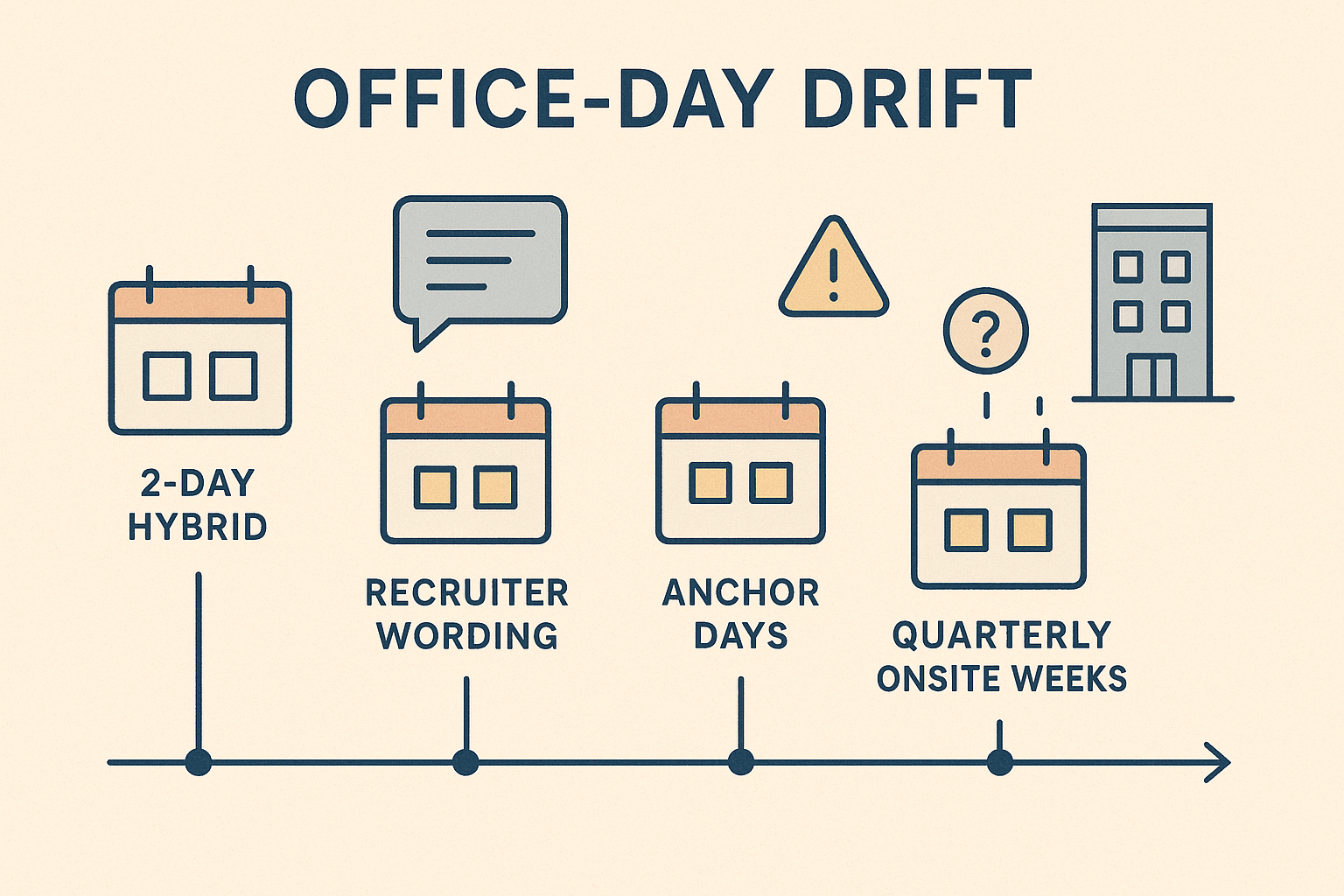
The biggest hybrid trap is not a clearly onsite role. It is a vaguely hybrid role that keeps tightening.
A post might say two days in office. A recruiter might say "usually two or three." A hiring manager might later describe "anchor days," customer visits, quarterly onsite weeks, or an expectation to be around when leadership is in town. None of those details are automatically unreasonable. The problem is that they change the cost of the job, and they often show up only after you have invested real effort.
Microsoft's hybrid-work research keeps coming back to the same tension: employees want flexibility, while leaders want more confidence in coordination and output.[1] That is why candidates should ask early whether the cadence is company policy, team norm, or manager preference.
Ask this directly: What does hybrid mean on this team in a normal month? That phrasing is better than asking whether the role is hybrid in theory. You want the lived version.
Commute assumptions are part of compensation
Candidates sometimes treat commute questions like a lifestyle preference. They are closer to job economics. A long trip, expensive parking, unreliable transit, childcare reshuffling, or a requirement to stay within commuting distance all change the real value of an offer. If the post says hybrid but quietly assumes you live near one office, treat that as a meaningful condition of the role.
This is also where "local only" wording matters. Sometimes it means occasional onsite collaboration. Sometimes it means the company wants the option to increase office time later without a formal relocation conversation. If you are outside the area, ask whether the role is open to nonlocal candidates, whether relocation is expected, and whether the salary band is tied to office geography.
Candidates who skip this step often end up tailoring for jobs they would never realistically accept. That is the same waste problem behind Ghost Jobs Are Wasting Your Tailoring Time: How to Verify a Role Before You Rewrite Your Resume. Clarity first, customization second.
"Exceptions available" is not the same as a policy
A lot of companies sound flexible when what they really have is informal manager leeway.
If a recruiter says exceptions are possible, ask what kind of exception, who approves it, how long it lasts, and what happens if your manager changes. An informal exception can disappear during a reorg, a team transfer, or a leadership shift. If you need something specific, such as one office day instead of three, occasional travel instead of weekly presence, or time to relocate after joining, get concrete about whether that is a standard accommodation, a temporary arrangement, or a one-off favor.
The same principle applies to return-to-office language. "We are bringing people back together" can describe a stable expectation or an unfinished transition. Ask where the team actually is in that process.
Do not tailor hard until the job is clear enough
Resume advice consistently points to the same principle: tailor to a real target, make relevant evidence easy to scan, and use the job description to decide what deserves emphasis.[2][3][4] That only works when the target is clear.
If the posting still leaves basic questions unanswered, do a light screening step before you invest more.
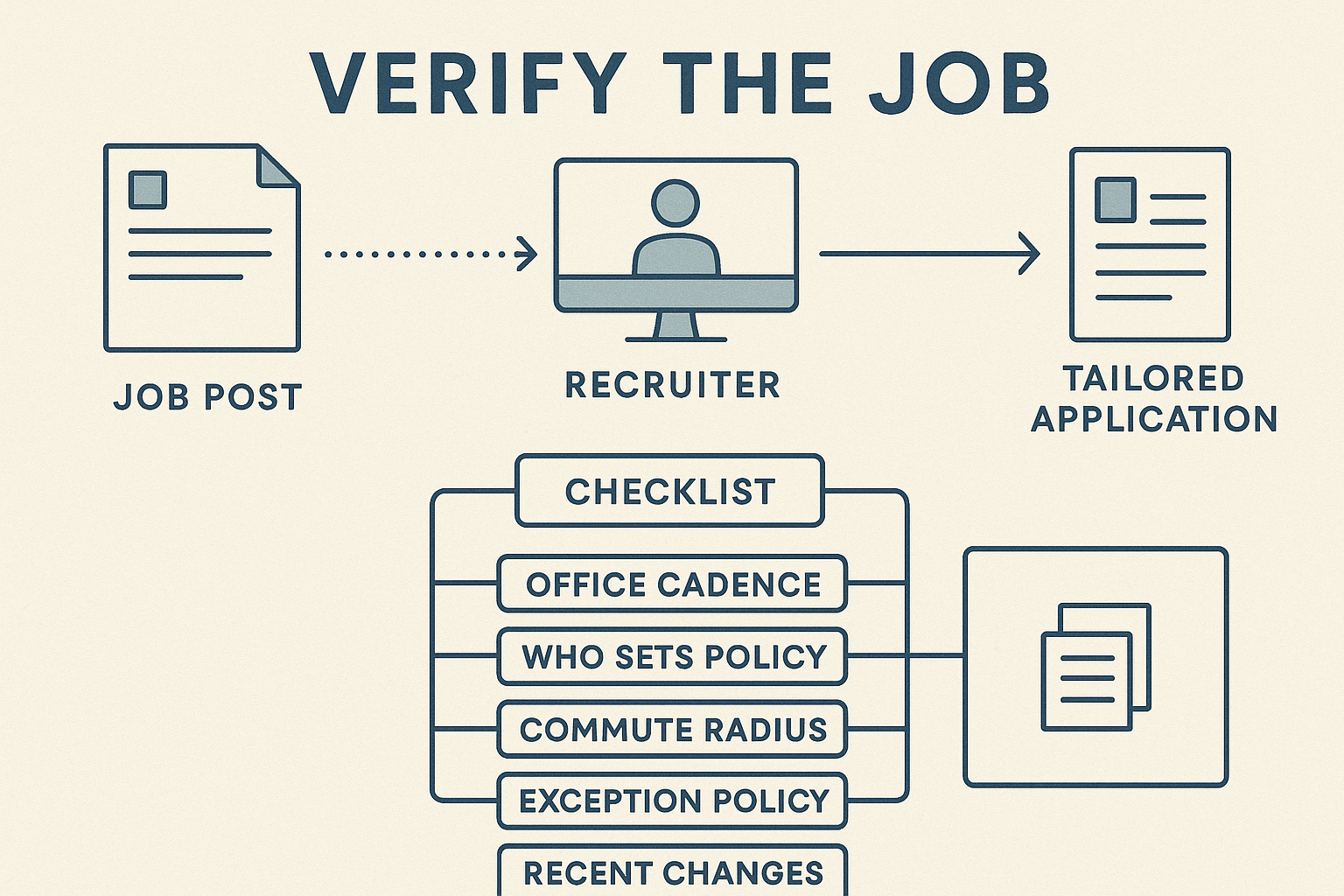
Ask:
- How many in-office days are actually expected in a normal week or month?
- Who sets that expectation: company policy, the function, the manager, or the team?
- Is there an assumed commute radius or relocation timeline?
- Are exceptions formal and documented, or case by case?
- Has the office expectation changed in the last six to twelve months?
If the answers stay slippery, do not over-tailor. Send a lighter-fit version if you want to keep the door open, or wait until the recruiter screen clarifies the basics. If the answers are sharp, then it is worth doing the deeper role-matched work. For that next step, Do You Need to Tailor Your Resume for Every Job? helps if the bigger issue is application efficiency, while Remote-First Careers: Succeeding and Standing Out in Distributed Teams is the better follow-on if you need to show you operate well in distributed work.
A hybrid work schedule is only a benefit when you can actually describe it. If the company cannot explain the real cadence, the commute assumption, the relocation pressure, or the exception policy, you do not have enough signal yet. For a repeat-touch next step, follow the job search archive, then decide which roles are worth the tailoring effort once the location reality is on the table.
Sources
1. Microsoft Work Trend Index, Hybrid Work Is Just Work. Are We Doing It Wrong?: https://www.microsoft.com/en-us/worklab/work-trend-index/hybrid-work-is-just-work
2. Harvard FAS Mignone Center for Career Success, Create a Strong Resume: https://careerservices.fas.harvard.edu/resources/create-a-strong-resume/
3. MIT Career Advising & Professional Development, Resumes: https://capd.mit.edu/resources/resumes/
4. UC Berkeley Career Engagement, Resumes: https://career.berkeley.edu/prepare-for-success/resumes/