One Master Resume Is Not Enough. Build a Verified Source of Truth.

A master resume can become a very organized source of mistakes. If every old bullet, estimated metric, AI rewrite, and role-specific phrase lives in one document, copying from it feels safe even when the claim's origin is unclear. A pile of versions is an archive. A source of truth explains where every claim came from.
The U.S. Department of Labor describes a master resume as a complete work-history record used to create targeted resumes.[1] Keep that useful idea, then add the control it lacks: verified evidence records, explicit boundaries, and a saved copy of what each employer received.
Build four layers, not one giant file
Use a small system with four distinct layers:
- Stable facts: employers, titles, dates, education, certifications, and links.
- Evidence records: accomplishments with context, ownership, source, and limits.
- Role-family views: approved selections for backend, platform, data, leadership, or another real target.
- Submitted artifacts: the exact resume and job description attached to each application.
CareerOneStop recommends using a master resume to create job-specific targeted versions after analyzing the role's requirements.[2] The distinction matters: the source stores more than any employer needs, while the tailored resume selects only the evidence that makes a defensible match.

Each tailored resume is a controlled selection from the same verified foundation.
This goes further than the resume stack, which helps organize variants. The extra question is provenance: can you trace a sentence back to a fact you verified?
Turn accomplishments into evidence records
Do not store an accomplishment as a polished bullet alone. Store the material behind it.
Evidence ID: PLATFORM-07
Context: Checkout service deployments, Q2 2025
Ownership: Designed rollout checks; shared implementation with SRE
Verified result: Recovery from a failed deployment fell from about 40 to 12 minutes
Source: Incident timeline and deployment review
Boundary: Six deployments; not the whole platform
Approved language: Added readiness and rollback checks...
That record can support several truthful bullets. A platform version may lead with deployment safety. A backend version may lead with service recovery. Neither version may upgrade shared implementation into sole ownership or extend six deployments into a company-wide result.
Retain only facts you are authorized to keep. Summarize the evidence without copying confidential employer material, and never paste personal or proprietary data into an AI tool. Harvard's AI guidance specifically cautions users against entering confidential or sensitive information into these tools.[4]
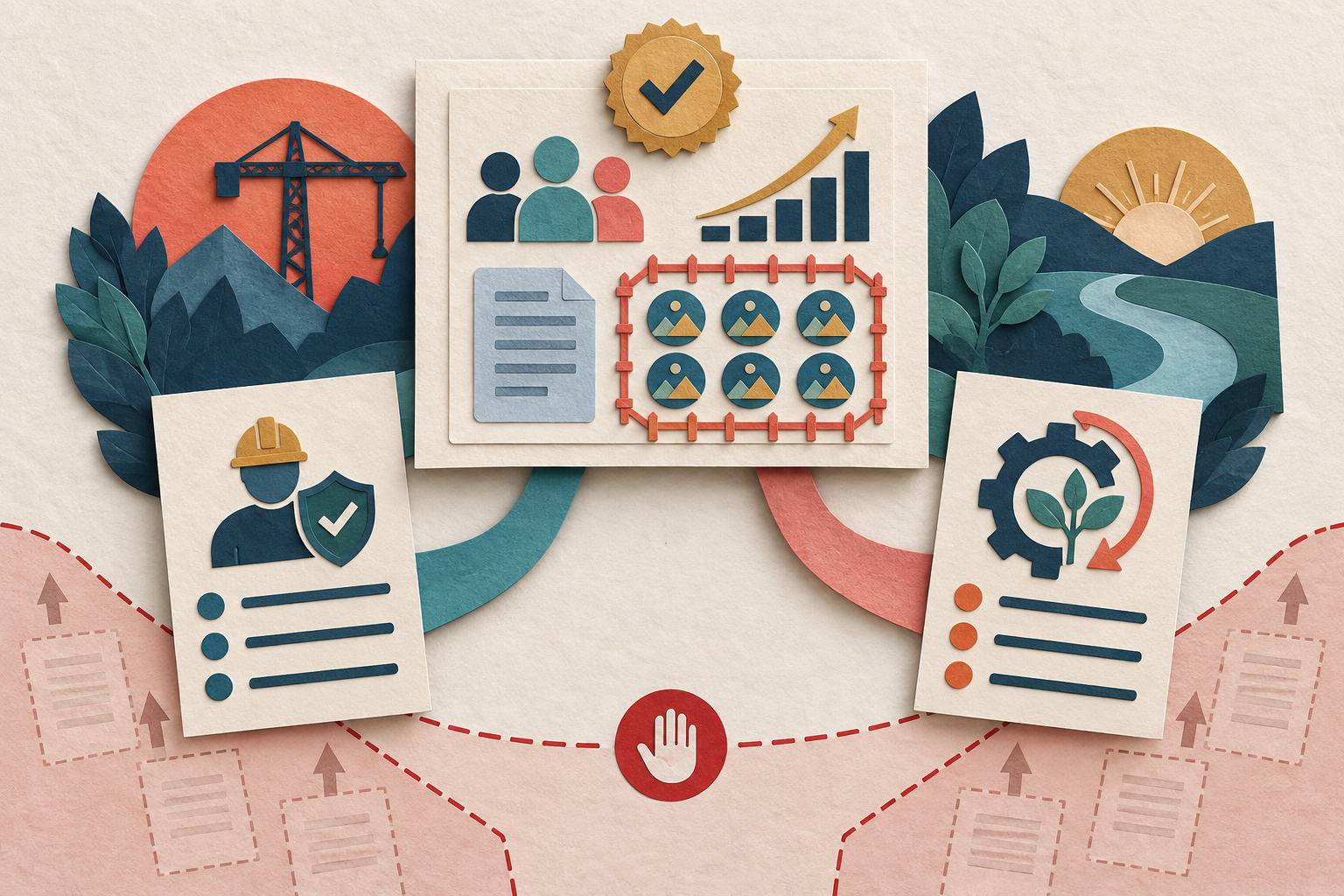
Different emphasis is useful; different facts are not.
Current Harvard career guidance recommends building a bank of experiences, skills, and accomplishments that an AI assistant can draw from during tailoring.[3] The bank becomes safer when each item carries its source and boundary, not just attractive wording.
CoreCV can keep resumes structured and fine-tune a version against a pasted job description or job URL. Use that output as a proposed selection from your evidence base. Verify the facts, ownership, and scope before saving the new version.
Decide what tailoring may change
Good tailoring changes emphasis. It can reorder bullets, choose a more relevant example, remove unrelated detail, and use accurate language from the posting. Harvard's career guidance recommends reflecting the skills and experience a specific employer values.[4]
Four fields should remain locked unless new evidence changes them:
- Ownership: what you personally did or decided
- Scope: which users, systems, teams, or period the result covers
- Chronology: titles, employers, and dates
- Metric provenance: where a number came from and whether it is measured or estimated
Run the skills evidence matrix against each role family. If a priority skill has no linked accomplishment, the honest choices are to add real evidence, describe adjacent experience precisely, or leave the skill out. A synonym cannot repair an evidence gap.
Name the artifact, then save the submission
File names should answer three questions: who was it for, which role was targeted, and when was it sent.
2026-10-02_northstar_platform-engineer_v1.pdf
2026-10-02_northstar_platform-engineer_job-description.pdf
Then record the evidence IDs used, the application source, and any changed application answers. This is more useful than resume_final_v7.pdf because it preserves the exact claim set the interviewer may reference.
The Department of Labor advises candidates to review the submitted application and job announcement when preparing interview examples.[5] That becomes easy when the exact resume and posting are saved together. It also makes the AI-tailoring defendability audit faster: you can test each line against its source instead of reconstructing what happened weeks later.
Run a five-minute provenance check
Before submitting, ask:
- Does every changed bullet map to an evidence record?
- Did any rewrite enlarge ownership, scope, certainty, or precision?
- Can I explain where each metric came from?
- Does the version emphasize the target role without hiding chronology?
- Have I saved the exact resume and job description together?

A short verification pass keeps the submitted artifact traceable to its evidence.
The goal is controlled variation. Keep one verified evidence base, create role-family views from it, tailor the selection for each job, and preserve the submitted artifact. Then AI can help you edit faster without quietly becoming the author of your work history.
Follow the CoreCV Blog via RSS for practical weekly guidance on making technical value legible in an AI-shifting hiring market.
Sources
1. U.S. Department of Labor, Resume Essentials Participant Guide 2026: https://www.dol.gov/sites/dolgov/files/VETS/files/ResumeEssentials_PG_Interactive_Feb2026.pdf
2. CareerOneStop, Target Your Resume: https://cloudfront.careeronestop.org/Veterans/JobSearch/ResumesAndApplications/target-your-resume.aspx
3. Harvard Mignone Center for Career Success, Resumes for Industry: Grad Student Edition (2026): https://careerservices.fas.harvard.edu/blog/2026/09/15/resumes-for-industry-grad-student-edition-2026/
4. Harvard Mignone Center for Career Success, AI for Resumes and Cover Letters: https://careerservices.fas.harvard.edu/ai-resumes-and-cover-letters/
5. U.S. Department of Labor, Interview Tips: https://www.dol.gov/general/jobs/interview-tips