
13 posts tagged with "career-growth"

View All Tags

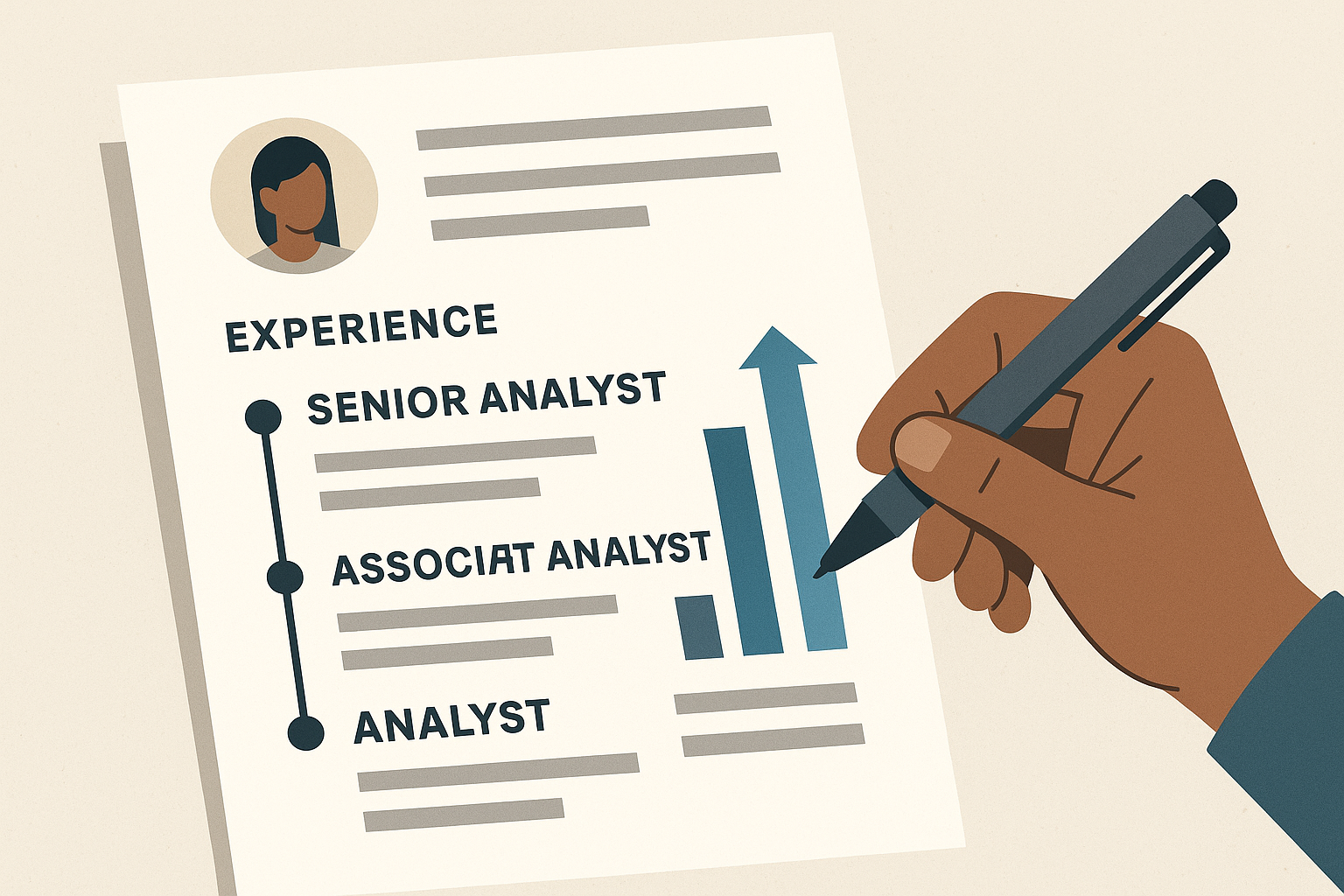
How to Show Promotions on a Resume Without Losing the Story

· 7 min read
How to Show Promotions on a Resume Without Losing the Story

Promotions are one of the strongest signals on a resume because they show that one employer kept increasing your scope and trust. The problem is that many resumes hide that signal under clutter. If the reader cannot quickly tell whether you moved from engineer to senior engineer to staff engineer, or whether those title changes actually came with broader ownership, the story gets lost. Harvard advises candidates to tailor resumes to the role they want and to write for readers and systems that scan quickly. MIT likewise recommends using the position description to decide what belongs on the page and making relevant information immediately visible.[1][2]


Addressing Employment Gaps: Turning Time Off into a Narrative of Growth

· 8 min read
Addressing Employment Gaps: Turning Time Off into a Narrative of Growth

Employment gaps become a problem mostly when the resume leaves too much work for the reader. If a hiring manager cannot quickly tell what happened, whether your skills stayed relevant, or why you still fit the role, the gap starts to carry more weight than it should. Harvard advises candidates to tailor resumes to the job they want and to write for people and systems that scan quickly. MIT similarly recommends using the position description to decide what belongs on the page. That is the right frame for gaps too: keep the document clear, credible, and focused on evidence.[1][2]

Securing Strong References: Building Relationships That Endorse You

· 7 min read
Securing Strong References: Building Relationships That Endorse You

Most strong references are built long before anyone asks for them. When the moment comes, a former manager who can recall how you handled a messy launch is far more useful than a big-name contact who barely knows your work. By the time an employer wants to check references, the real work is already done: someone has seen how you operate, remembers specific examples, and is willing to speak about you with detail and confidence. That is why the best reference strategy is not scrambling for names at the end of a job search. It is building professional relationships that naturally produce credible endorsements later.[1]