60 posts tagged with "resume-advice"

View All Tags

How to Write a Resume When Your Best Work Was Infrastructure No One Noticed

· 7 min read

How to Write a Resume When Your Best Work Was Infrastructure No One Noticed

Infrastructure engineers often get punished by the same logic that proves they did the job well. If your best month was the month nothing broke, the resume can end up looking empty unless you translate prevention into evidence. Strong resume guidance still applies here - tailor for the role, keep the format easy to scan, and show concrete accomplishments rather than a generic tool list.[3][4][6] But infrastructure, platform, and reliability work usually needs one extra move: make the hidden leverage visible by naming the system, the risk or drag, and what changed because your work existed.

Security Clearance, Regulated Work, and NDAs: How to Talk About Confidential Technical Experience

· 8 min read
Security Clearance, Regulated Work, and NDAs: How to Talk About Confidential Technical Experience

A lot of strong technical candidates have the same frustrating problem: their best work happened inside environments where they cannot name the customer, the system, or the exact implementation details. That does not mean the work has to disappear behind empty phrases like "worked on confidential projects." Strong resumes still need specificity, relevance, and visible accomplishment.[1][2][3][4] The trick is not to reveal more. It is to make the safe parts legible.

How to Show Systems Thinking on a Resume Without Writing a Wall of Text

· 7 min read
How to Show Systems Thinking on a Resume Without Writing a Wall of Text

A lot of engineers try to show systems thinking on a resume by naming it directly. That usually fails. Hiring teams do not infer strong technical judgment from labels like "strategic thinker" or "designed scalable systems." They infer it from specifics: what you had to balance, what you changed, what constraints shaped the decision, and what happened afterward. Strong resume guidance keeps returning to the same basics here: tailor for the role,[1][4] make relevant information visible quickly,[2] and describe work with specific context and outcomes.[3]

The Best Resume Format for Senior Engineers Who Haven't Coded Full-Time in Years

· 7 min read
The Best Resume Format for Senior Engineers Who Haven't Coded Full-Time in Years

A lot of senior-engineer resumes fail for the same reason: they pick the wrong mirror. Some read like executive bios with no technical proof. Others try to look current by pretending the candidate still spends eight hours a day shipping tickets. Good resume guidance keeps returning to the same basics - tailor to the role, use a readable structure, and make evidence easy to scan.[1][2][4] Senior candidates have a second problem: the format also has to show where their technical value lives now. If their leverage comes from architecture, prioritization, migration judgment, and cross-team technical decisions, the page should make that obvious.[5]

Stop Faking Resume Metrics: What to Do When You Can't Prove the Number

· 6 min read
Stop Faking Resume Metrics: What to Do When You Can't Prove the Number

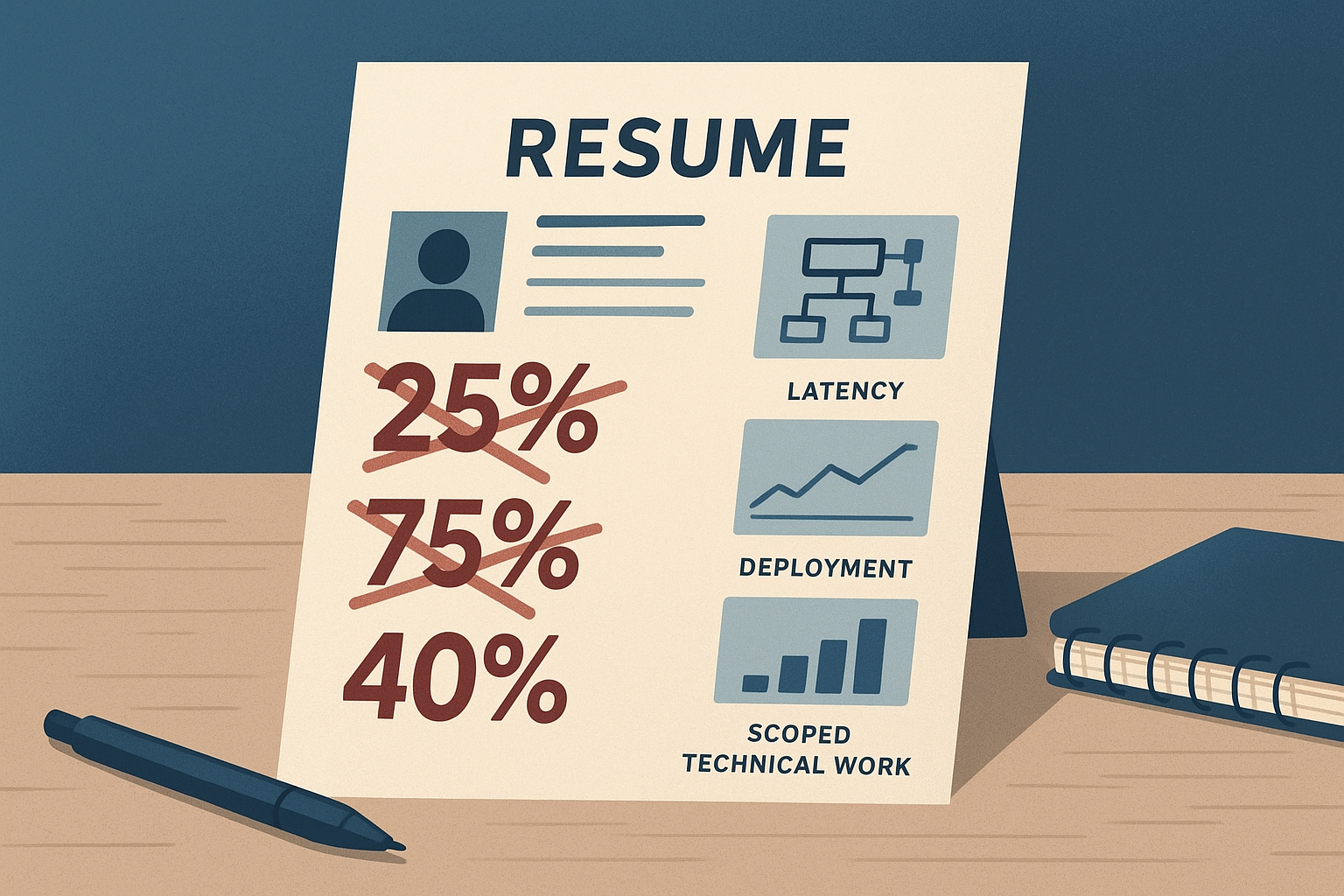
A lot of resume advice gets repeated long after the useful part has worn off. "Add more metrics" started as a good correction to vague, responsibility-heavy bullets. Now it often gets applied so mechanically that candidates feel pushed to invent percentages they cannot really defend.

Strong resume guidance is narrower than that: be specific, focus on accomplishments, and quantify impact where possible.[1][2][3][4]

Short Tenure Resume? How Software Engineers Can Explain 6-Month Stints Without Sounding Defensive

· 7 min read
Short Tenure Resume? How Software Engineers Can Explain 6-Month Stints Without Sounding Defensive

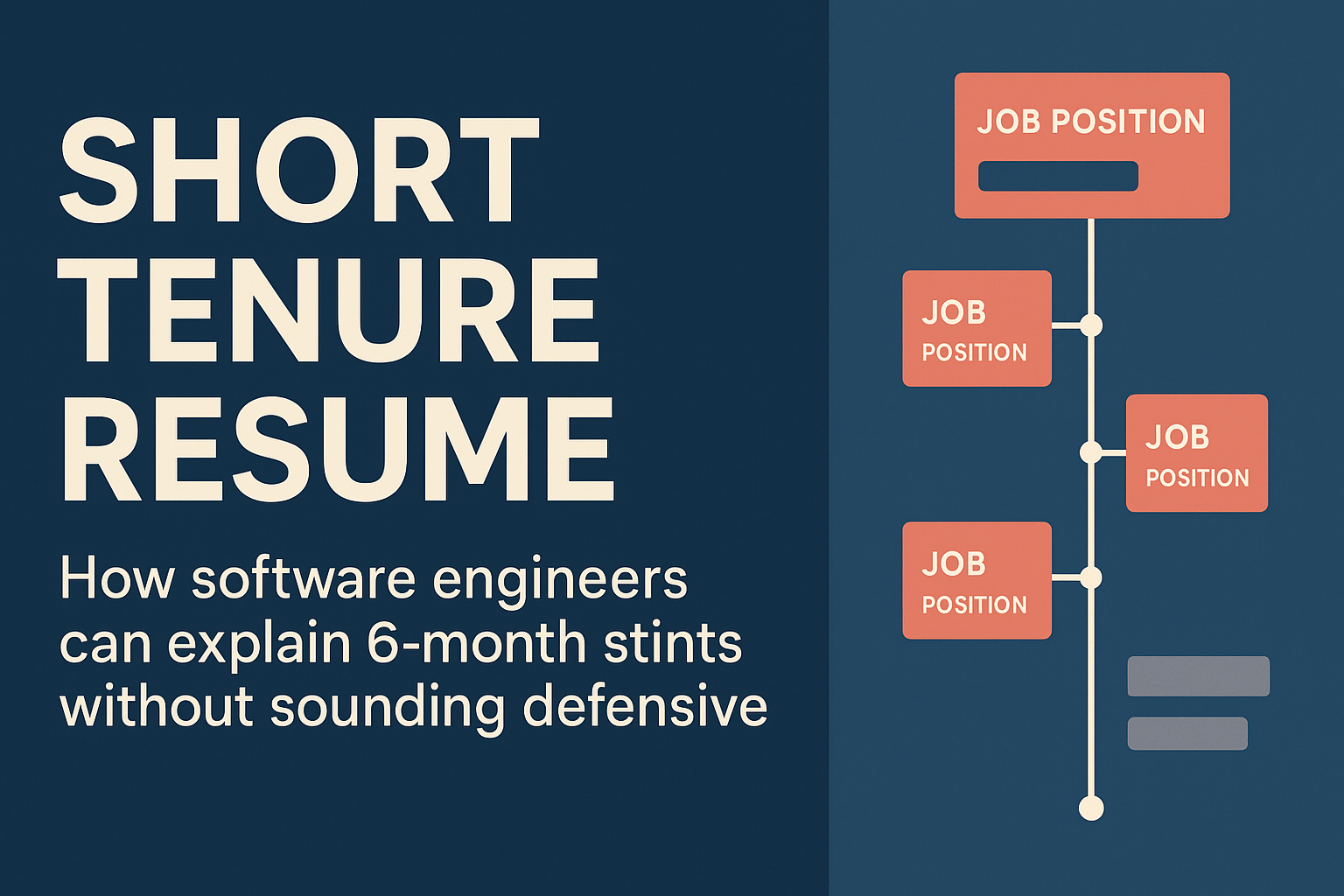
A short tenure resume does not usually lose people because the dates are visible. It loses them because the pattern feels chaotic, unexplained, or suspiciously generic. In a labor market where median employee tenure fell to 3.9 years in 2024, and workers ages 25 to 34 had median tenure of 2.7 years, shorter stays are part of the backdrop even if those numbers do not predict how any one hiring team will react.[1] The real question is whether your resume helps a hiring team understand what kind of work those stints represent and why you are still a credible fit now.[2][3][5]

ATS Resume for Software Engineers: 3 Ways You Can Be Rejected Before a Human Reads It

· 8 min read
ATS Resume for Software Engineers: 3 Ways You Can Be Rejected Before a Human Reads It

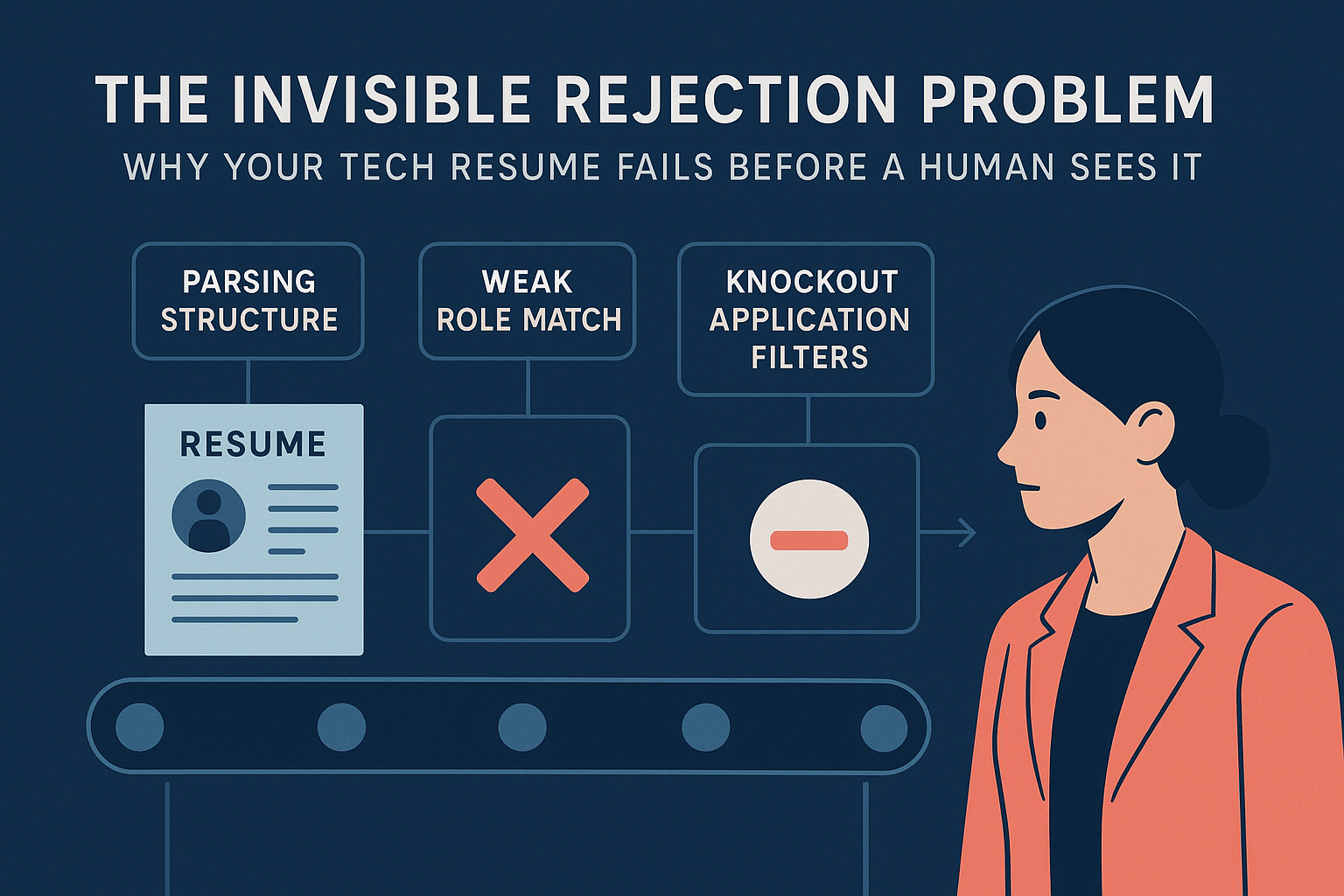
A lot of ATS resume advice for software engineers is aimed at the wrong problem. Candidates fixate on whether the system will "like" the file, when the real risk is earlier and more practical: your application can stall before a recruiter reads it because the resume does not parse cleanly, the role match is weak, or an application question closes the loop.[1][2][5][6] If you want an ATS-friendly resume for software engineers, think in terms of three pre-human failure modes, not one generic "beat the bots" checklist.

Are You Overqualified or Just Misframed? Fixing Resume Signals That Price You Out

· 8 min read
Are You Overqualified or Just Misframed? Fixing Resume Signals That Price You Out

A lot of "overqualified" feedback is lazy shorthand. Often the problem is not too much experience. It is that your resume makes you look pointed at a different job: broader scope, heavier management, higher compensation, or less willingness to do the hands-on work. Strong resume guidance keeps returning to the same principle: tailor for the role in front of you and make relevance obvious.[1][2][3]